Formula 1 Sales Incentive Programs: A Systematic Approach to Driving Commercial Performance

TL;DR. Formula 1-themed sales incentive programs apply F1’s core operating principles — real-time performance data, tiered execution, and disciplined strategy — to commercial campaigns that produce measurable revenue outcomes. Generic incentives stall for a specific reason: they reward outcomes weeks after the behavior that earned them. Reinforcement only sticks when it arrives immediately, tied to the exact action that triggered it.1 Ninety percent of top-performing organizations already run structured sales incentive programs.2 The gap between those that do and those that don’t widens with every deal cycle that passes.
What Is a Formula 1–Themed Sales Incentive Program and Why F1 Works as an Anchoring Concept
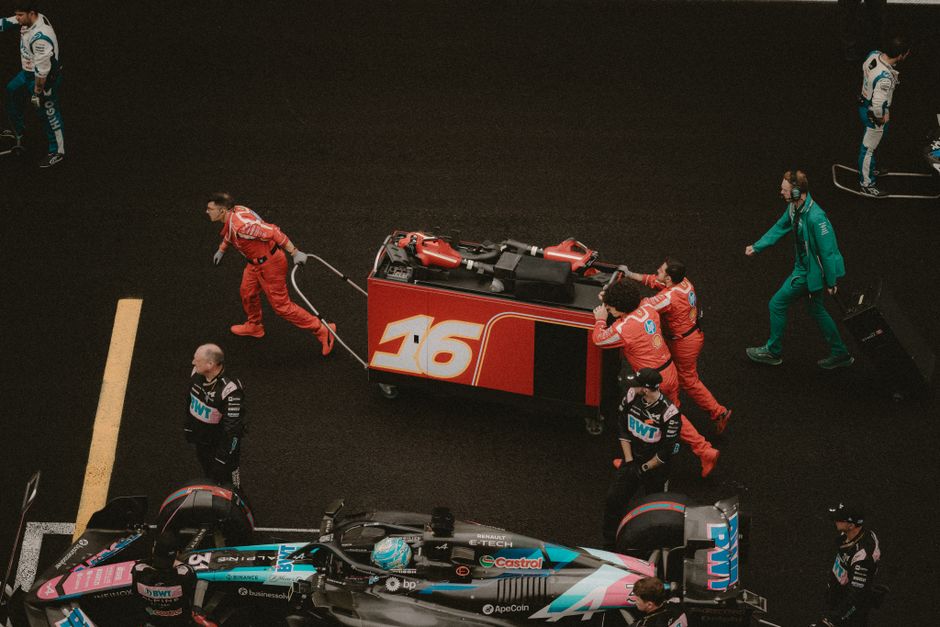
An F1-themed sales incentive program is a time-bounded campaign that maps Formula 1 race mechanics — championship standings, pit-stop milestones, tiered performance tiers, and real-time leaderboards — directly onto sales goals. The result is a psychological alignment between rep behavior and a competitive narrative that reps actually care about.
The metaphor works because F1 makes one truth impossible to ignore: elite performance is a product of system design, not individual heroics. A driver doesn’t win a championship through willpower. The team’s pit-stop precision, data telemetry, and strategic calibration determine the outcome. Sales teams recognize that parallel immediately — and that recognition is the first step toward sustained engagement.
Here’s where most incentive programs go wrong: they treat disengagement as a people issue. The evidence says otherwise. Programs that focus on 2–3 key behaviors generate 27% higher performance improvements than those tracking five or more metrics3 — a structural finding, not a coaching tip. Yet most programs still fail at the design layer. Confusing goals, delayed rewards, and zero real-time visibility kill momentum long before the leaderboard even matters.4
F1-themed campaigns reframe the diagnosis. Poor results aren’t a motivation deficit — they’re a systems failure. When goal clarity, immediate feedback loops, and reward certainty are engineered into the campaign architecture, the theme stops being decoration and starts doing behavioral work.
Learn more in our complete guide: What is a Sales Operating System: the loop that transforms results.
What Formula 1 Teaches Us About Goals, Strategy, and Commercial Performance
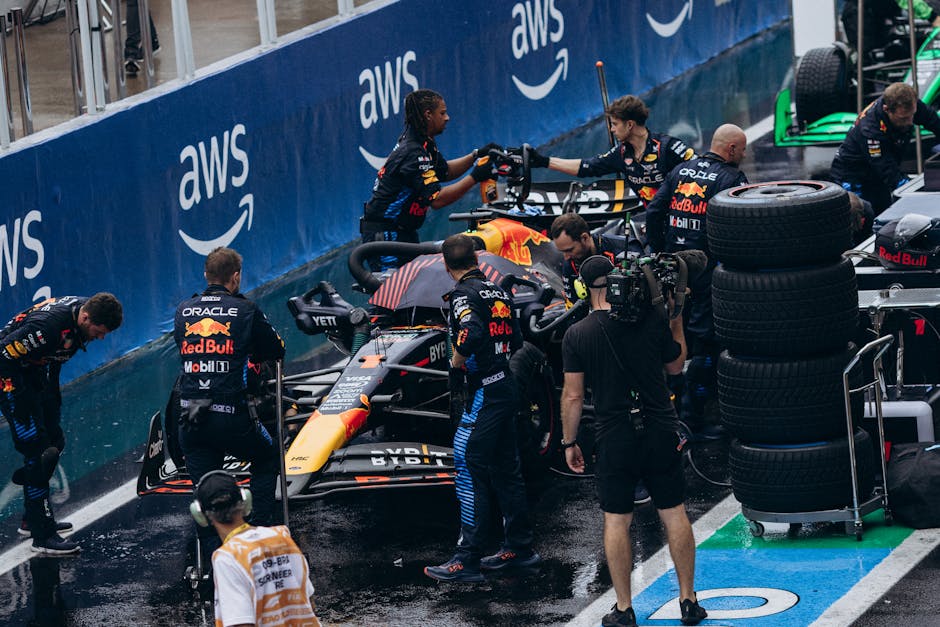
Formula 1 teaches sales leaders one foundational lesson: elite performance is a systems outcome, not a talent outcome. The same three operating principles that separate championship teams from also-rans map directly onto the sales operations failures that cost revenue-accountable leaders the most.
Championship Strategy → Prioritize Impact Over Activity
F1 teams allocate risk deliberately across a season — defending hard in high-points races, sacrificing position where it won’t compound. Sales teams that chase every account equally produce random results. Research shows reps already spend only 28% of their time actually selling 5. Burning that time on low-value accounts is a structural failure, not a motivational one.
Pit-Stop Execution → Choreograph Every Handoff
A four-second pit stop runs on pre-assigned roles, rehearsed sequences, and zero improvisation. The same logic governs the prospecting → qualification → close handoff. When you choreograph and measure each transition, cycle time compresses. Programs that concentrate on 2–3 key behaviors generate 27% higher performance improvements than those tracking five or more metrics 3.
Real-Time Telemetry → Eliminate the Feedback Delay
Every F1 engineer watches live data during the race. Sales operations rarely does. Revenue is a lagging indicator — a scoreboard that reflects decisions reps made weeks or months ago 1. Without live performance signals, teams adjust strategy on stale instinct instead of fact.
How Leading Companies Used Formula 1 Themes to Drive Sales and Commercial Growth
Companies that embed Formula 1 as a structural incentive theme — not a one-off contest — consistently report stronger engagement and revenue outcomes than those running generic leaderboard programs. The difference comes down to system design, not spectacle.
Corporate teams that use F1 race weekends as capstone rewards find that the aspiration alone reshapes daily behavior. According to F1 Experiences, attending a Grand Prix "can be a big impetus for salespeople to reach their quarterly goals" — a visible, emotionally resonant target that sustains motivation across the full quarter, not just the final sprint.6 That effect compounds when the reward ties to measurable milestones rather than general effort.
The broader data on structured incentive programs backs this up. The Incentive Federation, Inc. found that incentives improve individual performance by an average of 22% and team performance by as much as 44% — but only when programs focus on two to three key behaviors instead of scattering rewards across five or more metrics.3 F1-themed programs that map pit-stop precision and championship-stage rankings onto real quota milestones give reps a shared mental model of execution discipline. That shared model accelerates both ramp-up and sustained performance over time.2
How to Structure a Formula 1–Themed Sales Incentive Campaign: Goals, Mechanics, and Rewards
A well-structured F1-themed sales incentive campaign translates championship logic directly into commercial operations: one overarching revenue metric broken into race-length sprints, tiered competition that keeps the entire grid engaged, and scheduled pit-stop reviews that allow real-time course corrections.
Championship Goal Architecture
Start with one to three concrete business objectives — new customer acquisition, revenue by segment, or retention rate. Then break each one into weekly or bi-weekly sprint targets that mirror a race calendar. Effective incentive programs stay inside that same one-to-three range; exceed it, and participants lose focus in ways that measurably reduce program impact4. Points should attach to strategic behaviors — discovery calls completed, proposals submitted, demos delivered — not just closed revenue. That way, mid-funnel activity gets rewarded before the deal lands.
Tiered Mechanics: Rookie → Driver → Champion
Design three to four advancement tiers so reps compete for both absolute leaderboard position and tier promotion. This structure gives the middle of the pack — where the largest growth opportunity actually lives — a meaningful goal to chase. Without it, they concede the race to perennial top performers by week two7.
Pit-Stop Checkpoints
Schedule bi-weekly performance reviews: publish standings, recognize achievements, and adjust mission parameters if the data calls for it. Programs with a structured communication cadence achieve 34% higher participation rates than single-point announcements3. Think of these checkpoints as the race-strategy calls that separate teams that adapt from teams that crash out.
Types of F1 Rewards: Grand Prix Experiences, Hospitality Packages, and Themed Prizes
F1-themed sales rewards fall into three tiers — experiential, mid-range, and entry-level — and the research is clear: the tier you choose determines which reps you move, not just how much you spend.
Top-Tier: Grand Prix Weekends and Paddock Club Access
Premium rewards — GP weekend packages, Paddock Club hospitality, driver meet-and-greets — trigger aspiration that compounds through peer influence long after the race weekend ends. The Paddock Club sits directly above the team garages, offers Michelin-inspired cuisine, and includes pit lane walks. Industry sources call it "the undisputed pinnacle of F1 hospitality." 8 Non-cash experiential rewards land as higher value than their actual cost — which makes them disproportionately effective relative to what you spend. 7
Mid-Tier: VIP Hotel Packages, Branded Merchandise, and Milestone Bonuses
Mid-tier rewards do a specific job: they create multiple win moments across the campaign window, not a single end-of-quarter payout that everyone forgets by Tuesday. The Incentive Federation found that individual incentives improve performance by an average of 22%, and team incentives by as much as 44%. 3 Stagger the prizes, and you maintain momentum instead of a single spike.
Entry-Level: Leaderboards, Digital Badges, and Small Branded Gifts
Low-cost visibility tools — live leaderboards, digital badges, ranked progress — anchor psychological investment across the full team, not just your top ten. Programs that focus on two or three key behaviors generate 27% higher performance improvements than those tracking five or more metrics. 9 Seeing "I moved up three spots this morning" delivers reinforcement that a cash deposit simply cannot replicate at the same frequency.
Common Mistakes in Incentive Campaigns and How the F1 Mindset Prevents Them
Most sales incentive programs fail not because reps are unmotivated, but because the design is broken from the start 10. The F1 mindset — precision, real-time data, and pre-committed resources — corrects the five structural failures that kill campaign momentum before it ever builds.
Mistake 1: Unclear Metrics and Manual Scoring
When reps cannot verify how points are calculated, they stop trusting the leaderboard entirely. Research shows 85% of commissionable employees manually recalculate their own compensation at some point — time spent auditing payouts instead of closing deals 11. The fix is straightforward: automate event capture so every action scores itself the moment it happens. Just as every F1 lap time posts instantly to the timing tower, every rep behavior should generate a visible, verifiable result with zero manual entry.
Mistake 2: Rewards Announced but Delayed or Underfunded
Delayed payouts destroy credibility fast. The longer the gap between a behavior and its reward, the weaker that reward’s motivational pull 3. Commit the budget before the campaign launches — publicly — and deliver on schedule. Announcing a prize you cannot fund on time is worse than announcing nothing at all.
Mistake 3: Wrong Campaign Duration
Campaigns that run too long breed fatigue. Campaigns that run too short never shift behavior. A sprint matched to your actual business cycle — anywhere from two weeks to a full quarter — sustains intensity without burning out the team.
Mistake 4: One-Size-Fits-All Leaderboards
A single ranking that pits your top closer against a first-month rep demoralizes the middle of the pack — which is precisely where the largest performance opportunity lives 7. Segment by role, region, or tenure. When progress is visible at every level and the next rank always feels reachable, the entire distribution moves — not just the top five.
Step-by-Step Implementation Guide for a Formula 1–Style Sales Incentive Program
Launching an F1-themed sales incentive program takes seven deliberate steps. The most common failure point is not the reward budget — it’s the operational infrastructure behind the program. Get the system right first; the fanfare follows.
-
Define championship goals. Lock in your top 1–3 business metrics and their point values before anything else. Effective objectives are measurable, realistic for at least 70% of the team, and tied directly to activities reps control 4. Limit focus ruthlessly — programs tracking 2–3 key behaviors generate 27% higher performance improvements than those chasing five or more metrics 3.
-
Design the leaderboard structure. Decide on segments (region, shift, product line), scoring rules, and refresh cadence. Real-time event capture is non-negotiable. If reps must manually log data, the leaderboard lags, trust erodes, and engagement collapses within days.
-
Secure and publish reward inventory. Flights, hotel packages, bonus pools, and VIP race-weekend access all need confirmation before launch — not a promise in principle. Publish a campaign calendar showing race-date milestones, pit-stop checkpoints, and announcement moments so every rep can see the finish line.
-
Build a crystal-clear rulebook. Ambiguity kills trust. If a rep needs a spreadsheet or a 30-minute call to understand how they get paid, the plan is already broken 11. Document tie-breaker rules, eligibility criteria, and escalation paths in plain language.
-
Select a platform that captures events automatically. Manual logging defeats the F1 speed principle entirely. Play2sell SalesOS distributes points by sales event — opportunity created, proposal sent, deal closed — pulling directly from integration data, not from what your rep remembered to type. Leaderboards update in real time. Badges carry full governance and are verifiable. Only 26% of sellers currently trust that their compensation is calculated correctly 1; auditable, automated scoring closes that gap before it costs you a season.
-
Launch with fanfare, then run weekly pit-stop reviews. A structured communication plan at launch — kickoff meeting, teaser campaign, visible countdown — drives participation. Programs with structured communication plans achieve 34% higher participation rates than single-point announcements 3. Weekly reviews celebrate pace-setters, flag rule changes early, and give mid-field reps a clear window to adjust.
-
Measure and iterate post-campaign. Track revenue lift, rep retention delta, and team sentiment. Use that data to calibrate the next campaign — segment thresholds, point weights, reward mix. Running the same playbook twice and expecting different results is not a strategy.
Frequently Asked Questions About F1-Themed Sales Incentive Programs
F1-themed sales incentive programs work best when their mechanics map directly to real sales behaviors — and when the underlying system captures data automatically, publishes progress in real time, and governs rewards transparently. Below are the five questions sales leaders ask most when evaluating this model.
How long should an F1-themed campaign run?
Most successful campaigns run 4–8 weeks or a full quarter — long enough to build competitive momentum, short enough to prevent fatigue. Flash campaigns of two weeks work well for burst periods: product launches, end-of-quarter sprints. Longer runs carry a structural risk. Research confirms that engagement typically drops sharply around week three of a campaign cycle.1 When that happens, you have two options: intensify the stimuli or shorten the feedback loop. Do neither, and you lose the team.
Can F1 incentives work outside of pure sales roles?
Yes. Customer success, renewal, and support teams have adopted equivalent mechanics because the underlying principle is role-agnostic: ranked visibility plus milestone rewards plus transparent progress equals sustained effort.2 The F1 theme is a wrapper. If your audience responds better to a space race or a championship bracket, swap the metaphor. The engine underneath stays the same.
What if we can’t budget for Paddock Club access or GP weekends?
Use a tiered reward structure. Top performers receive cash bonuses or premium travel. Mid-tier contributors receive branded merchandise and public recognition. Entry-level reps receive badges and leaderboard standing. Non-monetary rewards are frequently perceived as higher value than their actual cost — and social proof (public rank, visible streaks, peer recognition) often sustains motivation longer than a prize payout that arrives weeks after the fact.7
How do we stop the campaign from feeling like theater?
Link every F1 mechanic to a measurable business outcome: pit stops equal structured deal reviews, laps equal tracked activities, the checkered flag equals closed deals. When the metaphor maps cleanly to real work, it reinforces execution discipline rather than functioning as decoration.9 The data bears this out: programs that focus on 2–3 key behaviors generate 27% higher performance improvements than those tracking five or more metrics.3
What kind of platform infrastructure do we actually need?
You need a system that captures sales events automatically from your existing CRM or pipeline tool, publishes live leaderboards without manual updates, and executes reward governance with auditable scoring. Spreadsheets fail structurally: 85% of commissionable employees manually recalculate their own earnings at least some of the time — precisely because plan details aren’t transparent enough.11 Play2sell SalesOS is built for this architecture. It integrates with your CRM via API, captures events without requiring your reps to enter anything manually, runs segmented leaderboards by team or region, and tracks point redemption with full governance. Your team focuses on selling. The system keeps score.
Launch Your Formula 1–Inspired Sales Campaign: The Next Concrete Step
The bottleneck in most F1-themed sales campaigns is never the concept — it’s the execution infrastructure. Leaderboards decay, scoring disputes erupt, and manual CRM entry kills momentum before the campaign reaches its second week. That is a systems problem, not a motivation problem.10
This is exactly where Play2sell SalesOS Gamification operates. The module sits above your existing CRM and captures sales events automatically via API integration — no manual data entry required. Live leaderboards publish in real time, segmented by team, shift, or region. Point allocation and badge verification run without spreadsheet overhead. A two-week F1-themed campaign executes end-to-end with zero scoring disputes because the system generates the audit trail — not your sales manager on a Sunday night.1
Your next step is concrete: schedule a 30-minute conversation with Play2sell to map your top three business targets — new customer pipeline, deal velocity, territory expansion — to F1-campaign mechanics: goal tiers, reward triggers, and leaderboard segments. Bring your reward budget. Leave with a live demo showing how other sales operations compressed ramp-up, improved close rates, and kept teams engaged across multi-month programs — without the manual overhead that kills every incentive program by week three.3
## Sources- The Habits That Actually Build Revenue — https://play2sell.com/blog/2026/08/07/the-habits-that-actually-build-revenue ↩
- Sales incentive programs: Complete guide for 2026 — https://www.outreach.ai/resources/blog/sales-incentive-programs ↩
- A Step-by-Step Guide to Designing a Sales Incentive Program — https://www.one10marketing.com/resources/blog/need-a-killer-sales-incentive-program-heres-our-step-by-step-guide ↩
- Your Ultimate Guide to a Killer Sales Incentive Program — https://ss-usa.s3.amazonaws.com/c/308479929/media/88056092f2b0c129170466719160332/One10_PerformX_Guide_Final.pdf ↩
- Sales Operations: The Operator’s Guide to Building a High-Performance Revenue Engine — https://www.thegtmadvisor.com/blog/sales-operations ↩
- 8 Reasons To Invest In Corporate Hospitality With F1® Experiences — https://f1experiences.com/blog/8-reasons-to-invest-in-corporate-hospitality ↩
- Sales Incentive Structures That Work — https://www.biworldwide.com/en-au/our-work/blog/sales-incentive-structures-that-work ↩
- Formula 1 Hospitality Guide for 2025/2026 — https://aboveandbeyond.group/formula-1-hospitality-guide ↩
- Complete Guide to Designing a Sales Incentive Program — https://www.one10marketing.com/resources/blog/sales-incentive-program-design ↩
- 10 Common Sales Incentive Programme Mistakes (and Fixes) — https://wow4results.co.za/blogs/10-common-mistakes-in-designing-sales-incentive-programs-and-how-to-fix-them ↩
- Sales Incentive Plan Design: A Framework for High-Growth Enterprises — https://www.captivateiq.com/blog/enterprise-sales-incentive-plan ↩