Small Business E-Commerce in 2026: Your Complete Guide to Selling Online

TL;DR. Online selling is no longer a competitive advantage — it’s the baseline. In Q1 2025, e-commerce accounted for more than 16% of all U.S. retail sales, totaling $300.2 billion — a 6.1% year-over-year increase.1 If your business still has no digital channel, that isn’t a missed opportunity. It’s a structural gap. More than 80% of U.S. consumers research products online before they buy.2
This guide covers what closing that gap actually requires: choosing the right platform, deciding between marketplaces and an owned store, designing your first logistics setup, and avoiding the mistakes that cost beginners the most.
Why Selling Online Is Essential for Small Businesses in 2026

Selling online is no longer a growth strategy for small businesses — it is the baseline requirement for staying in the game. In 2026, the consumer decision journey begins digitally for the vast majority of buyers. A business without an online presence gets eliminated before the first conversation ever happens.
The numbers make the structural case plainly. E-commerce accounted for more than 16% of all U.S. retail sales in Q1 2025 — $300.2 billion, up 6.1% year-over-year — and global e-commerce is projected to climb from $6.56 trillion in 2025 to over $8 trillion by 2028.1 Over 80% of U.S. consumers research products online before buying.2 If you are not findable in that research phase, you do not make the shortlist.
Dependency on foot traffic and local geography is a structural constraint, not a personal failure. A physical storefront caps your addressable market at whoever happens to walk by. An online channel removes that ceiling — you can sell across all 50 states and reach niche audiences your local market will never generate.2 That is a systems problem with a systems solution.
Small businesses that have made the shift report real operational gains. According to Insureon data, 43% saw significant revenue growth after launching online sales, and 81% said those online sales were important or very important to their overall success.3 And yet, as of 2026, 45% of small business owners still do not have a website — and more than 20% of businesses with a physical presence and under $10M in revenue use no online sales channels at all.1
"As our survey shows, e-commerce is a valuable tool for small businesses and a key driver of success in a competitive environment," said Linda Moore, President and CEO of TechNet.4 The gap between businesses that have made this shift and those that have not is widening every quarter — and it compounds.
Learn more in our complete guide: What is a Sales Operating System: the loop that transforms results.
Related reading: AI RolePlay Creates Something Traditional Sales Training Never Could: Behavioral Intelligence.
Your Own Online Store vs. Marketplaces: Pros, Cons, and When to Use Each

The choice between an owned store and a marketplace is not aesthetic — it’s structural. The right answer depends on where you are in your business, not on which option sounds more professional. Most successful small businesses end up using both, but in sequence — not simultaneously from day one.
Head-to-Head: Owned Store vs. Marketplace
| Dimension | Owned Store | Marketplace (Amazon, Etsy, etc.) |
|---|---|---|
| Audience | You build it from zero | Built-in, high-intent shoppers |
| Brand control | Full — your design, your rules | Limited — their template, their rules |
| Commission fees | None | Typically 8–15% per transaction |
| Barrier to first sale | High — traffic must be earned | Low — products can sell within days |
| Customer data | You own it entirely | Marketplace retains most of it |
| Algorithmic risk | SEO-dependent | Ranking and visibility can shift overnight |
When to Use Each
Marketplaces excel at demand validation. If you are not sure whether customers will actually pay for your product, a listing on an established platform tells you quickly — no infrastructure required. Nearly 9 in 10 small business owners say it’s easier to launch new products on online marketplaces than in physical stores 4, and the average small business already sells across 3–4 separate channels 4.
An owned store earns its place once you have a product that converts and a customer worth retaining. It eliminates commission dependency, lets you build a direct marketing list, and gives you data no marketplace will ever share with you.
The Practical Sequence
Start on a marketplace to test demand and collect reviews. Once you have proof that buyers convert, invest in an owned store to cut fees and build direct customer relationships. The hybrid model is not a compromise — it is the playbook most durable small businesses actually follow.
The Best E-Commerce Platforms for Small Businesses
For U.S. small businesses launching online in 2026, three platform categories dominate: fully hosted SaaS (Shopify), self-hosted open-source (WooCommerce on WordPress), and regional solutions built for Latin American sellers. The right choice comes down to your technical comfort, monthly budget, and where your customers and supply chain actually live.
| Platform | Est. Monthly Cost | Best For | Technical Lift |
|---|---|---|---|
| Shopify | $29–$399/mo | Turnkey setup, no coding required | Low |
| WooCommerce | $5–$20/mo (hosting) + free plugin | Tech-comfortable operators who want control | Medium–High |
| Nuvemshop / Loja Integrada | Varies | Sellers with Brazil-facing supply chains or customer bases | Low–Medium |
How to Choose
Evaluate these four criteria in order. Skip any one of them and you will typically pay to fix it later:
- Total monthly cost — platform fee + hosting + payment processing fees combined
- Design flexibility — how much you can customize without hiring a developer
- Payment method support — especially critical if your customers or suppliers are outside the U.S.
- Integration depth — does it connect cleanly to your accounting software, email platform, and shipping carriers?
The barrier to entry has dropped sharply. Most small businesses can get a fully functional online store running for a few hundred dollars per year1. And 91% of small business leaders already selling on marketplace platforms report those channels are effective for driving sales (TechNet/Morning Consult, 2026)4.
The Top Marketplaces for Small Businesses in 2026

In 2026, the largest and most accessible marketplaces for U.S.-based small businesses are Amazon, Etsy, eBay, Mercari, and Shopify. Each one is built for a different seller profile, category mix, and geographic reach. Picking the wrong platform doesn’t just hurt sales — it burns the margin you can’t afford to lose.
A TechNet/Morning Consult survey of 1,108 small business retailers (March 2026) found that 91% of small business leaders say e-commerce platforms drive sales, and the average small business runs 3–4 separate sales channels at once.4 Multi-channel isn’t a growth strategy anymore — it’s the baseline.
| Marketplace | Best for | Key consideration |
|---|---|---|
| Amazon | High-volume, price-competitive products | Highest global traffic; steepest competition and stricter seller requirements |
| Etsy | Handmade, vintage, niche crafts | Built-in audience with purchase intent; lower entry cost |
| eBay / Mercari | Used goods, collectibles, resale | Strong for inventory liquidation and one-of-a-kind items |
| Mercado Libre | Cross-border sales to Spanish-speaking markets | Largest e-commerce platform in Latin America; broadest reach for bilingual sellers |
| Shopify | Owned-channel strategy | Not a marketplace — your store, your customer data |
The 90% of small business owners who say more marketplace channels exist today than when they started4 are correct. But more options sharpen — not soften — the need for channel discipline. Research where your target customer actually shops. Then find where competitor density in your category is thinnest. That gap is where your margin lives.
How Do You Start Selling Online from Scratch?
Starting to sell online does not require a perfect website or a large budget — it requires a sequenced system. Most first-time sellers fail not because their product is wrong, but because they invest in the wrong things in the wrong order: they build before they validate, spend before they learn, and scale before they can fulfill. Here is the sequence that actually works.
The 7-Week Launch Roadmap
- Weeks 1–2 — Validate demand before building anything. Run $50 in Facebook or Instagram ads, or list your product on an existing marketplace like Etsy or Amazon. If you cannot hit a 5%+ click-to-purchase conversion rate at this stage, your product positioning needs work — not more traffic.
- Weeks 3–4 — Choose your channel. Marketplaces (Amazon, Etsy, eBay) get you selling fast. An owned store (Shopify, WooCommerce) gives you margin and data control. On average, small businesses run 3–4 separate sales channels simultaneously 4 — but start with one, then expand once you understand your fulfillment capacity.
- Weeks 5–6 — Set up payments and shipping. Configure Stripe, PayPal, or Square for payment processing. Decide early whether you will handle fulfillment yourself or hand it to a third-party fulfillment center — the latter can offer shipping rates that small businesses simply cannot negotiate on their own 5.
- Week 7+ — Launch small, learn fast. Watch your first 50 transactions closely for fulfillment and customer service gaps before you increase ad spend. Bottlenecks at low volume are manageable; at high volume, they are catastrophic.
The most common startup mistake: over-investing in store design before confirming that customers want your product. Testing costs $50. A custom storefront costs thousands. Sequence matters.
How to Structure Logistics and Shipping Without Driving Up Product Costs
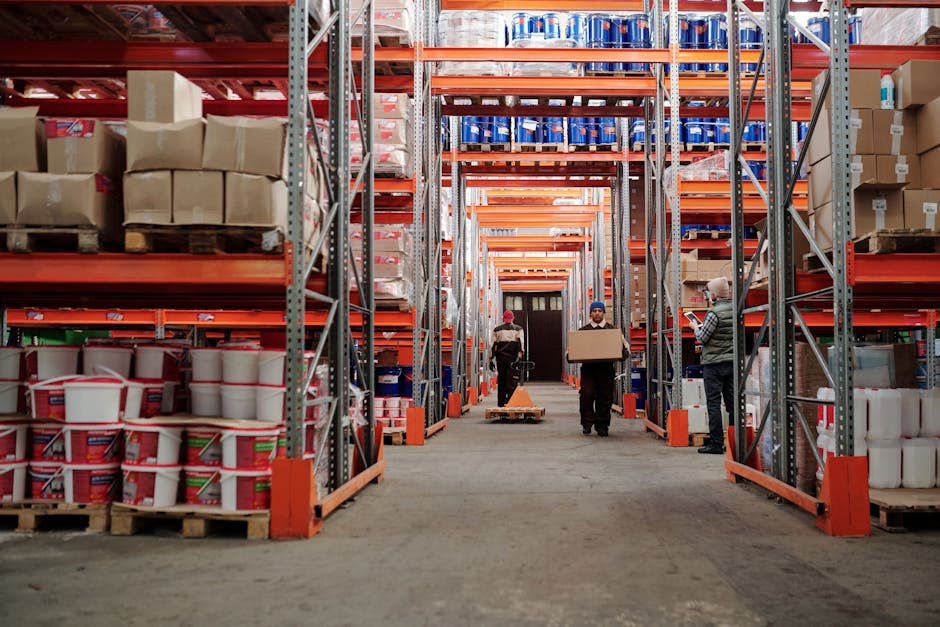
Shipping decisions made at launch will either protect your margin or quietly erode it. The fix is a deliberate cost structure defined before your first order ships — not retrofitted after customers start complaining.
Start with a blunt fact: the number-one reason shoppers abandon their cart is shipping and handling costs.5 Surprise fees at checkout kill conversions. The structural answer is to build a realistic shipping cost into your unit price, then offer free shipping above a threshold — say, $50. Customers feel like they’re getting a deal. You’re simply recovering the cost through pricing instead of checkout friction.5
Calculate True Per-Unit Shipping Cost Before You Price Anything
Major carriers — USPS, FedEx, UPS, DHL — all use dimensional weight to set rates. They bill whichever is higher: actual weight or the volume-based calculated weight.5 Your product may weigh 2 lbs, but if it ships in a large box, the billable weight could hit 4 lbs. Run this math before you set retail prices. Not after.
Volume Unlocks Better Rates
Most small businesses don’t realize they have negotiating power with carriers.5 UPS and FedEx will reduce rates upfront for businesses they expect to grow — typically offering a three-month window to hit a specified shipment volume.5 In the early stage, self-fulfill to protect margin. Third-party fulfillment partners become cost-effective only once monthly volume justifies their per-unit fees.
Low-Cost Promotion Strategies to Attract Your First Customers
The highest-return customer acquisition channels for a new small business are organic social content, targeted micro-influencer seeding, and email sequences — in that order, executed before you spend a dollar on paid ads. This is a system-design decision, not a budget preference.
Organic Social First
Nearly one-third of consumers (29%) discover new retail and e-commerce brands through organic social media, according to Klaviyo’s 2024 Future of Consumer Marketing report 6. Three to five short product or process videos per week on Instagram or TikTok takes roughly 30 minutes of production time and costs nothing. Build this habit before you touch paid channels.
Micro-Influencer Seeding
Creators with 10,000–50,000 followers in your niche convert at higher rates than mass-reach accounts — their audiences actually trust them. A $200–$500 product seeding budget across 20 creators, with the realistic expectation that two or three become recurring partners, is a low-risk channel with a clear ceiling on downside. ButcherBox partnered with a single TikTok creator and pulled 2.5 million views from one tutorial video 6.
Email Sequences at Near-Zero Cost
Capture a first-time visitor’s email and run a five-email onboarding series: product education, social proof, then a time-limited offer. Acquisition costs are minimal — primarily labor and a platform subscription 6. A well-structured sequence targets the 20–30% repeat purchase rate that converts one-time buyers into customers who stay.
The System Error to Avoid
Spending $500 or more on paid ads before validating organic or earned channels is not a budget miscalculation — it is a sequencing error. E-commerce customer acquisition costs have risen 222% in less than a decade 7. Paid spend amplifies what already works. It does not substitute for channels you have not yet tested.
Common Mistakes Small Businesses Make with Online Sales—and How to Avoid Them

Most small businesses don’t fail at e-commerce because they lack effort — they fail because their setup creates invisible structural problems that compound quietly over time. The four mistakes below aren’t about hustle; they’re architectural, and each one has a concrete fix.
Mistake 1: Multiple Platforms, No Inventory Sync
Selling on Amazon, Etsy, and your own site at the same time is smart in theory — small businesses using 3–4 separate sales channels outperform those relying on a single one 4. In practice, without a unified inventory layer, you are one double-sell away from a customer service crisis. Sync tools like Shopify’s native inventory management or third-party connectors eliminate that risk before it ever surfaces.
Mistake 2: No Pipeline or Customer Record
Orders that arrive without an attached customer record are revenue that cannot compound. You have no data for re-marketing, no history for support, and no signal telling you which product lines are actually growing. Implement even a lightweight CRM or order-tracking system from day one. The setup cost is trivial compared to the repeat-purchase revenue you will recover.
Mistake 3: Skipping Legal Structure and Tax Planning
This one has teeth. E-commerce sellers operating without an LLC carry personal liability exposure, and improper business structuring can push your effective tax rate to 44.7% on gross revenue once corporate tax and branch profits tax stack on top of each other 8. Form your LLC, obtain an EIN, and route quarterly estimated payments through a tax professional — not a spreadsheet you open every April.
Mistake 4: Competing on Price Alone
Matching the lowest competitor ad trains your customers to wait for discounts and permanently destroys margin. A lack of strategic tax planning and cash flow management — not pricing — ranks among the most common reasons small businesses plateau 9. Build differentiation through service quality, fulfillment speed, or brand trust instead. Customers who pay full price once refer others who do the same.
Frequently Asked Questions
These are the questions small business owners ask most often when taking their sales online — answered directly.
Q: Do I need an LLC to sell online? Not legally required, but strongly recommended. An LLC separates your personal assets from business liability — if a customer sues, your savings stay protected. Formation runs $50–$200 depending on your state, and the structure simplifies tax filing while you’re at it.
Q: Where will my first customers actually find me? Google and social media — not inside any marketplace. More than 80% of U.S. consumers research products online before buying2, and nearly one-third discover new brands through organic social6. Focus on SEO and organic content first. The platform you sell on matters less than how you drive traffic to it.
Q: How much should I budget for ads to reach 100 sales? There’s no universal answer. Start with $20/day for two weeks — $280 total — and track your Customer Acquisition Cost (CAC)10. If CAC exceeds 30% of your product price, the problem is positioning or audience targeting, not budget size.
Q: What if my first month has zero sales? Expect it — and don’t read it as a product problem. Zero sales in month one almost always signals a customer-discovery problem. Shift to direct outreach, influencer seeding, or organic content. The system needs adjustment, not the product.
Next Steps: Building a Sales System That Scales
Building a scalable online sales system means treating every transaction as a data asset — not just a completed order. Most small businesses let that data evaporate into email inboxes, marketplace dashboards, and disconnected spreadsheets. Every sale stays isolated instead of compounding into customer lifetime value.
The structural problem isn’t effort. It’s architecture. When order events sit across three separate tools, no one can see repeat-purchase patterns, identify which customers are worth retargeting, or pinpoint where pipeline is leaking. Insureon’s 2026 research found that 43% of small businesses reported significant revenue growth after consolidating their online sales visibility — yet 81% already said those online sales were important or very important to their success.3 That gap between importance and execution is exactly what a fragmented system produces.
This is where Play2sell SalesOS Leads changes the equation. Instead of requiring your team to manually log orders across tools, the Leads module captures every transaction event — order placed, payment confirmed, shipment triggered — automatically via API integration. Customer identity, purchase history, and repeat-purchase signals flow into a single view. That lets you ask the right question: which customers are likely to buy again, and when should you reach out? The shift from "did we make sales?" to managed, predictable pipeline is the difference between flat revenue and compounding growth.
Your concrete next step: audit every system you currently use to track customers and orders. List what data you lose between tools. Then map how automated event capture would close those gaps — turning your online store from a transaction machine into a strategic sales operation.
## Sources- Benefits of an e-Commerce Solution for Your Small Business — https://business.bankofamerica.com/en/resources/benefits-of-ecommerce-for-small-business ↩
- 10 Powerful Reasons Why Your Business Needs E-Commerce in 2026 — https://www.linkedin.com/pulse/10-powerful-reasons-why-your-business-needs-e-commerce-5uj1c ↩
- Small Business Ecommerce: Choose the Right Platform and Compete with Giants — https://www.bigcommerce.com/articles/ecommerce/small-business-ecommerce ↩
- Small Businesses Are Embracing a Broad Range of E-Commerce Marketplaces and AI Tools — https://www.technet.org/media/small-businesses-are-embracing-a-broad-range-of-e-commerce-marketplaces-and-ai-tools-to-expand-reach-and-improve-performance ↩
- 7 Best eCommerce Shipping Strategies for Small Businesses — https://www.shipmonk.com/resources/content-hub/7-best-ecommerce-shipping-strategies-for-small-businesses ↩
- Customer Acquisition: Formulas and Strategies – Klaviyo — https://www.klaviyo.com/blog/ecommerce-customer-acquisition-strategy ↩
- 11 Effective Customer Acquisition Strategies | Nextdoor — https://business.nextdoor.com/en-us/blog/customer-acquisition-strategy ↩
- E-Commerce Businesses: Structuring and Compliance — https://biltgroup.net/e-commerce-businesses-structuring-and-compliance ↩
- 10 Common Mistakes Small Business Owners Make — https://www.epwealth.com/blog/10-common-mistakes-small-business-owners-make ↩
- How to develop a customer acquisition strategy for e-commerce — https://www.smartinsights.com/digital-marketing-strategy/how-to-develop-a-customer-acquisition-strategy-for-e-commerce ↩