Sales Coaching: Definition, Implementation, and ROI Guide

TL;DR. Sales coaching is a continuous, personalized development process — distinct from one-time classroom training — that builds rep skills through observation, targeted feedback, and real-world application.1 Generic training events transfer knowledge. Coaching changes behavior.2 The difference shows up in revenue: according to the Human Capital Institute, 51% of companies with a strong coaching culture report increased revenue.3 Getting there requires a structured process, clear leading metrics, and sustained commitment from sales leadership — not a quarterly workshop.
What Is Sales Coaching? Definition and Core Concept

Sales coaching is a continuous, personalized development process where a manager or external expert works one-on-one with individual reps to improve their selling skills, sharpen their mindset, and close more deals.1 It is not a one-time event — it is an ongoing system embedded into a rep’s daily workflow.
The clearest way to understand it is through contrast. Training transfers knowledge; coaching transforms behavior. A sales training session might teach objection-handling frameworks to an entire team in a single afternoon. Coaching takes those same frameworks and personalizes them to each rep’s specific gaps — through repeated observation, targeted feedback, and real-world application.2 As FranklinCovey CEO Paul Walker puts it: "Telling reinforces dependency; coaching develops capability."1
Four elements make coaching structurally different from other forms of sales development:
- Observation — the coach witnesses actual selling behavior, not a self-reported version of it
- Feedback — specific, timely, and tied to a concrete moment in the rep’s workflow
- Goal-setting — individual targets calibrated to each rep’s current performance level
- Accountability — regular check-ins that hold the rep to agreed behaviors over time
The relationship matters as much as the method. Effective coaching runs on psychological safety, active listening, and collaborative problem-solving — not directive instruction. When that trust is present, reps internalize feedback instead of deflecting it. Behavioral change follows naturally.
Learn more in our complete guide: What is a Sales Operating System: the loop that transforms results.
Related reading: AI SDRs redefining sales.
Sales Coaching vs. Traditional Training: Key Differences

Training and coaching solve different problems. Training transfers knowledge to groups through a structured event — product workshops, onboarding courses, methodology certifications. Coaching takes that knowledge and applies it to individual reps through real deals, live call feedback, and sustained one-on-one dialogue.2
| Dimension | Sales Training | Sales Coaching |
|---|---|---|
| Format | One-to-many, event-based | One-to-one, continuous |
| Goal | Impart baseline knowledge | Drive behavior change |
| Timeline | Days or weeks | Months of reinforcement |
| Accountability | Low — attendance alone | High — tracked behaviors |
| Upfront cost | Lower | Higher (manager time) |
The accountability gap is where training breaks down most consistently: nearly 60% of organizations cite rep failure to apply what they learned as the top barrier to effective sales training.1 Coaching closes that gap by building ongoing checkpoints into the workflow — not as optional check-ins, but as structured moments where behavior is tracked and adjusted.
High-performing teams sequence both deliberately. Training builds the foundation. Coaching embeds and sustains the behavior over months. Neither replaces the other. Pull one out and the loop breaks.
How the Sales Coaching Process Works in Practice
A structured coaching cycle converts good intentions into measurable behavior change. In practice, the process moves through four repeatable phases — observation, feedback, goal-setting, and scheduled follow-up — not as a one-time event, but as a continuous loop embedded in day-to-day selling.4
The Four-Phase Coaching Cycle
- Observe — Review call recordings, email threads, or deal records to surface specific behaviors, not general impressions.
- Feedback conversation — Discuss findings in a structured one-on-one. The coach surfaces patterns; the rep reflects on root causes.
- Collaborative goal-setting — Agree on one or two concrete behavior targets for the next period, with clear success criteria.
- Check-in and reinforce — Scheduled follow-ups (bi-weekly or monthly one-on-ones outperform ad-hoc sessions) hold both parties accountable and close the loop.
Guiding with Questions, Not Answers
Effective coaches run feedback conversations through structured frameworks — not lectures. The GROW model (Goal, Reality, Options, Will) is the most widely adopted. As John Whitmore, who developed the model, put it: "Coaching is unlocking a person’s potential to maximise their own performance, helping them to learn rather than teaching them."5
The practical implication is direct: the coach’s job is to ask questions that help the rep uncover barriers and solutions on their own. FranklinCovey CEO Paul Walker frames it plainly — "Telling reinforces dependency; coaching develops capability."1 Rep ownership is the goal. The coaching process is the mechanism that gets you there.
Key Techniques and Methodologies in Sales Coaching

Effective sales coaching runs on a defined set of techniques — not improvised feedback sessions. The methods below give managers a repeatable system for diagnosing skill gaps and closing them faster than any single training event could.
Call Recording Review and Role-Play
Listening back to recorded calls lets reps hear exactly where discovery questions fall flat or where objection handling loses momentum. Role-play in a controlled setting — before the live call — lets them rehearse corrections without risking a real deal. Conversational intelligence platforms surface objective data points like talk-to-listen ratio and monologue duration, converting gut-feel feedback into something measurable 6.
Behavioral Frameworks for Structured Practice
Models such as SPIN Selling or Consultative Selling give coaches a shared language for pinpointing gaps. Instead of telling a rep "your discovery was weak," a coach can point to a specific question type that was missing — making feedback concrete, actionable, and repeatable 5.
Situation-Behavior-Impact (SBI) Feedback
Vague praise or vague criticism rarely changes behavior. The SBI method ties feedback directly to outcomes: describe the situation, name the behavior observed, explain the impact on the deal or relationship. FranklinCovey CEO Paul Walker captures the distinction precisely: "Telling reinforces dependency; coaching develops capability" 1.
Peer Coaching and Team Huddles
High performers modeling techniques in group settings scale coaching beyond any single manager’s bandwidth. Short, structured huddles — where one rep walks through a recent call — build a learning culture without requiring a dedicated training budget.
Benefits of Sales Coaching for Teams and Revenue Growth
The business case for sales coaching is direct: build a strong coaching culture and you are significantly more likely to grow revenue. According to a study by the Human Capital Institute, 51% of companies with an embedded coaching culture report measurable revenue increases 3 — placing it among the highest-ROI investments a sales leader can make.
Effective coaching also triggers a cascade of operational improvements beyond topline numbers. World-class coaching programs produce faster new-rep ramp time, higher win rates, shorter sales cycles, and better forecast accuracy through cleaner pipeline hygiene 6. These are not soft benefits. They show up in quarterly results.
Coaching also addresses the talent retention problem that quietly erodes team performance. When reps receive consistent, personalized feedback, they develop clearer career trajectories and stronger engagement. That reduces the churn that costs organizations anywhere from 50% to 200% of a rep’s annual salary to replace. As FranklinCovey CEO Paul Walker puts it: "Telling reinforces dependency; coaching develops capability." 1 That capability compounds over time — building institutional knowledge the entire team draws from.
How to Implement Sales Coaching in Your Team: A Step-by-Step Guide

Launching a sales coaching program that actually sticks comes down to six sequential steps: assess where your team stands today, pick a framework, develop your managers first, lock in a recurring cadence, equip everyone with the right tools, and measure what matters. Skip any one of them and the initiative stalls — most often at accountability.
The Six-Step Implementation Roadmap
-
Assess the baseline. Run skill audits and win/loss reviews to surface the top two or three skill gaps across the team. Without an honest starting point, coaching loses focus and becomes impossible to evaluate later. Nearly 60% of organizations name rep accountability for applying new skills as their single biggest barrier to effective development 1 — which means the audit must explain why gaps exist, not just what they are.
-
Select a coaching framework. Choose or adapt a proven model — GROW, Sandler, MEDDIC — that maps directly onto your existing sales methodology. A shared framework gives managers a common language and a repeatable structure for every session, so no two coaches run the same conversation differently.
-
Develop your managers first. Front-line managers cannot coach skills they have never been coached on themselves. Allocate four to six hours per rep per month for quality coaching interactions. Make manager coaching cadence a tracked metric — the recommended benchmark is above 95% of scheduled sessions actually held 6.
-
Establish a recurring cadence. Schedule bi-weekly one-on-ones at minimum, review recorded calls weekly, and run monthly peer coaching huddles. Frequency converts coaching from a one-off event into a cultural habit. Cadence without frequency is just a calendar entry.
-
Enable with tools. Integrate CRM data, call recording, and conversational intelligence software so managers coach on objective evidence — talk-to-listen ratio, next-step hygiene, stage conversion rates — rather than gut feel 6.
-
Measure and iterate monthly. Track leading indicators (reps coached weekly, call quality scores) alongside lagging metrics (quota attainment, rep tenure). Every coaching initiative should tie to a specific business outcome: discovery coaching targets win rate; negotiation coaching targets average deal size 6.
How to Measure Results and Quantify the ROI of Sales Coaching
Proving the ROI of sales coaching starts by separating what you can see today from what you can only measure later. Leading indicators tell you whether your program is actually running. Lagging indicators tell you whether it’s working. Without both, you’re either flying blind or waiting too long to course-correct.
Leading Indicators: Is the Program Active?
Leading KPIs track the behaviors salespeople need to move deals forward — and they give managers something actionable before revenue moves7. Measure these weekly:
- Manager coaching cadence — percentage of scheduled one-on-ones actually held (recommended target: above 95%)6
- Call quality score — playbook adherence, talk-to-listen ratio, question rate, and monologue duration6
- Next-step compliance — percentage of open opportunities with a documented next action (target: above 90%)6
- Stage-to-stage conversion rates — are reps moving deals forward faster than before coaching started?
Lagging Indicators: Is the Program Working?
Revenue is the ultimate metric, but it’s a lagging KPI — it tells you what happened, not what caused it7. Track these monthly by rep and cohort:
| Metric | Target Lift | Review Cadence |
|---|---|---|
| Win rate | +5% | Monthly |
| Average selling price (ASP) | +3–5% (Enterprise) | Monthly |
| Sales cycle time | Reduction | Quarterly |
| Forecast accuracy | Improvement | Monthly |
Every coaching initiative should connect to a specific business outcome. Coaching on discovery depth targets win rate. Coaching on negotiation targets ASP. Coaching on CRM hygiene targets forecast accuracy6.
Building the Business Case
Research by the Human Capital Institute found that 51% of companies with a strong sales coaching culture report increased revenue3 — but isolating coaching’s contribution requires discipline. The most reliable method: A/B test coached versus uncoached cohorts over a defined period, establish baselines, set lift targets, and measure the delta6. As Mark Garrett Hayes, author of Sales Coaching Essentials, puts it, coaching is "deeply embedded within the DNA of really successful organizations" but "it can be tricky to prove a direct correlation between coaching interventions and actual revenue results"8. That is precisely why a structured measurement scorecard, reviewed with leadership every month, is non-negotiable. Without it, buy-in erodes the moment results take longer than expected to appear.
Common Mistakes When Adopting Sales Coaching and How to Avoid Them
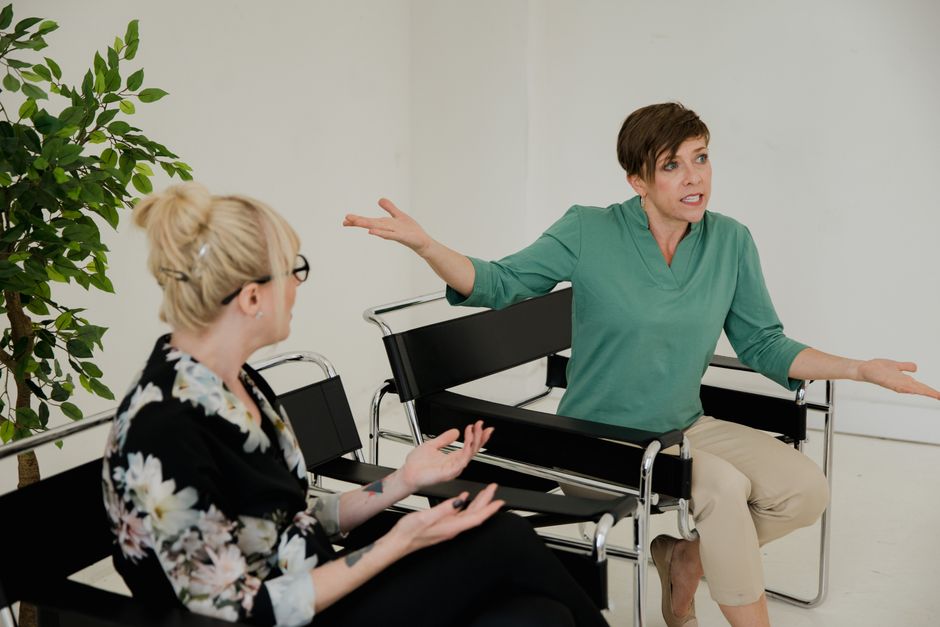
Most sales coaching programs fail before they gain traction — not because the methodology is wrong, but because of avoidable execution errors. Spot these mistakes early and you get a program that shifts behavior. Miss them and you burn budget.
The Five Most Common Pitfalls
1. Treating it as a one-time event. Sales coaching is a continuous process, not a seminar.4 Commit to a 12-month minimum. Embed coaching reviews into quarterly planning — not just onboarding week.
2. Skipping manager preparation. Coaches who lack active listening or structured feedback skills damage rep trust directly. Nearly 60% of organizations cite rep accountability as their top barrier to effective sales development — a problem that starts with the coach, not the rep.1 Certify managers before launch, not after the first session goes sideways.
3. Measuring everything. Tracking 15 metrics dilutes focus for everyone. Choose 3–5 — quota attainment, win rate, pipeline hygiene — and review them on a consistent cadence.7 More signals without more action is just noise.
4. Coaching only low performers. Top reps disengage when development stops. Coaching high performers toward leadership paths or advanced skills turns them into program advocates — and keeps your best people from quietly updating their LinkedIn.
5. Using a one-size-fits-all style. Reps carry different preferences and blind spots.9 Run a brief personality or coaching-preference assessment before the first session. Tailor your approach from day one and you cut defensiveness before it has a chance to form.
Frequently Asked Questions About Sales Coaching
A sales coach observes a rep’s activity — calls, emails, live meetings — then delivers structured feedback on skill execution, sets measurable improvement goals, and holds the rep accountable over time. The role is distinct from a sales manager’s: a manager inspects performance; a coach builds capability. As FranklinCovey CEO Paul Walker puts it, "Telling reinforces dependency; coaching develops capability." 1 Internal coaches are usually sales managers. External coaches bring specialized expertise or an unbiased perspective when a specific performance challenge calls for it.
Is sales coaching the same as sales training?
No. Training is an event — it delivers knowledge to a group at a point in time. Coaching is a continuous, personalized process aimed at lasting behavior change for the individual.2 Nearly 60% of organizations cite reps failing to apply what they learned as their top barrier to effective sales training.1 That application gap is exactly what ongoing coaching is designed to close.
Is sales coaching the same as mentoring?
No. Mentoring is longer-term, career-focused, and often peer-based. Coaching is shorter-term, skill-focused, structured, and performance-driven. It works by drawing out a rep’s own potential rather than transferring accumulated wisdom — or, in John Whitmore’s words, "helping them to learn rather than teaching them." 5
Get Started With Sales Coaching Today
Starting a coaching program does not require a company-wide rollout. Pick one team, one manager, and run the model for 30 days before you scale anything.
Here is a sequence that generates traction quickly:
- Choose a pilot team. One department with a motivated manager is enough to produce a real-world case study — one you can take to leadership with actual numbers.
- Pick your early champion. Your most coachable rep — not necessarily your top performer — will show quick wins that shift the culture before skeptics have time to dig in.
- Block two hours per week per manager for structured coaching sessions in month one. As reps begin to self-correct and peer coaching takes hold, that time investment compounds rather than grows.
- Bring in outside expertise. A coaching specialist designs a program calibrated to your sales process and team size — and consulting costs are typically offset by the first quarter’s performance lift. Companies with a strong coaching culture report a 51% increase in revenue.3
- Elevate Your Sales Team with Powerful Sales Coaching — https://www.franklincovey.com/blog/elevate-your-sales-team-with-powerful-sales-coaching ↩
- Sales Training vs Sales Coaching: Is there a difference? — https://www.integritysolutions.com/blog/sales-training-vs-coaching ↩
- Key benefits of sales coaching and how to coach effectively — https://www.avoma.com/blog/the-benefits-of-sales-coaching ↩
- Sales Coaching Training | How Effective Coaching Drives Sales Performance | Richardson — https://www.richardson.com/sales-resources/sales-coaching ↩
- Sales Coaching: A Complete Guide to Types, Benefits, and… — https://federicopresicci.com/blog/sales-coaching/sales-coaching-roadmap-to-excellence ↩
- How to Measure Sales Coaching Effectiveness: Metrics That Matter | Aviso Blog — https://www.aviso.com/blog/measure-sales-coaching-effectiveness-metrics ↩
- How do you measure the impact of sales coaching? — https://www.unboundgrowth.com/blog/how-do-you-measure-the-impact-of-sales-coaching ↩
- How to measure sales coaching effectiveness — https://www.salesenablementcollective.com/how-to-measure-sales-coaching-effectiveness ↩
- 5 Common Sales Coaching Errors and How to Avoid Them — https://trainingindustry.com/articles/sales/5-common-sales-coaching-errors-and-how-to-avoid-them ↩