AI Tools for Sales Rep Productivity: A Systemic Solution to Reclaim Selling Time

TL;DR. Your reps aren’t underperforming — the system they work inside is. Research shows sales reps spend only about 28-30% of their week on activities that actually generate revenue; the rest gets absorbed by CRM entry, manual qualification, and follow-up coordination1. That’s not a motivation problem. It’s a structural one, and it’s why 82% of sales leaders who adopted AI report measurable productivity gains once admin work moved off reps’ plates2. Automating the non-selling 72% is the fastest lever a sales leader has3.
Why Sales Rep Productivity Is a Systemic Problem, Not an Individual One

Low selling time isn’t a motivation problem — it’s an architecture problem built into how sales workflows are designed. Multiple independent studies converge on the same number: reps spend roughly 28-30% of their week on actual selling. The rest gets absorbed by administrative work that has nothing to do with rep willpower or skill^41.
Forrester’s activity study draws on over 28,000 reps across 150+ companies in North America, EMEA, and Asia-Pacific. It found that only 23% of a rep’s time goes to direct selling, while non-core internal tasks — expense reports, travel planning, cross-functional coordination — eat up 27%3. That’s not one outlier company. That’s a pattern spanning industries and geographies, and that pattern is the signature of a system-level bottleneck, not an individual-capability gap.
The remaining hours go to a predictable list: CRM data entry and pipeline updates (17% of the week), account research and call prep (14%), internal meetings (15%), email triage (14%), and scheduling logistics (12%)1. None of that produces revenue directly. A rep working a standard 40-hour week loses the equivalent of 37 selling weeks a year to this non-selling load. For a 20-rep team, that’s 740 weeks of selling time burned annually1.
As Forrester’s Phil Harrell puts it, sales leaders have historically tried to fix this "based largely on what worked at a prior company — or by using anecdotal evidence" rather than data on where time actually goes3. That’s the real failure: treating a workflow-design problem as a coaching problem.
The CRM is where this breakdown becomes visible — empty fields, stale pipeline, data nobody trusts. Play2sell SalesOS’s Leads module addresses it by capturing rep activity through integration rather than manual entry, so the system gets accurate data without asking reps to become typists.
Learn more in our complete guide: What is a Sales Operating System: the loop that transforms results.
Related reading: sales rep awards.
What Tasks Can AI Automate in Your Sales Workflow?
AI automates four categories of sales work: prospecting, lead qualification, CRM data capture, and follow-up sequencing — the exact tasks that eat the 72% of a rep’s week that produces zero revenue1. These aren’t edge-case automations. They’re structural fixes to a time-allocation problem that has resisted a decade of training budgets and headcount additions.
Here’s what each category looks like in practice:
- Prospecting and list-building. AI agents monitor job postings, funding rounds, technology changes, and executive moves to flag companies entering a buying window. They then build verified contact lists automatically — work that used to consume hours of manual LinkedIn and database searching5.
- Lead qualification and scoring. Static point systems treat a pricing-page visit the same as a whitepaper download. AI models instead weigh actual behavioral and intent signals to predict conversion likelihood6.
- CRM logging and data capture. Event-driven capture writes call logs, emails, and proposal creation to CRM fields automatically, with no manual entry from the rep7.
- Follow-up sequencing and scheduling. AI coordinates next steps and books outreach based on triggers like response speed, document access, or stakeholder movement — not a rep’s memory8.
The payoff is measurable: teams running predictive lead scoring report 20–30% lifts in conversion, according to Tommaso Maria Ricci’s 2026 analysis of AI sales rollouts8. None of this requires reps to become better typists. It requires redesigning where the data comes from — which is precisely the gap Play2sell SalesOS’s Leads module closes by capturing pipeline events upstream of the rep.
How Reclaiming Selling Time Unlocks Strategic and Relationship-Building Wins

Reclaiming selling time only matters if reps redirect it toward work a machine cannot do: diagnosing a buyer’s real constraints, negotiating terms, and building the executive relationship that survives a bad quarter. Time is the input; judgment is the output. That output only shows up when the hours are actually freed, not just reshuffled.
The gap is wider than most sales leaders assume. Reps burn roughly 72% of a 40-hour week on research, CRM updates, internal meetings, and logistics. Only 11.2 hours go to active selling, according to Forrester’s Activity Study of 3,031 reps, cited by Salesmotion, 20251. HubSpot’s 2025 research found 83% of sales professionals say AI-driven personalization frees them to engage more substantively with prospects8.
What happens with the reclaimed hours is the structural question. Gartner’s 2025 survey of chief sales officers found organizations giving sellers AI-enabled next-best-actions were 2.6 times more likely to achieve commercial growth8. Strategy and discovery scale — typing faster doesn’t.
| Freed-up hours spent on | Revenue effect |
|---|---|
| Discovery, negotiation, account planning | Direct, per Gartner 20258 |
| CRM entry, status chasing | None, per Salesmotion 20251 |
This is why reclaiming time can’t live inside the CRM layer itself — it requires a system that captures events automatically. Play2sell SalesOS’s Leads module routes and qualifies without manual entry, so the hours it returns to reps go straight into account strategy and retention conversations, not another dashboard to babysit. The next step is auditing where your team’s week actually goes before you buy another tool.
What AI Sales Tools and Technologies Are Available in the U.S. Market?
The U.S. AI sales tools market splits into four functional categories: CRM-layer intelligence, sales copilots, lead intelligence platforms, and training/engagement systems. Each solves a different piece of the productivity gap. None replaces the underlying operating rhythm your team runs on.
The four categories
| Category | What it does | Example tools |
|---|---|---|
| AI CRM companions | Adds predictive scoring and automation on top of existing CRM data | Salesforce Einstein, priced $25–$500/user/month 9 |
| Sales copilots | Transcribes calls, extracts insights, recommends next steps | Gong, Chorus.ai, custom-priced 10 |
| Lead intelligence | Automates list-building and intent detection | ZoomInfo, starting near $15,000/year 10 |
| Training & engagement | Uses AI practice and gamified incentives to drive adoption | Behavior-engine platforms layered above CRM 11 |
Most U.S. sales orgs already own tools from the first three categories. In 2025, 87% of sales organizations reported using some form of AI in their process, according to Salesforce’s State of Sales report 8. Yet that same report found sellers still spend roughly 60% of their working hours on non-selling tasks 8. Owning intelligence layers didn’t fix the adoption problem underneath them. The fourth category — training and engagement systems — exists precisely because reps don’t adopt new workflows just because leadership bought new software.
How Should You Implement AI in Your Sales Team?

Implementing AI in sales works when you treat it as a four-stage sequence — diagnose, select, train, measure — rather than a tool purchase. Skip the diagnosis and you’ll buy AI that automates the wrong bottleneck. Skip training and reps will shelve it within weeks, the same way they shelved the CRM.
A four-step rollout sequence
- Diagnose. Map exactly where non-selling time goes before you evaluate a single vendor. A sales enablement veteran who built AI rollouts for thousands of sellers at Cisco put it plainly: the most overlooked stakeholder in any AI implementation is the seller who has to actually use it12. Forrester’s studies across 28,000+ reps found only 23% of time goes to actual selling3. Find your version of that number first.
- Select. Match the tool to the bottleneck. CRM friction, slow lead qualification, and lead distribution lag each demand different capabilities. Buying based on features instead of the specific drag point is why the average team now runs 13 tools and still leaks pipeline13.
- Train. Static LMS content doesn’t build confidence. Guided, AI-driven roleplay against real sales scenarios does — onboarding reps through practiced conversation rather than passive modules changes adoption outcomes.
- Measure. Track CRM accuracy, call volume, and selling-time share. Then correlate those adoption metrics to pipeline movement and quota attainment, not just usage logs — organizations that distinguish adoption from actual business value catch failed rollouts earlier14.
For sales organizations wrestling with exactly this sequence, this is the structural rationale behind Play2sell SalesOS’s Leads module: it removes the CRM-entry bottleneck at the diagnosis stage by capturing events automatically, so the training and measurement stages start from clean data instead of fiction.
The next concrete step: run the time-allocation audit this week, before you evaluate a single vendor.
How Does AI Transform Lead Qualification and Personalized Engagement?
AI transforms lead qualification by replacing static point systems with models that score fit, behavior, and intent together, then rank every lead by real likelihood to close — so reps stop guessing which call to make first. Traditional scoring assigned the same value to a pricing-page visit and a top-of-funnel form fill. That meant reps chased leads that were never going to convert6. Modern models analyze behavioral and intent signals in real time, producing a far more accurate read on conversion likelihood6.
That shift also compresses the qualification cycle. Only about 2% of a market is actively buying at any moment, and AI hands reps that narrow list directly instead of forcing them to sort through everyone5. Routing engines then pre-screen leads and assign them to the rep statistically most likely to close, cutting the round-robin delay that lets hot leads go cold6.
Personalization scales the same way. AI drafts tailored messaging per segment, and dynamic email personalization has been linked to a 44% lift in generated leads and closed deals5.
What Are the Biggest Risks and How to Address Sales Team Resistance to AI?
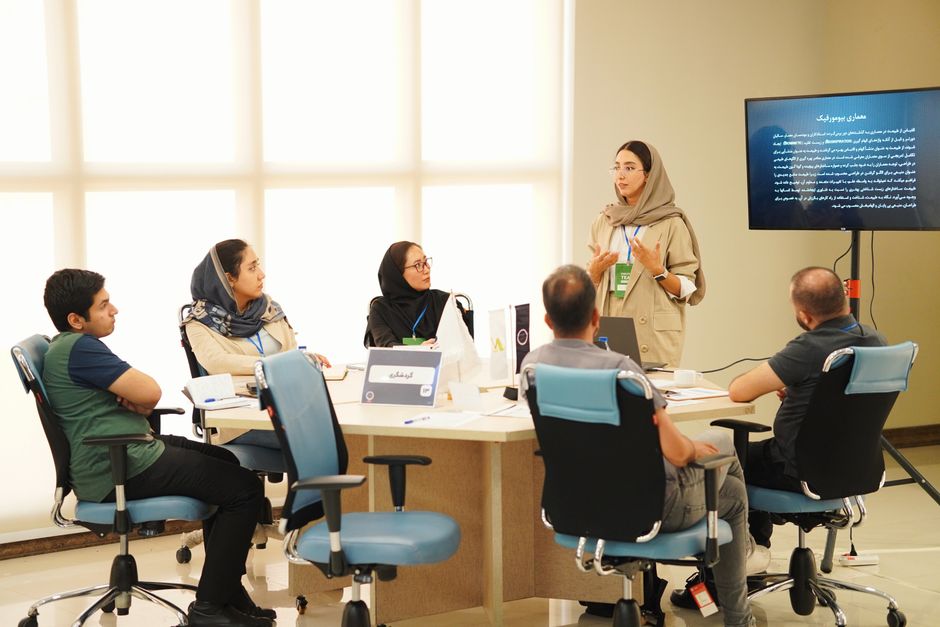
The biggest risk isn’t that AI fails technically — it’s that reps quietly resist it, and leaders mistake silence for buy-in. More than half of U.S. workers (52%) worry AI threatens their jobs, according to Pew Research, 202415, and 45% of CEOs told Kyndryl, 2024 that employees are reluctant or outright hostile toward AI tools15. That resistance signals a system design failure, not an attitude problem.
| Risk | What’s actually happening | Fix |
|---|---|---|
| Fear of replacement | Reps treat new tools as a roadmap to their own obsolescence15 | Message time saved, not headcount cut |
| Adoption friction | The average rep already juggles 8 tools; 42% feel overwhelmed and are 45% less likely to hit quota1 | Add a layer that reduces clicks, not one more login |
| Skill gaps | Reps trained on legacy workflows resist new motions when training stays passive | Guided practice embedded in real deals, not a static LMS module |
This is precisely why Play2sell SalesOS captures events automatically instead of asking reps to adopt yet another system. It’s also why RolePlay replaces static courses with AI-guided practice reps actually finish.
How Should You Measure the ROI of AI Investment in Sales Productivity?
Measuring ROI on AI sales investment means tracking three things together: time reclaimed per rep, the quality of pipeline that time produces, and revenue per rep — never tool adoption alone. A credible baseline matters first. Without a pre-AI measure of ramp time, conversion rates, or hours spent selling, you cannot attribute any improvement to the tool itself14.
- Time-to-productivity. Track how fast new hires reach full quota capacity. Organizations giving reps AI-enabled next-best-actions were 2.6 times more likely to post commercial growth, per Gartner’s 2025 survey of chief sales officers8.
- Pipeline quality. Measure lead-to-opportunity conversion, deal size, and close rate — not call volume. Daily AI users are twice as likely to exceed quota than non-daily users, according to LinkedIn’s 2025 research16.
- Revenue per rep. Segment reps by AI usage and compare revenue generated before and after adoption. Top adopters often show 2–3x the revenue performance of laggards17.
As one ROI framework puts it, the goal is "ensuring every sales tech AI investment is driving meaningful, measurable results"17. That’s exactly the discipline Play2sell SalesOS bakes into its RolePlay and Pay modules, turning ramp-up speed and commission payout into auditable, trackable numbers from day one.
What Is the Future of Sales Reps as Autonomous AI Agents Evolve?

Autonomous AI agents will take over full prospecting and qualification sequences. Reps will not disappear, though — they will shift into roles no model can fill: negotiation, strategic account judgment, and advocacy when a deal gets complicated. Gartner’s November 2025 forecast projects AI agents will outnumber human sellers 10:1 by 2028, yet fewer than 40% of sellers expect those agents to improve their own productivity. That gap tells you the agents are handling volume, not judgment1.
You can already see that split in how practitioners describe the shift. One commentator argues sales involves "numerous hidden stakeholders with unobservable priorities," along with trust built over time — something AI still cannot replicate18. The responsibility of generating pipeline isn’t disappearing. What changes is the quality of work a rep does, trading degrading grind for consultative selling18.
What this means for leadership
Sales leaders will increasingly manage a hybrid workforce — agents running sequences, humans running relationships. Deciding which work flows to each is now a management discipline, not a tooling decision. Play2sell SalesOS’s RolePlay module prepares reps for exactly this higher-judgment work: AI-guided practice on real deal scenarios, so the human half of the hybrid team is actually ready to close when the agent hands off a qualified conversation.
Frequently Asked Questions
No, AI tools automate administrative work — CRM updates, research, follow-up reminders — not judgment, negotiation, or trust-building. Reps spend only 28–30% of their week actually selling, per Salesforce’s State of Sales research cited in 2026 analysis4, and most of the lost time is mechanical, not strategic. Analysts tracking AI’s role in sales argue the technology removes the excuse for fewer good conversations; it doesn’t remove the rep’s accountability for the relationship19. That’s exactly the gap our Leads module targets: it routes and qualifies leads without asking the rep to type a thing.
How long until we see ROI from AI sales tools?
Most teams see early productivity signals within 30–60 days. Fuller ROI tends to show up around six months, once adoption scales and processes stabilize. Yet only 31% of C-suite leaders expect to measure AI ROI within six months at all, per a 2026 executive guide20 — a sign that most companies measure late, if they measure at all. Build your baseline (time spent, error rates, conversion) before rollout, or any gain you report will be unattributable14.
Can AI tools integrate with our existing CRM?
Yes. The category built for this problem sits above your CRM rather than replacing it, capturing events via API or webhook so your Salesforce or HubSpot instance stays intact while manual data entry disappears.
What happens if reps don’t adopt the new tool?
Adoption failure is the single biggest cause of wasted AI spend. Sellers resist tools that feel like surveillance or extra typing, and without simple, intuitive design, adoption stays weak11. The fix is structural: train managers first, communicate the time saved, and let early champions model usage before you mandate it11.
| Risk | Root cause | Fix |
|---|---|---|
| Low adoption | Tool feels like more work, not less11 | Manager-led training, peer champions |
| Fear of job loss | 52% of U.S. workers worry about AI’s impact on jobs, Pew Research, 202415 | Reframe messaging: support, not replacement15 |
| No measurable ROI | No baseline set before rollout14 | Track time/cost metrics pre- and post-launch |
Next Step: Audit Your Sales Operation and Build Your AI Roadmap
The next step is a time audit, not another tool purchase. Shadow three to five reps across a full week and log, hour by hour, where their time actually goes. Forrester’s activity studies, drawn from more than 28,000 reps across 150+ companies, found that only 23% of a rep’s time goes to actual selling, while roughly 27% is lost to low-value internal tasks like expense reports and travel planning3. Other research shows CRM data entry and pipeline updates alone consume 17% of a typical selling week1. You cannot fix what you haven’t measured, and most sales leaders manage this problem by instinct rather than data.
Once you know where the hours leak, map the bottleneck to a specific fix instead of a generic AI subscription:
- CRM friction, empty pipelines, or leads sitting unrouted — this is a data-capture problem. Play2sell SalesOS’s Leads module distributes leads by performance and captures activity through integration, so reps stop typing and pipeline data starts reflecting reality.
- Slow ramp-up or onboarding that drags for months — this is a practice problem. RolePlay replaces static LMS content with AI-guided rehearsal grounded in real sales scenarios.
- Flat engagement, a leaderboard nobody checks past week two — this is a rhythm problem. Gamification runs points, verified badges, and segmented rankings with governance built in, not a one-off incentive campaign.
From there, the concrete move is a 90-day pilot: a defined cohort, clear baseline metrics, and a scheduled diagnostic session with your enablement or RevOps team — before you commit to a full rollout.
## Sources- https://salesmotion.io/blog/sales-rep-time-selling — https://salesmotion.io/blog/sales-rep-time-selling ↩
- https://speakwiseapp.com/blog/sales-productivity-statistics — https://speakwiseapp.com/blog/sales-productivity-statistics ↩
- https://www.forrester.com/blogs/use-science-to-improve-sales-productivity — https://www.forrester.com/blogs/use-science-to-improve-sales-productivity ↩
- https://www.hockeystack.com/blog-posts/ai-tools-for-lead-generation — https://www.hockeystack.com/blog-posts/ai-tools-for-lead-generation ↩
- https://salescloser.ai/blog/how-ai-tools-revolutionize-lead-scoring-for-sales-teams — https://salescloser.ai/blog/how-ai-tools-revolutionize-lead-scoring-for-sales-teams ↩
- https://www.momentum.io/blog/ai-sales-tools — https://www.momentum.io/blog/ai-sales-tools ↩
- https://www.tommasomariaricci.com/blog/ai-for-sales-guide — https://www.tommasomariaricci.com/blog/ai-for-sales-guide ↩
- https://monday.com/blog/crm-and-sales/enterprise-ai-tools-for-b2b-sales-workflows — https://monday.com/blog/crm-and-sales/enterprise-ai-tools-for-b2b-sales-workflows ↩
- https://www.prezent.ai/blog/best-b2b-ai-tools — https://www.prezent.ai/blog/best-b2b-ai-tools ↩
- https://www.naw.org/why-sales-reps-resist-technology-and-what-distributors-can-do-about-it-leveraging-the-power-of-ai-26 — https://www.naw.org/why-sales-reps-resist-technology-and-what-distributors-can-do-about-it-leveraging-the-power-of-ai-26 ↩
- 4-Step Framework for Successful AI Rollout — https://www.sellmethispen.ai/blog/4-step-framework-for-successful-ai-rollout-take-from-enterprise-sales-enablement-expert ↩
- Top 12 AI Sales Tools to Boost B2B Sales Performance in 2026 — https://www.default.com/post/ai-sales-tools ↩
- How CEOs Should Measure the Business Value of AI — https://chiefexecutivescouncil.org/how-ceos-should-measure-the-business-value-of-ai ↩
- https://www.shrm.org/enterprise-solutions/insights/how-to-engage-employees-ai-without-triggering-fear — https://www.shrm.org/enterprise-solutions/insights/how-to-engage-employees-ai-without-triggering-fear ↩
- https://www.fyxer.com/blog/most-popular-ai-tools-for-sales-reps — https://www.fyxer.com/blog/most-popular-ai-tools-for-sales-reps ↩
- https://humantic.ai/blog/how-to-measure-the-roi-of-ai-sales-intelligence-tools — https://humantic.ai/blog/how-to-measure-the-roi-of-ai-sales-intelligence-tools ↩
- AI in Sales: Human Reps Remain Essential — https://www.linkedin.com/posts/elliotoco_will-ai-replace-sales-reps-i-asked-dan-activity-7434998206050045952-u4xQ ↩
- How to Measure and Improve Sales Productivity in 2026 — https://www.everstage.com/sales-productivity/sales-productivity-statistics ↩
- https://salessense.co.uk/will-ai-replace-salespeople — https://salessense.co.uk/will-ai-replace-salespeople ↩
- https://witness.ai/blog/how-to-measure-ai-roi — https://witness.ai/blog/how-to-measure-ai-roi ↩