Sales Roleplay: The System That Transforms Team Performance Into Measurable Revenue Growth

TL;DR. Sales roleplay is a structured simulation—run with a manager, a peer, or an AI-driven buyer—where a rep rehearses a real selling moment before it happens live. The stakes are concrete: a Mentor Group case study found that consistent, structured roleplay practice drove a 37% average performance increase and a 28% improvement in win rate1. Reading a battlecard doesn’t build that skill. Static training content doesn’t transfer to live calls without repeated, calibrated simulation and feedback. That’s a program design problem, not a motivation problem.
What Is Sales Roleplay and Why It’s Essential for Sales Development

Sales roleplay is a structured simulation in which a rep rehearses a real selling moment — a cold-call opener, a price objection, a stalled negotiation — against a buyer stand-in, under conditions realistic enough to expose the gaps a live prospect would find first. One person plays the buyer, working from a persona, a goal, and a set of objections. The other plays the rep, pushing toward a defined outcome such as holding price or booking a next step1. The format isn’t new — it traces back to a 1987 Harvard Business Review framework — but the mechanism it exploits hasn’t changed: reps retain what they execute, not what they hear1.
That distinction matters because most sales training is still built to be absorbed, not performed. Reading a battlecard or watching a shadowed call is passive. Roleplay forces the rep to produce the words out loud, under pressure, and adjust in real time — the same deliberate-practice loop athletes use to build motor skill2. The National Training Laboratories model estimates retention from active practice at roughly 75%, against about 5% for lecture and 10% for reading, though researchers debate the precision of those exact figures1.
The gap this closes is structural, not personal. A static LMS module delivers content once. It can’t supply the repetition and calibrated feedback required to convert knowledge into behavior under live pressure3. Teams that build roleplay into their recurring training cadence report a 37% average performance increase, a 28% improvement in win rate, and 30% faster rep ramp, according to a Mentor Group case study1. That’s not a training preference — it’s evidence that skill transfer requires a system, not a reminder to "practice more."
For sales leaders accountable for ramp time and pipeline consistency, this reframes roleplay from a soft-skills nicety into infrastructure. Without it, the knowledge-to-behavior conversion simply doesn’t happen at scale.
Learn more in our complete guide: What is a Sales Operating System: the loop that transforms results.
Related reading: best sales roleplay software 2026.
How to Structure and Plan a Roleplay Session: Script, Objectives, and Roles
A roleplay session gets its structure from four moves: define one measurable objective, script the buyer’s resistance points in advance, assign roles before the exercise starts, and lock in a pass bar the debrief can point to. Skip any of these four, and the session turns into a conversation instead of a drill1.
- Set a single objective. Name one moment to fix — recovering from "we’re not ready to buy," for instance — rather than chasing a vague goal like "practice objections." A written setup should name the buyer, state what they want, specify what they will refuse, and define what counts as a win4.
- Script the buyer just enough. Give the buyer 2–3 objections and a hard limit they will not concede, plus a decision trigger that tells the seller when the scenario ends. Full ad-libbing produces noise; a memorized script produces stiffness5.
- Assign roles transparently.
| Role | Owns |
|---|---|
| Seller | Driving toward the revenue outcome |
| Buyer | Creating realistic friction and holding the limit |
| Observer | Scoring against the agreed rubric |
A manager playing buyer tends to coach strategy instead of testing it; a peer makes a tougher, more realistic prospect6. 4. Lock the evaluation criteria first. Write the pass bar before the session starts. That way the debrief argues evidence, not opinion, and the team knows exactly when it’s time to rotate in a harder scenario7.
This is exactly the discipline Play2sell SalesOS RolePlay enforces automatically for every rep, every run.
What Sales Scenarios Should You Simulate? Four High-Value Use Cases Across the Funnel

Four scenarios cover most of the funnel where reps freeze in live calls: prospecting, objection handling, negotiation, and closing. Each one deserves a dedicated, repeatable drill — not a single generic "sell me this pen" session. That’s because each scenario tests a different failure point.
| Scenario | What it tests | Why it matters |
|---|---|---|
| Prospecting (cold outreach / inbound triage) | Discovery questions and qualification logic before advancing a lead | Reps who rehearse the opener earn the first 30 seconds instead of losing it 1 |
| Objection handling | Composure on "not in budget," "happy with current vendor," "too expensive" | These moments account for the majority of stalled deals. A rep who has rehearsed the pushback doesn’t freeze live 5 |
| Negotiation | Holding terms, managing discount requests, unblocking procurement | Most reps learn this only by failing on a live, high-value deal — the exact gap structured practice is meant to close 6 |
| Closing | Soft closes (next-meeting confirmation) and hard closes (signature, budget release) | The highest-anxiety moment in the cycle, and typically the one rehearsed least 6 |
What unites all four scenarios is diagnosability. A manager can see, scenario by scenario, exactly where a rep’s technique breaks — and that’s a system fix, not a pep talk.
Inside Play2sell SalesOS, this is what the RolePlay module exists to structure: calibrated scenarios, tracked over time, tied to the ramp curve — instead of one nervous session nobody repeats.
How to Run a Roleplay Exercise: A Step-by-Step Execution Guide
A well-run roleplay exercise follows three tight phases — pre-session setup, in-session practice, and post-session reset — each with its own timebox and rule. Skip the structure and you get an unscripted conversation, not a drill that builds a specific skill4.
- Pre-session (5 minutes): Distribute the scenario brief and assign roles. Define the seller’s single objective — book a follow-up, hold price, surface the real blocker — and give the buyer their objections in advance. The rep should never see the buyer’s limits ahead of time4. State the win condition up front so the debrief later argues over evidence, not opinion4.
- In-session (10–15 minutes): Run the scenario in real time. Pause only to clarify a rule, never to coach. Interrupting to correct a rep mid-attempt short-circuits the exact recovery instinct the drill is meant to build6. This is also why roleplay outperforms lecture-based training in the first place: people retain roughly 75% of what they actively practice, versus about 5% from being told the answer1.
- Post-session (5 minutes): Call time, have the buyer explicitly drop the persona, and give the group thirty seconds of silence before feedback starts. Reps who enter the debrief still keyed up from the exercise tend to defend their choices instead of hearing them. Resetting first is what makes the feedback loop land2.
Run this cadence weekly and calendar-block it. Managers who diagnose a weak team usually find roleplay simply wasn’t on the calendar at all8. Rotate scenarios by difficulty so a rep advances to a harder buyer only after clearing the current bar twice in a row5 — that’s the discipline a live session needs, and it’s the same discipline Play2sell SalesOS’s RolePlay module runs automatically, scoring each attempt so managers see readiness without booking the room.
How to Give Effective Feedback and Assess Roleplay Performance

Effective roleplay feedback is a structured judgment on observable behavior, not a general impression — it names what happened, its effect on the deal, and asks the rep to solve it. Two managers grading the same call differently is the norm, not the exception. Even one manager scores inconsistently between a Monday and a Friday, and that inconsistency is exactly what erodes a rep’s trust in the whole training program9.
The fix is behavioral specificity. "You paused after the objection before recovering" is a fact the rep can act on. "You seemed unprepared" is a verdict about character, and reps stop listening the moment feedback turns judgmental.
Score it, don’t just discuss it
Run every session against a short rubric — 3 to 4 dimensions such as discovery questions asked, objection rebuttal quality, tone and pace, and next-step clarity — scored below target / at target / exceeds. Weighted rubrics tied to a known framework (Situation, Problem, Implication, Need-payoff) work well because each score maps to a specific selling behavior, not a vague overall grade10.
Close with a forward-looking question — "What would you do differently next time?" — instead of an instruction. That single shift moves the rep from compliance to self-coaching, a behavior no scoring system can manufacture on its own.
This is precisely the governance gap Play2sell SalesOS RolePlay is built to close. Every practice run gets scored against the same rubric automatically, so coaching stays consistent rep to rep and week to week — not dependent on which manager happened to be in the room.
How Often Should You Run Roleplay? Ideal Frequency and Integration Into Training Routine
The right cadence is weekly or biweekly roleplay — 30 to 45 minutes, two to three scenarios — never a quarterly training day. Skill retention depends on spaced repetition. Without reinforcement, reps forget roughly 70% of new training within a single day5. A once-a-quarter binge can’t fight that decay curve. Only a recurring rhythm can.
One sales manager scaled a service company from $1,300,000 to $10,200,000 in 19 months, and he attributes the growth to a non-negotiable, calendar-blocked 90-minute roleplay session every week. Consistency, in his framing, is a scheduling decision — not individual initiative8. Weekly practice also builds confidence that holds up when real pressure arrives, because practice frequency directly predicts performance under stakes2.
| Cadence | Outcome |
|---|---|
| Quarterly training day | High forgetting, brittle confidence |
| Weekly/biweekly, 30–45 min | Compounding retention, calm under pressure |
The strongest programs also close the loop. When a rep stumbles on an objection in a CRM-logged forecast call, that exact objection becomes next week’s scenario. A new scenario only rotates in once reps clear the pass bar twice in a row4.
This is precisely the gap Play2sell RolePlay closes — AI-guided practice tied to real deal context, run on a rhythm instead of a once-a-year event that nobody remembers by March.
How AI and Digital Tools Scale Roleplay: Voice, Chat, and Automated Evaluation
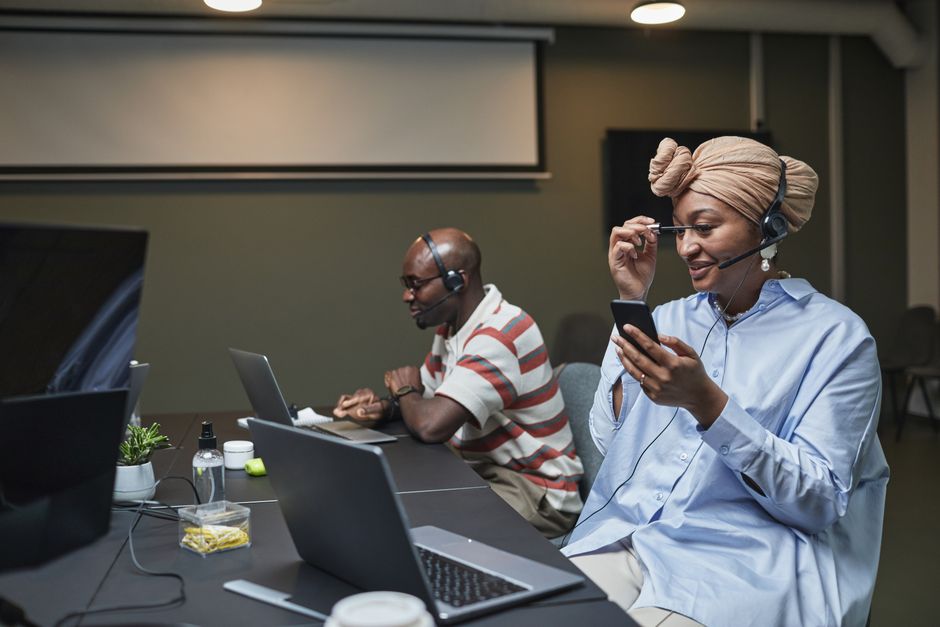
AI-driven roleplay platforms scale practice by replacing the human buyer with a voice or chat-based avatar that objects, stalls, and scores the rep in real time. No manager or peer has to sit in the room. That single shift turns roleplay from a scheduling headache into a system every rep can run daily.
The operational math explains why this matters. In-person roleplay for a ten-person team costs roughly half an hour per rep once you add setup, the run, and feedback — about five hours of manager time total, and a full day once the team hits twenty reps 9. AI-powered software removes that ceiling: a rep can run the same scenario five, ten, or twenty times until they hit the required standard, a volume no human coach can supply by hand 9.
The feedback is also harder to dismiss. Automated speech analysis scores tone, pacing, sentiment shifts, and stakeholder engagement cues against proven benchmarks, which reduces the bias that comes from "whoever’s in the room" grading the call 3. That objectivity matters because human scoring is inconsistent by nature. Two managers grade the same call differently, and even one manager scores differently on a Monday than a Friday. Over time, that inconsistency erodes rep trust in the training program 9.
| Format | Scale | Feedback source | Main limitation |
|---|---|---|---|
| Live roleplay (manager/peer) | Low — bound by calendar hours | Subjective, varies by grader 9 | Scheduling friction, drops in half a day at 20 reps 9 |
| AI voice/chat roleplay | High — unlimited repetitions on demand | Automated, benchmarked scoring 3 | Can flatten dialogue realism if not tuned 7 |
The last piece is the paper trail. Every session gets captured as a transcript, which lets enablement leaders spot patterns across the whole team. They can discover, for instance, that half the reps stumble on the same objection, and route coaching at the gap that actually exists — not the one someone assumes exists 11.
This is precisely the failure mode Play2sell SalesOS’s RolePlay module is built to close: instead of a training curriculum that lives in an LMS nobody finishes, reps get AI-guided practice tied to real sales context, with governance over what gets scored and how. If your team’s roleplay currently depends on a manager’s open calendar slot, that dependency — not rep effort — is the system problem worth fixing first.
What Are the Most Common Mistakes When Running Sales Roleplay?
Most sales roleplay programs fail for the same handful of structural reasons — not for lack of effort. Three mistakes do most of the damage: scripting the buyer too tightly, skipping feedback, and treating roleplay as a one-off event instead of a routine.
Over-scripting the buyer
When the person playing the buyer reads from a fixed script, the rep isn’t practicing selling — they’re practicing memorization. A real scenario needs a persona, a resistance level, and two to four objections the buyer can deploy in any order. The buyer’s limits stay hidden from the rep so the exchange stays unpredictable 4. That randomized, unscripted pushback is what actually stress-tests whether a rep can apply a standard response under real pressure 8.
Skipping or delaying feedback
A session without specific, actionable notes is rehearsal, not training. The operational drag of running roleplay — not the exercise itself — is why most programs quietly die within a few months 7.
Treating roleplay as a once-a-year event
Spaced repetition, progressive difficulty, and scenario variation are what convert practice into retained skill. A single annual session builds none of that 3. One sales leader who scaled a company from $1.3 million to $10.2 million in 19 months attributes part of that growth to a recurring, calendar-blocked 90-minute roleplay session — he treated consistency as a scheduling decision, not an individual one 8.
The pattern behind most of these failures is the same: they’re process gaps, not rep failures. A manager who runs roleplay once and calls it done is solving a system problem with an event. Play2sell SalesOS’s RolePlay module exists for exactly this gap — it turns practice into a governed, recurring routine with AI-guided scenarios and calibrated difficulty, instead of a training day nobody remembers by March.
How to Measure Roleplay’s Impact: Key Metrics and KPIs That Matter

Roleplay’s business impact comes into focus when you pair leading indicators (practice volume and skill acquisition speed) with lagging indicators (funnel velocity, close rate, and ramp time). The combination is what turns a training habit into a revenue argument you can bring to the board.
Leading indicators tell you whether the system is running at all: roleplay sessions completed per rep per quarter, scenarios cleared against a pass bar, and time-to-fluency on a new objection. You track that last one by comparing rehearsed language to what shows up in live CRM call logs3. Lagging indicators tell you whether it worked: time spent in the objection-handling stage of the funnel, close-rate lift for reps who completed a roleplay series versus a control group, and days-to-first-qualified-pipeline for new hires.
| Indicator type | Metric | What it signals |
|---|---|---|
| Leading | Scenarios completed per rep/quarter | Practice volume, program adoption |
| Leading | Time-to-fluency on new objection | Speed of skill acquisition |
| Lagging | Days-to-first-qualified-pipeline (new hires) | Ramp velocity |
| Lagging | Close-rate delta vs. control group | Revenue transfer |
Mentor Group’s data shows what a mature program can move: a 37% average performance increase, a 28% better win rate, and 30% faster ramp1. A separate report found 50% faster ramp-up and a 2x cut in coaching time per rep once structured practice replaced ad hoc sessions4.
Most teams skip the missing link: tagging transfer. When a rep overcomes in a live deal the exact objection they drilled weeks earlier, that outcome should get flagged in the CRM — not left to anecdote. Closing that gap is exactly what a system built above the CRM is meant to do. Inside Play2sell SalesOS, RolePlay logs which scenarios a rep has cleared, and Leads’ event capture lets you match that history against the deal stage where the objection actually appeared. Ramp and win-rate gains show up as auditable numbers instead of a manager’s impression.
Frequently Asked Questions
A structured roleplay session runs about 45 minutes: 5 minutes to brief the scenario, 10 to 15 minutes to run the conversation, and the rest split between live feedback and debrief6. That structure mirrors what practitioners recommend — a short setup, a short run, and most of the clock reserved for feedback. A session without specific, actionable notes is just rehearsal, not training7. Run one session per week, and a team of reps spends roughly three hours of collective time — modest against the fact that reps forget about 70% of new training within a day if it’s never rehearsed5.
Q: Can roleplay work for remote or hybrid teams?
Yes. Video conferencing with screen-share for scenario briefs is a proven substitute for in-person sessions, and it removes the scheduling friction that kills most peer-roleplay programs within a few months5. Simulators built for this go further: reps can rehearse a scenario five, ten, or twenty times on demand — a volume of repetition no human coach can supply by hand9. That matters because 91% of sellers say holding a buyer’s attention virtually is already hard7.
Q: What if a rep resists roleplay or gets defensive during feedback?
Frame it explicitly as a safe-to-fail environment: mistakes in practice cost nothing. Compare that to the four seconds after a hard question on a live call, where an invented answer can cost the deal4. Peer-led feedback often lands softer than manager correction, since a peer plays a more realistic, less cooperative prospect and the exchange feels like practice, not evaluation6. This isn’t a motivation problem to manage rep by rep — it’s a scheduling and structure problem. Fixing the system, not the individual, is what turns roleplay into a habit instead of a dreaded, one-off event8.
That’s exactly the gap Play2sell RolePlay is built to close: AI-guided practice with real sales context, so training happens on a rhythm the manager doesn’t have to babysit — instead of content sitting untouched in an LMS.
Moving From Sporadic Practice to Systematic Skill Building
Systematic roleplay dies at the scheduling stage, not the strategy stage. Most sales leaders already know weekly practice works — the gap is capacity. A manager running ten reps through a ten-minute session plus feedback loses roughly half a day per rep. A twenty-rep team burns an entire day just facilitating drills9. That math explains why so many roleplay programs collapse within a few months, even when reps and managers agree the exercise itself is valuable7.
AI-driven roleplay removes the trainer as bottleneck. A rep can run a scenario against an AI buyer five, ten, or twenty times until performance clears the bar — a volume no manager can supply by hand. Meanwhile, the system logs transcripts, scores objection handling, and surfaces skill gaps without waiting for a calendar slot9. That’s the mechanical shift that turns roleplay from an event into infrastructure: practice volume, rubric scores, and skill trends become data leadership can track against ramp and win-rate outcomes1.
This is precisely the gap Play2sell RolePlay is built to close: guided, AI-facilitated practice that runs without a dedicated facilitator, scores reps automatically, and logs outcomes so you can see which skill gaps are closing and which deals they’re affecting.
Your next step: pick one costly, recurring objection — pricing pushback is the usual suspect — and run a focused roleplay series on it for three to four weeks, tracking close rate or deal velocity before and after. If the lift is real, that’s your case for scaling roleplay from occasional event to permanent system. From there, a 20-minute walkthrough of how Play2sell RolePlay plugs into your existing workflow and ties practice data back to your CRM is the logical next conversation.
## Sources- Sales Role-Play Training: Best Practices + Checklist — https://www.pitchmonster.io/blog/master-sales-role-play-training ↩
- How Sales Manager Roleplay Training Turns Good Leaders Into Great Ones — https://www.exec.com/learn/sales-manager-role-play ↩
- 9 Sales Role Plays and Exercises That Boost Skills — https://www.highspot.com/blog/sales-role-play-exercises ↩
- https://www.pitchmonster.io/blog/12-sales-role-play-scenarios-to-sharpen-your-sales-team-skills — https://www.pitchmonster.io/blog/12-sales-role-play-scenarios-to-sharpen-your-sales-team-skills ↩
- https://kendo.ai/blogs/sales-role-play-scenarios — https://kendo.ai/blogs/sales-role-play-scenarios ↩
- https://www.zoomforth.com/blog/sales-role-play-scripts — https://www.zoomforth.com/blog/sales-role-play-scripts ↩
- https://blog.sendspark.com/sales-roleplay-training-methods-compared — https://blog.sendspark.com/sales-roleplay-training-methods-compared ↩
- 8 Tips To Use Roleplay To Improve Your Sales Team’s Performance — https://www.youtube.com/watch?v=WA3OxssUseY ↩
- 8 Best AI Sales Role-Play Software for Teams (2026) — https://www.pitchmonster.io/blog/top-8-best-tools-for-sales-role-plays-comparison ↩
- Role play self-assessment using SPIN Selling methodology with Feedbackfruits — https://feedbackfruits.com/activities/self-assessment-of-sales-role-play ↩
- AI Sales Role Play: How Managers Coach Smarter — https://www.highspot.com/blog/ai-role-play-sales-manager-training ↩