Best Sales Gamification Software: Platform Comparison & Selection Guide

TL;DR. Sales gamification software turns routine sales activities — logging calls, booking meetings, closing deals — into competitive, reward-driven experiences through real-time leaderboards, points, badges, and automated incentives.1 Organizations that adopt these platforms report conversion rate increases up to 7x and productivity gains as high as 50%.1
The category is broad. Platforms like Ambition, SalesScreen, Spinify, Centrical, SmartWinnr, and Plecto each win in different contexts — from enterprise contact centers to lean SMB teams. The right choice depends on team size, your CRM stack, and how mature your sales process already is.2
Here’s what most buyer guides don’t tell you: standalone gamification collapses fast. A leaderboard with no integration to your CRM, training, and compensation systems produces a two-week spike — then silence.2 The sections below cut through that pattern.
What Is Sales Gamification Software?

Sales gamification software layers game mechanics — points, badges, leaderboards, real-time competitions — directly onto a sales team’s daily workflow. Calls logged, meetings booked, and deals closed become visible, scored events that shape behavior3. The category sits between a CRM dashboard (numbers without motivation) and a generic productivity platform (motivation without sales-specific data). The goal is straightforward: make performance visible, make progress feel immediate, and channel the competitive instincts that already exist on every sales floor.
The appeal is data-backed. Organizations using sales gamification platforms report conversion-rate increases of up to 7x and productivity gains of as much as 50%1. Those are headline numbers — real-world results depend heavily on implementation — but they explain why adoption has accelerated across verticals from SaaS to real estate to financial services.
Why it works (and when it doesn’t)
The mechanism is psychological before it is technological. When a rep watches their name climb a leaderboard seconds after closing a deal, the brain’s reward system fires as strongly as any quarterly bonus4. Immediacy is what makes the difference. Bury that same achievement in a monthly spreadsheet, and you get a fraction of the behavioral response.
The category also has a well-documented failure mode: leaderboard-first gamification energizes the top three performers for about a week while quietly demoralizing everyone else2. Gartner has argued that effective gamification rewards getting better, not just hitting a number — and that the real opportunity is motivating the middle of the team, not the reps already at the top2.
The tools that hold up over time share a few structural traits: they track multiple metrics rather than a single KPI, they update in real time without manual rep entry, they work across remote, hybrid, and in-office environments, and they tie recognition to transparent rules the team can actually trust. Get those foundations right, and gamification becomes governance — not a gimmick that fades by week two.
Learn more in our complete guide: What is a Sales Operating System: the loop that transforms results.
Related reading: best sales roleplay software 2026.
Comparative Table: 6 Leading Sales Gamification Platforms

Six platforms dominate the sales gamification conversation in 2026. They split along a clear fault line: some are built for high-velocity sales floors with deep CRM integration; others serve enterprise contact centers or distributed field teams. The table below maps each platform to its real-world strengths — not its marketing copy.
| Platform | Best For | Key Strengths | Pricing Transparency |
|---|---|---|---|
| Play2sell | SMBs with simple sales processes | Lightweight, mobile-first, rapid deployment | Contact sales |
| Ambition | Mid-market teams needing deep performance data | Advanced analytics, coaching workflows, CRM-agnostic architecture | Public — from $45/user/month 2 |
| Centrical | Contact centers and inside sales teams | Multi-channel engagement, compliance tracking, gamification + performance management | Custom enterprise pricing 2 |
| SalesScreen | High-velocity sales floors with visual culture | Visual dashboards, TV-friendly leaderboards, peer-to-peer competitions, CRM integration | Partially public — from ~$25/user/month 2 |
| Spinify | Distributed teams and field sales | AI-generated competitions, real-time notifications, personalized avatars, mobile app | Partial — requires 15+ users; ~$4,500/year minimum 3 |
| Smartico | Large enterprises with complex reward structures | White-label flexibility, custom rule engine, enterprise scalability | Custom enterprise pricing |
What Each Platform Does Best
Ambition occupies the coaching-integrated tier. Its strength is tying gamification directly to manager workflows — coaching sessions, scorecards, and rep development plans sit alongside leaderboards rather than getting bolted on after the fact. For RevOps teams that need to correlate behavior data with performance outcomes, it’s a credible mid-market choice.2
Centrical targets enterprise contact centers, combining gamification mechanics with full performance management: interactive courses, rewards programs, internal competitions, real-time feedback, and recognition of excellence.5 If your environment is a large inside-sales or support floor with compliance requirements, Centrical’s depth is hard to match — but plan for custom pricing and a lengthy procurement cycle.
SalesScreen is purpose-built for the visual sales floor. It layers psychological segmentation into its incentive design — tailoring pathways to personality types like Achievers, Socialites, Explorers, and Killers — and pushes real-time updates to TV displays the moment a deal closes.6 The tradeoff: contests lock once they start, and users report integration reliability issues at scale.
Spinify offers breadth in game mechanics — over 250 visual designs across more than 20 distinct game modes — making it one of the most flexible options for teams running multiple simultaneous competitions.7 There is a hard entry floor, though: the standard plan requires a minimum of 15 users at $25/user/month on an annual contract, which puts the starting cost at roughly $4,500/year before any enterprise features are included.3
Play2sell takes the opposite approach. Mobile-first and lightweight, it suits smaller sales operations that need gamification running quickly without a multi-week CRM integration project. For teams still building out their sales stack, low setup friction matters more than deep analytics.
Smartico anchors the high-customization enterprise tier. Its rule engine lets organizations design reward logic that maps to complex compensation structures. Its white-label capability makes it a fit for companies that need the gamification layer to appear as part of their own product or internal tooling.
How to Use This Table
Pricing transparency alone signals something worth noting. Three of the six platforms — Ambition, SalesScreen, and Plecto — publish at least partial pricing publicly.2 The others require a sales call before any number appears. That asymmetry affects how quickly your team can scope a build-vs-buy decision without committing to a full demo cycle.
Team size is the other forcing function. If you run fewer than 15 reps, Spinify and comparable enterprise platforms are structurally off the table — their minimums eliminate them before features even enter the conversation.3
How to Choose a Sales Gamification Platform: 5 Key Criteria

Five criteria separate a platform that accelerates your team from one that collects dust after week two: team size, integration depth, customization flexibility, adoption friction, and pricing transparency. Nail all five and the platform pays for itself. Miss even one and you’ve bought a leaderboard nobody checks by February.
1. Team Size and Sales Process Complexity
Before you evaluate a single feature, know where your headcount lands. Enterprise platforms — Spinify, SalesScreen, Ambition — have moved upmarket. They now require 15+ users at roughly $4,500/year just to get started3. Most sales teams in the world are smaller than that — startup SDR squads, regional pods, real estate offices, recruiting desks3. A 10-person team does not need a dedicated Customer Success Manager and a four-week implementation. Match the platform’s tier to your actual org size, not the org you hope to be in 18 months.
Simple processes — one role, one KPI — can run a leaderboard-first tool without pain. Multi-stage pipelines are different. When different roles are accountable for different metrics, you need a platform that supports multiple boards simultaneously, one per KPI. Reps stay focused on what’s relevant to their role; managers see the full picture3.
2. CRM and Integration Depth
The data source determines two things: how fast the leaderboard updates, and how much setup work lands on your team3. Enterprise tools pull from Salesforce, HubSpot, Pipedrive, and Microsoft Dynamics automatically. Lighter tools accept manual entry, Google Sheets syncs, Zapier flows, or REST API calls — which matters significantly for teams that don’t yet run on a formal CRM stack.
Pay attention to integration friction in user reviews. Some platforms that look polished in demos carry real implementation headaches in practice4.
3. Customization and Rule Flexibility
A platform that gamifies a single metric creates perverse incentives — economists call this Goodhart’s Law: when a measure becomes a target, it stops being a good measure2. Crown the leaderboard by dials alone and you get more dials, not better conversations. The strongest platforms let you define custom contests, balanced metric combinations, and reward structures that reflect how your team actually sells.
Gartner has noted that the best gamification programs reward getting better, not just hitting a number — and that they should motivate the middle of the performance curve, not only the reps already at the top2.
4. User Adoption and Interface Friction
Points, badges, and prizes are extrinsic motivators. They work fast and fade fast2. What sustains engagement over the long run is immediacy: the moment a deal closes, the rep sees their name move. Real-time leaderboard updates — rankings that shift the instant scores change, no manual refresh required — are the core value proposition of any gamification platform3. A slow or clunky interface breaks this feedback loop before it can form a habit.
Mobile-first design matters for field sales and distributed teams. Look for native apps alongside the TV or sales-floor display — the leaderboard on the wall is what reps physically look at3.
5. Pricing Transparency and ROI Benchmarking
Many vendors bury per-user rates behind a demo requirement, making total cost of ownership hard to evaluate without sitting through a sales call2. Public, listed pricing lets you scope the tool against your budget before booking anything. When platforms report results, look for specific benchmarks: organizations using sales gamification platforms have reported up to 7x increases in conversion rates and productivity gains of up to 50%1. Verify whether those numbers apply to a team at your scale before signing an annual contract.
Why Standalone Gamification Fails: The Sales Operating System Approach
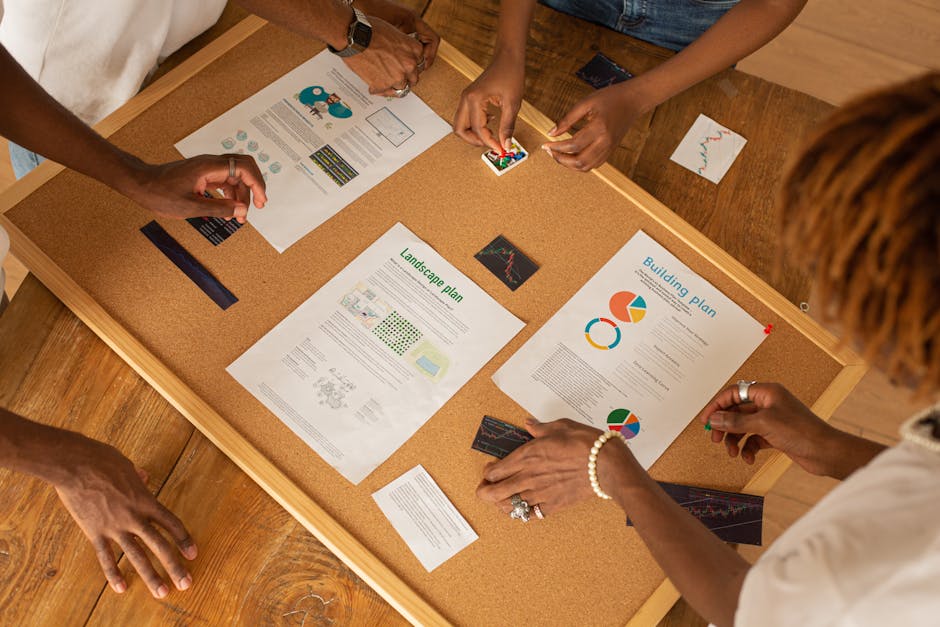
Standalone gamification fails because it layers motivation on top of a broken data foundation. Without CRM sync, training alignment, and strategic goal-setting wired into the same system, leaderboards produce theater — not pipeline discipline, not skill improvement, not clean commission data. The platforms that actually move the number treat gamification as one layer inside a connected operating system, not the whole solution.
The Leaderboard-Only Trap
Most tools gamify outcomes that have already happened — calls dialed, meetings booked, deals closed.2 That creates visibility, which matters. But it does nothing for the rep who dials plenty and still loses the call, and nothing for the manager whose CRM data is still fiction because reps log only what’s mandatory.3
The psychology compounds the problem. Points, badges, and prizes are extrinsic motivators — they work fast and fade fast. Mastery, status, and visible progress are intrinsic motivators, and they last.2 A leaderboard on the wall energizes the top three performers for about a week while quietly demoralizing everyone else. As Gartner has argued, the best gamification programs reward getting better, not just hitting a number — and they target the middle of the team, not the reps already on top.2
Then there is the perverse-incentive problem economists call Goodhart’s Law: when a measure becomes a target, it stops being a good measure.2 Crown the leaderboard by dials and you get more dials, not better conversations. Crown it by revenue alone and you reward whoever drew the best territory.
What Integration Actually Fixes
The platforms that escape this trap — Ambition, Spinify, Centrical — share one architectural trait: they sit above the CRM rather than beside it.3 Here is what that integration delivers in practice:
- CRM sync → real data, automatically. When rep actions generate points via CRM integration — call logged, proposal sent, deal stage advanced — reps stop manual-entering and the leaderboard reflects reality.1
- Training wired to behavior gaps. Skill-based gamification that scores roleplay sessions on objection handling, discovery depth, and talk ratio builds a per-rep skill profile that rises as reps actually improve — not just as they close more.2
- Goal alignment ties contests to strategic priorities. Managers segment rankings by team, region, or campaign, calibrating missions against real performance baselines — not guesswork.8
- Feedback loops close automatically. Closed deals feed leaderboards; leaderboard gaps surface training needs; training completion feeds back into mission calibration. No Monday-morning spreadsheet required.
The difference is not cosmetic. A CRM expects humans to do the work of operations. A system built as a sales operating layer automates operations and leaves humans to set rules, approve changes, and spot patterns — which is exactly where their judgment belongs.
The Integration Checklist
| Layer | Standalone Gamification | Integrated Sales OS |
|---|---|---|
| Data entry | Manual (reps log what they choose) | Automatic via CRM event triggers |
| Motivation durability | Extrinsic, fades in 2–3 weeks | Intrinsic + extrinsic, calibrated continuously |
| Training connection | None | Skill scores feed contest weighting |
| Commission traceability | Separate spreadsheet | Same system, fully auditable |
| Goal alignment | Generic leaderboard | Missions tied to quota and activity targets |
The Insurance Surgery, a UK life insurance broker, makes the data-foundation point concrete: after wiring gamification into their live performance dashboards, their lead generation team produced the equivalent of eight extra hours of calls per month per advisor — a 50% increase in call volume — because reps could finally see exactly where they stood in real time.4 Visibility changed behavior. But that visibility only worked because the data was clean and live — not because someone put a leaderboard on the wall.
Frequently Asked Questions

Pricing across sales gamification platforms shifts considerably by tier and team size. At the SMB end, mid-tier tools start at $0–$19/month flat-rate regardless of headcount. Enterprise platforms — Spinify, SalesScreen, Ambition — open at roughly $4,500/year with a 15-user minimum.3 Per-seat rates on the enterprise side run from approximately $25/user/month (SalesScreen) to $45/user/month (Ambition) to $55/user/month for tools focused on AI roleplay.2 Setup and CRM integration are rarely bundled into the base subscription. Budget additional investment based on the complexity of your existing stack.
How long does implementation take?
Timeline depends almost entirely on how data enters the platform. Lighter tools — those accepting manual entry, Google Sheets sync, or Zapier flows — can be live within minutes. Enterprise platforms like Spinify, SalesScreen, and Ambition typically require a 2–4 week implementation window, a dedicated Customer Success Manager, and a signed annual contract before you go live.3 Full CRM integration with data validation and custom workflows adds time on top of that baseline.
Which platform integrates best with our CRM?
The leading enterprise platforms all offer native CRM connectors, but depth varies. Spinify connects with Salesforce, HubSpot, Microsoft Dynamics, Google Sheets, Excel, Salesloft, and any custom system via open API.7 SalesScreen and Ambition cover Salesforce and HubSpot most robustly. Plecto connects to major CRMs, dialers, spreadsheet software, and SQL databases — though its Salesforce connector has drawn repeated user complaints about implementation difficulty.4 Teams without a CRM should prioritize tools that support manual entry or API-first data sources. Otherwise you risk layering a CRM rollout on top of a gamification rollout at the same time.
What ROI should we realistically expect?
Organizations running sales gamification platforms report up to 7X increases in conversion rates and productivity gains of as much as 50% (verified across multiple platform studies, 2025).1 In one documented case, The Insurance Surgery — a UK life insurance broker — recorded a 50% increase in calls made by their lead generation team after deploying Plecto’s gamification and dashboard features. That translated to 8 extra hours of calls per month per sales advisor.4 Results depend on team maturity, reward structure, and whether you’re targeting activity metrics, outcome metrics, or both.
Can we start with a pilot before full rollout?
Yes — and it is worth doing. Most platforms support scoped deployments across a single team or a single quota period before broader rollout. This matters because one of the most common failure modes in gamification is energizing only the top performers. Gartner has argued that the strongest programs move the middle of the team — not the reps already at the top — and a pilot lets you verify whether the platform actually shifts that cohort before you commit at scale.2
Next Steps: Select and Launch Your Gamification Platform
Launching a gamification platform pays dividends fast — or wastes a quarter — depending on how you structure the evaluation. Move methodically, and ROI shows up within the first 90 days.
Run a focused demo sprint
Schedule 20-minute demos with 2–3 shortlisted platforms back-to-back in the same week. Ask each vendor the same three questions: How does CRM sync work in real time? What does the mobile experience look like for a rep in the field? How much can managers customize point rules and contest logic without engineering help? The answers will separate real capabilities from slide-deck promises.
Pilot before you commit
Request a 30-to-90-day pilot on one team before signing an annual contract. Enterprise tools like Spinify, SalesScreen, and Ambition typically require annual contracts with multi-week implementation timelines 3 — which makes a structured pilot essential for validating adoption before you are locked in.
Bring reps into the design
Adoption hinges on perceived fairness. If reps feel the leaderboard rules were designed without their input, engagement collapses by week three. Run one working session with your top performers and one with mid-pack reps before you finalize any scoring logic.
Define success before day one
Set three targets before launch: an activity KPI (calls, demos booked), a weekly login rate for adoption, and a deal-impact baseline to measure against at 90 days. Without those anchors, you are measuring sentiment, not results.
Technical integration is only half the equation. The vendors worth partnering with deliver change management support alongside the software — because a perfectly configured platform that reps ignore is just an expensive leaderboard.
## Sources- Top 10 Sales Gamification Platforms — https://www.attention.com/blog-posts/top-sales-gamification-platforms ↩
- 13 Best Sales Gamification Software Tools (2026) — https://kendo.ai/blogs/best-sales-gamification-software-tools ↩
- Sales Gamification Software: Performance Tools for Teams — https://leaderboarded.com/sales-gamification-software ↩
- Top 8 Sales Gamification Software: Rankings for 2026 — https://www.fugo.ai/blog/top-8-sales-gamification-software-rankings-for-2026 ↩
- Best Gamification Platforms & Software Overview — https://centrical.com/resources/best-gamification-platforms ↩
- The Best Sales Gamification Software of 2025 — https://slideswith.com/blog/the-best-sales-gamification-software ↩
- Spinify vs SalesScreen: The Better Sales Gamification Alternative — https://spinify.com/salesscreen-alternative ↩
- Sales Gamification: Comparison of the 10 Platforms in 2026 — https://www.incenteev.com/en/blog/the-10-best-commercial-gamification-platforms-a-comparison-and-selection-guide-for-2026 ↩