Shopee Seller Engagement: The System That Separates Top Performers From the Rest

TL;DR. Shopee’s seller engagement system works as an algorithmic ranking model. It scores shops on response time, customer satisfaction, and sales velocity, then assigns a tier — Bronze, Silver, Gold, Platinum — that governs search placement and traffic1. This isn’t cosmetic. The system calculates store weight from product quality, service, and interaction data, not listing content2. Sellers who engaged through live selling saw buyer uplifts as high as 12x during major sale events3 — proof that visibility is a system output, not a reward for effort alone.
What Is Shopee Seller Engagement? How the Tier System Works

Shopee’s seller engagement program is a tiered ranking system — commonly labeled Bronze, Silver, Gold, and Platinum — that scores every shop on sales volume, sales revenue, and customer satisfaction, then feeds that score into the algorithm deciding who gets seen1. Shopee calls this underlying metric "store weight," and it’s calculated across four unequal dimensions: product quality (40%), customer service (30%), user interaction (20%), and campaign participation (10%)2.
Response time lives inside the customer-service pillar, and it’s not a soft metric. Let a shop’s chat response rate drop below 70%, and its ranking tanks outright4. Shopee even runs dedicated programs around this — including a Preferred Seller Program and internal roles tasked with identifying top-tier sellers as platform advocates — all built to reward shops that sustain high responsiveness and service consistency5.
| Tier driver | What it measures | Why it compounds |
|---|---|---|
| Chat response rate | Speed of replies to buyer messages | Fast replies lift satisfaction scores, which lift tier status |
| Shop active days / order volume | Consistency and scale of selling activity | Sustained activity raises store weight over time |
| Customer satisfaction rating | Reviews and dispute outcomes | Higher ratings feed directly into algorithmic placement |
Here’s the structural trap: tier status isn’t a badge, it’s a feedback loop. One slow week of replies lowers your score. A lower score lowers visibility. Lower visibility lowers order volume — and the next review cycle starts from a worse baseline than the last2.
Learn more in our complete guide: What is a Sales Operating System: the loop that transforms results.
Related reading: sales engagement.
Why Shopee Live and Video Commerce Are Engagement Multipliers

Shopee Live and Shopee Video function as algorithmic engagement multipliers: the platform’s feed and search-ranking system actively pushes visibility toward sellers who stream or post video, rather than treating these as passive marketing add-ons 6. That mechanic matters because Shopee’s own data shows the payoff is not marginal — the platform recorded a 12x uplift in buyers during its 8.8 sale and an 82x uplift in orders during 11.11, both attributed directly to Shopee Live sessions, though access requires a seller to first complete five successful orders and maintain a clean performance record 3.
A single live session can showcase up to 500 products in the “orange bag,” though hosts are barred from directing viewers off-platform 7. Video listings and interaction signals — favorites, add-to-cart rate, repeat purchases — also feed Shopee’s broader store-weight score, meaning engagement behavior compounds into ranking advantage over time 2. As Shopee’s own leadership has framed its platform strategy, the company remains “committed to adapting to the evolving needs of businesses and helping sellers grow and scale online” 8 — but that growth is conditional on sellers actually showing up to stream, not on luck or product quality alone 9.
How Does Shopee Ads Work and What Drives Organic Store Relevance?
Shopee Ads runs on a self-serve, auction-based pay-per-click model: sellers bid on keywords or placements and pay only when a shopper clicks, but that spend buys visibility, not organic rank10. A separate system governs organic ranking — Shopee’s internal "store weight" score, which rates shops on product quality, service, and engagement signals2.
| Lever | Shopee Ads | Organic Store Weight |
|---|---|---|
| Mechanism | Cost-per-click auction10 | Algorithmic scoring of shop behavior2 |
| What moves it | Bid amount, keyword match type10 | Product Quality (40%), Customer Service (30%), User Interaction (20%), Campaigns (10%)2 |
| What it doesn’t do | Raise organic rank10 | Respond to ad spend2 |
Most sellers treat these as two separate levers, and that’s the mistake. In practice, a cohesive product mix, fair and stable pricing, and strong quality ratings raise organic weight. Ads simply bring new traffic to convert against that stronger foundation2 — the two compound, they don’t substitute for each other.
Why Customer Service Speed Is a Hidden Ranking Signal
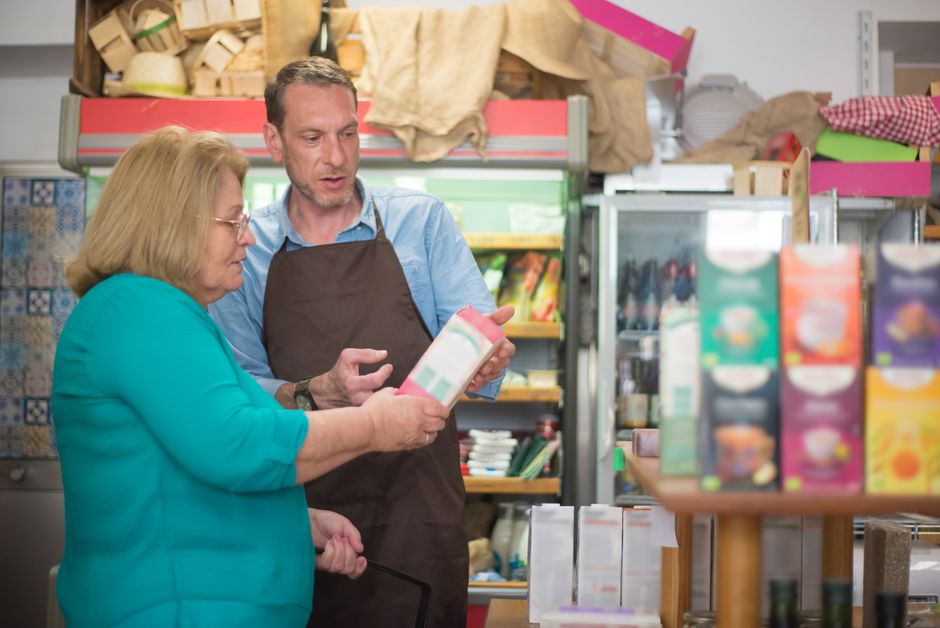
Customer service speed is a direct input into Shopee’s ranking algorithm, not a courtesy metric. Shopee tracks a Customer Satisfaction Score alongside reviews and ratings as a core performance signal feeding shop weight 11. One seller guide notes buyers expect replies within minutes, not hours — if a shop’s response rate drops below 70%, its ranking tanks 4.
This isn’t a soft penalty. A single stretch of slow replies or unresolved complaints can downgrade tier status and visibility overnight, since the scoring recalculates continuously 2.
The structural implication: support response time functions as a revenue lever, not overhead. Teams that treat chat response as a scored, trackable metric — not an afterthought — compete on an axis most sellers still ignore.
What Resources Does Shopee Provide to Help Sellers Succeed?
Shopee’s seller support goes beyond the marketplace itself. Free tools, seller programs, and performance analytics are built into Seller Centre to shorten the learning curve for new sellers. Shopee runs structured seller programs — including a dedicated coordinator role tasked with identifying and onboarding top-tier sellers to act as platform advocates and guide other sellers 5. The platform also layers in free analytics on page views, store visits, and repeat-purchase rate, so sellers can self-diagnose performance gaps 12.
But resources alone don’t move a store up the ranking. Shopee’s own weighting system rewards applied behavior — campaign participation, consistent service response, sustained engagement — not completed training 2. A seller who finishes every course but never goes live, never runs ads, or never responds to chats within the expected window still scores low on the dimensions that actually drive visibility 2.
This is the pattern commercial leaders see across every channel: education removes the excuse of ignorance, but it never substitutes for a system that enforces the behavior day after day.
What Mistakes Do Sellers Make That Tank Engagement on Shopee?

Three mistakes tank engagement scores fastest: slow responses, static listings, and ignoring feedback loops. Each one is a measurable, algorithmic penalty — not bad luck.
Response time gets scored directly. If a seller’s chat response rate drops below 70%, shop ranking falls, because Shopee treats support speed as a ranking input, not a courtesy 4. The expectation is aggressive: buyers want replies within minutes, and ideally within one hour 2.
The second failure is treating the storefront as a one-time upload. Shopee’s weighting model assigns Customer Service 30% of total store weight and Product Quality 40%. Both depend on ongoing behavior — clicks, conversion, review quality — not a static listing 2.
The third: ignoring return rates and pricing drift. Poor feedback and negative reviews deduct directly from product-quality scoring, regardless of effort spent elsewhere 2.
This mirrors the same structural pattern seen in sales teams: individual effort can’t fix a system that penalizes unmonitored input.
What Do U.S. Sellers Actually Achieve on Shopee? Real Cases of Growth
U.S. sellers who grow fastest on Shopee treat the platform as a connected system — tier, visibility, and service feed each other — rather than optimizing listings in isolation. That systems view separates sellers stuck on page five from those climbing toward Gold and Platinum tiers 2.
Consider the mechanics behind two common growth patterns. A seller who goes live regularly and keeps chat response times under the platform’s threshold protects the 30% customer-service weighting in Shopee’s ranking formula. The same behavior also lifts the click-through and conversion signals that make up 40% of store weight 2. Response rate matters directly: drop below 70% and shop ranking tanks 4.
A second pattern shows up in retention. Platform-wide, sellers who build structured engagement — loyalty touchpoints, consistent service, repeat-purchase incentives — see members spend twice as much per transaction as non-members 9. Over 145,000 sellers posted 25% sales growth in a single year by compounding these mechanics 9.
| Lever | Weight in Shopee’s ranking | Reader action |
|---|---|---|
| Product Quality (CTR, CVR, reviews) | 40% 2 | Improve images, descriptions, close negative-review loops |
| Customer Service (response, shipping) | 30% 2 | Respond under 1 hour; ship same day |
| User Interaction (favorites, repeat buys) | 20% 2 | Drive repeat purchase behavior |
| Campaigns & Promotions | 10% 2 | Join official campaigns that convert |
The common thread: these sellers don’t chase a single tactic. They track response time, tier status, and tool adoption weekly, because Shopee’s algorithm rewards consistency across all four dimensions at once — not one standout metric 2.
Is Active Shopee Engagement Worth Your Time and Budget? A Cost-Benefit Analysis

Active engagement on Shopee pays off only when the time you spend on live-selling, chat response, and promotional campaigns measurably moves your store’s internal ranking. That condition matters because Shopee’s own system ties visibility directly to engagement signals, not just listing quality.2
Shopee’s store-weight model is explicit about what it rewards: Product Quality carries 40% of the score, Customer Service 30%, User Interaction 20%, and Campaign Performance 10%.2 Tier status (Silver, Gold, Platinum) comes from sales volume, sales revenue, and customer satisfaction combined — not revenue alone.1
| Engagement level | What the platform rewards | Likely outcome |
|---|---|---|
| Low (reactive, no live-selling) | Minimal interaction signals | Buried search rank2 |
| High (daily chat, live sessions, campaign participation) | Strong CTR, CVR, retention | Loyalty members spend 2x per transaction9 |
So the honest answer isn’t "always engage." It’s "engage where your category already fits Shopee’s reward structure, then systematize it instead of relying on individual hustle." That’s precisely the gap Play2sell SalesOS Gamification closes for commercial teams: calibrated missions and verifiable recognition replace ad hoc effort with a governed system.
Frequently Asked Questions About Shopee Seller Engagement
The underlying scoring logic is consistent: tier levels are calculated from sales volume, sales revenue, and customer satisfaction everywhere Shopee operates1. What differs is velocity, not mechanics. Shopee’s most mature markets — Singapore, Malaysia, Indonesia — carry years of buyer habit formation, on top of a user base of 295 million concentrated largely in Southeast Asia6. A newer market moves slower for one reason: the buyer pool hasn’t built the same purchase reflexes yet. The system doesn’t change. The adoption curve does.
How much does it cost to test Shopee engagement?
Activating a shop and using tools like live-selling carry no platform fee12. Shopee Ads are discretionary and pay-per-click, so most sellers pilot with a modest daily budget before scaling spend on proven winners10. The real cost isn’t cash. It’s the operational time required to run live sessions and respond to chats consistently.
Can I automate engagement or hire someone to do it for me?
Partially. Live-selling needs a human presence, and response time gets scored directly — shops falling below a 70% response rate see their ranking drop4. Outsourcing without a coherent system across tiers, speed, and positioning tends to fail for the same reason unmanaged CRMs fail: data without structure doesn’t produce consistent behavior.
Build Your Engagement System: Move From Reactive Selling to Platform Operations
Shopee engagement isn’t a checklist of tactics. It’s a feedback loop where tier status, algorithmic weight, service speed, and sales velocity all reinforce each other. Shopee’s own store-weight model proves this: Product Quality counts for 40%, Customer Service for 30%, User Interaction for 20%, and Campaign Performance for 10% — four dimensions scored together, not separately 2. Most sellers chase one lever (go live, run an ad, answer faster) without seeing that each one moves the others.
That’s the operational opportunity. The sellers who compound tier gains treat response time, ratings, and live-selling cadence as one dashboard, not three side projects. A response rate below 70% alone tanks shop ranking regardless of product quality 4. Your own commercial team needs that same operating discipline: shared visibility into the metrics that drive tier movement, and weekly accountability for closing the gaps.
Here’s a concrete 12-week sprint to install that system:
- Audit your current response time, rating, and order velocity against Shopee’s documented thresholds.
- Commit to sub-2-hour chat responses and one weekly live session, logged consistently.
- Track weekly shop-weight movement toward the next tier, not just revenue.
- Review and adjust with your team every week, not at quarter-end.
Shopee rewards structural behavior over hustle. Your sales team needs the same architecture. Play2sell SalesOS’s Gamification module turns these weekly targets into verified missions and rankings, while RolePlay trains reps on the live-selling and service scripts that move the needle. Start with one seller, one shop, one week of logged activity — then scale once the system proves itself.
## Sources- Shopee Tier Levels Silver Gold And Platinum Explained — https://surveys.ecit.fsu.edu/shopee-tier-levels-silver-gold-and-platinum-explained-unlocking-the-secrets-of-ecommerce-success ↩
- Shopee Seller Ranking 2026: How Store Weight Really Works — https://blog.shopdora.com/en/page/shopee-seller-ranking-guide-how-store-weight-works-and-how-to-boost-your-product-visibility ↩
- How To Use Shopee Live Selling To Maximize Sales | Locad — https://golocad.com/blog/how-to-use-shopee-live-selling ↩
- How to Start Selling on Shopee in 2026 — https://www.youtube.com/watch?v=bSgFCc4ohUQ ↩
- Seller Engagement Coordinator – Business Development and … — https://careers.shopee.sg/job-detail/127999 ↩
- Mastering Shopee Live Selling: Strategies for Maximizing Sales Success — https://shipper.id/blog/eng/digital-marketing/the-future-of-e-commerce-shipping-trends-shaping-tomorrows-delivery-landscape-2 ↩
- Shopee Review for Sellers: Why to Sell on Shopee in 2026 — https://litcommerce.com/blog/shopee-review-for-sellers ↩
- Shopee announces initiatives to support seller growth — https://ms.shopee.com/ssr/news/c72473a21b52219b85d2c2e6ed303353 ↩
- Shopee Market Insights In-depth Analysis, Growth, and Competition — https://cube.asia/read/shopee-market-insights-an-in-depth-market-analysis-growth-and-competition ↩
- Shopee Ads Guide: How to Advertise and Boost Sales — https://www.equinetacademy.com/blog/shopee-ads-guide-how-to-advertise-and-boost-sales ↩
- Understanding Your Shopee Store’s Performance Insights — https://golocad.com/blog/shopee-store-performance-insights-for-sellers ↩
- [Seller’s Guide] How to Start Selling on Shopee: Key Requirements, Steps and Pitfalls to Avoid — https://www.thedigitalx.net/en/blog/seller-s-guide-how-to-start-selling-on-shopee-key-requirements-steps-and-pitfalls-to-avoid ↩