How to Structure Sales Rewards and Recognition Programs That Actually Motivate

TL;DR. Effective sales rewards programs are structured systems — not one-off bonuses. They rest on objective criteria, multiple incentive formats, transparent rollout, and continuous measurement. Sales teams perform best when incentive plans use no more than three or four clearly measurable variables; beyond that, motivation fades and target achievement drops1. The highest-performing frameworks combine cash, recognition, and milestone-based rewards instead of leaning on a single lever2. Programs that track results and adjust using real performance data correlate with lower turnover and stronger engagement3. That’s the real signal here: this is a design problem leaders can systematically fix, not a motivation problem individual reps need to solve.
What Defines a Winning Sales Performance? Setting Objective Criteria for Rewards

A winning sales performance rests on objective, pre-agreed criteria that blend quantitative targets with qualitative markers of deal quality — never revenue alone. The moment "winning" gets left to a manager’s gut feel, rewards stop feeling earned, and the program loses its grip on behavior.
Start with the quantitative layer: quota attainment, revenue, and win rate form the baseline, but they’re lagging indicators — they tell you what happened, not why4. A strong framework pairs them with leading indicators like activity volume, pipeline coverage, and sales cycle length, so leaders can intervene before the quarter is already lost4.
Then add the qualitative layer most commission plans skip: customer feedback, CRM hygiene, deal complexity, and process adherence4. This matters because average deal size alone can’t separate a rep who closed a straightforward renewal from one who navigated a nine-month, multi-stakeholder enterprise deal. Complexity has to be scored, not assumed4.
Why layering prevents the halo effect
Without layered criteria, revenue-based rewards build in a structural bias toward whoever holds the easiest territory. Simon-Kucher documented this directly: one rep who negotiated a smaller 5% discount generated double the profit of a colleague who discounted 10% — yet earned only 5.6% more commission, because the plan rewarded revenue, not profit or difficulty1.
That’s not a motivation problem. It’s a measurement defect, and no amount of individual effort can fix it.
| Criteria layer | What it measures | Risk if ignored |
|---|---|---|
| Base target | Revenue, quota attainment | Rewards easy territory over skill |
| Deal complexity | Cycle length, stakeholders, discount discipline | Penalizes reps closing hard deals |
| Quality tier | CRM hygiene, customer health, retention | Encourages short-term wins over durable accounts |
When criteria are layered this way, reps across different territories and segments can see exactly why a reward went where it went — because the system captured it, not because a manager vouched for it. That traceability is what the Play2sell SalesOS Pay module is built to enforce: splits, bonuses, and tiers calculate automatically from the same event data that drives recognition, so no rep has to take fairness on faith.
Learn more in our complete guide: What is a Sales Operating System: the loop that transforms results.
Related reading: sales recognition program.
Which Reward Formats Deliver the Best ROI? Cash, Trips, Vouchers, Experiences, and Recognition Compared

No reward format wins across every dimension. The right choice depends on what you’re optimizing for: speed, memory, or sustained engagement. Cash moves fastest but fades fastest; gift cards and experiences linger psychologically; recognition costs nothing and compounds over time when it’s visible and consistent.
Cash bonuses are the easiest format to administer. But they merge into payroll within weeks and become indistinguishable from regular pay, which erases the emotional memory of the achievement 5. Gift cards sit in a different mental bucket. Thaler’s mental accounting theory explains why: recipients treat a windfall differently from salary, and the endowment effect means people value a gift card roughly 22% above its cash equivalent once they own it 5. Experiential rewards go further still. Incentive Research Foundation data shows cash excitement fades within days, while trips and shared experiences create memories employees retell for years — generating organic advocacy for the company 6.
| Format | Speed to deliver | Psychological durability | Best fit |
|---|---|---|---|
| Cash | Immediate | Low — absorbed into payroll 5 | Junior reps, short-term targets |
| Gift cards/vouchers | Fast | Medium — full face value, no tax drag 5 | Mid-career reps, monthly wins |
| Trips/experiences | Slow, needs planning | High — lasting memory, bonding 6 | Top performers, annual milestones |
| Recognition (badges, rankings) | Instant, zero cost | High when paired with visibility 7 | Status-seeking, mid-tenure reps |
Recognition — badges, leaderboards, public spotlighting — costs nothing to deliver but drives retention comparable to paid rewards. Organizations with effective recognition report up to 31% lower voluntary turnover 7. The strongest programs blend formats by career stage: a base cash bonus for immediate performance, tiered recognition for ongoing visibility, and an annual trip reserved for top performers. Betting everything on one format leaves value on the table 6. This is exactly the logic behind Play2sell SalesOS Gamification: points, verifiable badges, and segmented rankings run continuously in the background, so recognition isn’t a once-a-year trip but a daily signal layered underneath whatever cash or voucher program you already run.
How Do You Balance Individual Rewards with Team Goals Without Breeding Toxic Competition?
Balancing individual and team rewards means pairing personal activity metrics with collective outcome metrics. Reps compete on effort within their own lane, but still share accountability for results that no single person controls. This dual structure prevents the two failure modes leaders see most often: a purely individual plan that breeds hoarding, and a purely team plan that lets low performers coast.
The risk of going all-individual is well documented. A study of 540 salespeople at a B2B company found individual incentives made reps more willing to seek advice but less willing to give it, since helping a peer felt like helping a competitor 8. David Marshall, CEO of Performio, puts it bluntly: individual incentive structures "can create an “everyone for themselves” mentality within the company" 9.
Going all-team flips the problem. Some reps coast while others carry the group’s target, and disputes break out over who actually earned the reward 10.
| Reward type | Best tied to | Main risk |
|---|---|---|
| Individual | Calls, meetings, pipeline activity | Knowledge hoarding, "me-first" culture 9 |
| Team | Closed revenue, retention, NPS | Free-riding, perceived unfairness 10 |
Segmented rankings — by territory, tenure, or account size — also matter. Pitting a junior rep in a tough territory against a veteran with warm accounts isn’t competition; it’s a predetermined loss. Keeping incentive criteria to three or four clear variables, rather than overloading the plan, is what sustains motivation instead of eroding it 1.
This is exactly the segmentation and governance problem Play2sell SalesOS Gamification was built to solve. Rankings split by cohort, missions calibrate to each group’s real baseline, and team milestones layer on top — so individual recognition and collective accountability run in parallel instead of at war with each other.
How Do You Launch and Communicate a Rewards Program to Drive Engagement From Day One?
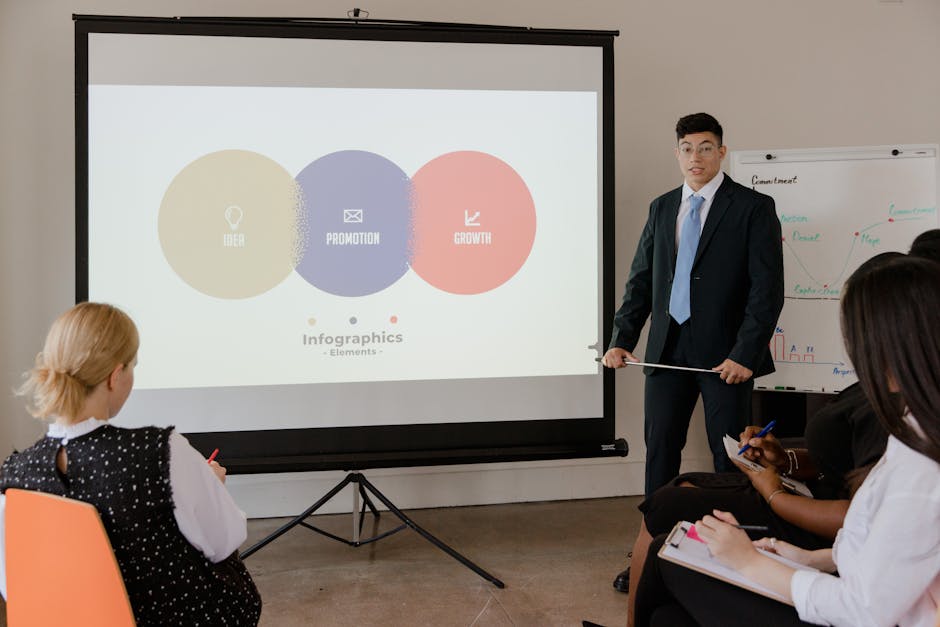
Engagement starts on day one only when a rewards program makes three things visible before anyone earns a single point: the exact criteria and weighting, what winning actually looks like, and where to check standing in real time. Skip any of those, and reps treat the program as noise rather than a system worth their attention.
Unclear or shifting criteria kill a launch faster than anything else. When salespeople can’t tell what counts toward an incentive, frustration and disengagement follow almost immediately 1. The fix isn’t more enthusiasm at kickoff — it’s specificity.
A launch package that holds up needs four elements:
- The exact scoring criteria and their relative weighting — not a vague summary of goals.
- Real examples of what each tier, badge, or milestone represents, so reps can map their own activity to the reward.
- A fixed cadence for payouts and public announcements, so nobody is guessing when recognition lands.
- A FAQ covering edge cases and territory-specific rules, since ambiguity in those gaps is where most complaints originate 2.
Say it once in a meeting, and you’ll lose half the room. Repeat the criteria in a live meeting, in email, and on a persistent dashboard — a document nobody reopens is not a launch 11. A soft launch with one team, or a two-week pilot before enterprise-wide rollout, catches scoring bugs early. It also turns a handful of reps into peer champions who vouch for the program before the rest of the team ever sees it.
This is precisely the governance gap Play2sell SalesOS Gamification closes: criteria, weighting, and standings run on one live system instead of a PDF nobody rereads, so the rules are never the rep’s excuse for disengaging.
What Cadence Works Best: Monthly, Quarterly, or Annual Incentive Campaigns?
The right incentive cadence depends on your sales cycle length and team size. Monthly campaigns suit high-volume, short-cycle sales. Quarterly campaigns (13 weeks) align with planning cycles. Annual programs work only as a capstone layered on top of shorter cycles — never as a stand-alone structure.
Monthly and quarterly recognition programs exist specifically to maintain momentum throughout the year, reinforcing consistency rather than letting energy spike once and fade 2. An annual-only program — a single President’s Club trip announced in January — leaves eleven months where nobody looks at the leaderboard. That’s exactly the failure mode brands report when gamification dies by week two 2.
| Cadence | Best fit | Risk if used alone |
|---|---|---|
| Monthly | High-volume, short-cycle sales (retail, inside sales) | Can feel repetitive without variety |
| Quarterly | Teams needing time to shape trajectory | Too sparse to sustain daily behavior |
| Annual | Capstone recognition (President’s Club) | 11 months of apathy if run in isolation |
No single format works for every sales organization. The right strategy depends on team structure, business priorities, sales cycle length, and the behaviors leadership wants to reinforce 2.
The structural fix is layering: weekly micro-campaigns (streaks, challenges), monthly rankings, quarterly trips, and an annual hall of fame — each calibrated so no rep goes more than a few days without a visible signal. This is precisely what Play2sell Gamification is built to orchestrate: missions, badges, and rankings running at every tier simultaneously, with governance instead of a wall chart nobody checks after February.
What Role Does Symbolic Recognition Play in Sustaining Engagement Over Time?

Symbolic recognition — public praise, leaderboard badges, naming a rep in a newsletter — sustains engagement because it costs almost nothing yet creates a lasting status signal. A one-time cash bonus can’t do that; it disappears into payroll and is forgotten by the next pay cycle5. The mechanism at work here is social, not financial. Reps respond to peer visibility and the chance to become an aspirational model for the rest of the team12. Underestimate this and you lose people: organizations with strong recognition programs post up to 31% lower voluntary turnover, according to Gallup and Workhuman research7.
Specificity matters more than warmth. "Great quarter" reinforces nothing. "Highest deal velocity in Q3" ties the acknowledgment to one of your defined winning criteria, so reps know exactly which behavior to repeat2.
At scale, symbolic recognition fails without a cadence. A leaderboard taped to the wall in January gets forgotten by February. The fix is structural:
- Monthly spotlights tied to specific, measurable criteria
- Quarterly town halls with winner interviews
- An annual awards ceremony for sustained top performance
This is precisely the gap Play2sell SalesOS Gamification closes. It captures qualifying events automatically, segments rankings, and issues verifiable badges on a governed rhythm — so recognition never depends on a manager remembering to post it.
How Do You Tailor Rewards to Different Roles and Career Stages—Junior, Senior, Hunter, Farmer?
Tailoring rewards by role and career stage means matching incentive type, cadence, and visibility to what actually motivates a junior rep versus a seasoned hunter versus a farmer managing renewals. A single incentive structure applied to all three groups systematically under-rewards at least two of them. Reward design research consistently shows that criteria tied to unclear or one-size-fits-all metrics erode motivation across a mixed team1.
Junior reps need fast, visible wins. Cash and rapid recognition work best for quantifiable, short-cycle tasks — first call booked, first meeting set, first proposal sent. These reps need proof points that reinforce learning, not team-based rewards that can mask individual contribution9.
Senior hunters, by contrast, are driven by autonomy and status more than frequency of payout. Reward deal size, complexity, and new-logo wins, and keep recognition peer-level rather than broadly public. Individual incentive structures tend to fit hunters well, since personal effort maps directly to outcome10.
Farmers and account managers optimize for retention and expansion. Reward renewal rate and upsell velocity rather than raw volume. Non-cash investments — training, conferences, skill development — often outperform bonuses for this cohort, because they read professional growth as career capital rather than a one-time payout12.
| Segment | Primary motivator | Reward format |
|---|---|---|
| Junior | Visibility, learning | Cash + activity milestones |
| Senior/hunter | Autonomy, status | Deal-size bonuses, peer recognition |
| Farmer/AM | Career capital | Training, experiences, retention-linked bonuses |
This is exactly the segmentation problem Play2sell SalesOS’s Gamification module is built to solve: missions, badges, and rankings calibrated per cohort — not a single incentive scheme forced onto three different jobs.
How Do You Measure ROI and Iterate Rewards Criteria Without Losing Momentum?

Measuring ROI means comparing performance against a pre-program baseline and, where possible, a control group. From there, you revisit criteria monthly using leaderboard and engagement data — not just revenue — before locking in next quarter’s rules.
Start with four numbers before launch: engagement rate (share of the team actively chasing the goal), performance lift versus baseline, retention of your top performers, and revenue generated per dollar spent on the campaign. Engagement and retention usually tell you more about program health than a short-term revenue spike. Cash-driven bumps fade fast and rarely predict what happens next quarter13.
Attribution is the hard part. Without a control — one team running without the incentive, or a same-period comparison from last year — you can’t separate the incentive’s effect from seasonality or market swings11. The Incentive Research Foundation calls this isolating causality. It recommends field experimentation (experimental vs. matched control group) as the gold standard, with retroactive "post-hoc" analysis of historical data as the fallback when a live control isn’t feasible11.
- Pull leaderboard data and completion rates by tier monthly.
- Run pulse surveys or one-on-ones to catch criteria that feel too easy, too hard, or structurally unfair to certain roles.
- Adjust in month two or three of a quarterly cycle — not at the finish line.
This cadence matters because two-thirds of HR leaders still can’t prove their recognition program’s business value. The usual culprits: narrow metrics and no visibility into what’s actually driving the number14.
What Are the Most Common Mistakes That Cause Rewards Programs to Lose Impact?
Rewards programs lose impact for three structural reasons: shifting criteria mid-campaign, paying out silently, and treating recognition as a one-off event instead of a system. None of these is a motivation problem. They’re design failures, and they’re fixable.
Moving the goalposts. When criteria change after a campaign closes — a new winner added, a rule reinterpreted — reps stop trusting the scoreboard. Research on sales recognition design is explicit: programs lose impact not because the concept is wrong, but because of unclear, inconsistent, or unfair structure2. The fix is procedural: publish rules before launch, honor them exactly, and save any adjustment for the next cycle2.
Paying quietly. A bonus that lands invisibly in a paycheck forfeits the social and psychological upside of the same spend. Public announcement, ceremony, and peer visibility multiply what the dollar amount alone delivers5.
Treating it as a campaign, not a cadence. A leaderboard that appears once and disappears reads as a gimmick. Structured, recurring recognition — monthly or quarterly, sustained year-round — signals to a sales team that recognition is strategy, not a stunt2.
- Define clear, measurable criteria before launch.
- Communicate and celebrate publicly, every cycle.
- Commit to a repeatable cadence, not a single event.
Each of these is a system-design choice — exactly where a Sales Operating System like Play2sell SalesOS’s Gamification module replaces ad hoc campaigns with governed, auditable rules.
Putting It All Together: Automate Your Rewards Program and Eliminate Manual Spreadsheets
Building a rewards program manually means someone on your team hand-builds leaderboards, tracks mission completion in spreadsheets, and reconciles payouts against CRM exports every week. That process is slow, error-prone, and nearly impossible to audit when finance asks for a breakdown. Play2sell SalesOS Gamification removes the manual layer entirely: it captures events — calls, meetings, deal-stage changes — straight from your CRM and sales tools via integration. Rankings, badges, and mission progress update in real time, and nobody has to type a thing.
This matters because structured, repeatable recognition outperforms one-off praise. Organizations with defined programs see measurably lower turnover and higher engagement than those without 3. But structure only holds if the criteria stay clear and consistently applied — the same conditions whose absence causes most recognition programs to lose credibility in the first place 2.
| Manual Rewards Process | Automated (Play2sell Gamification) |
|---|---|
| Rep logs activity by hand | Events captured via API/webhook |
| Leaderboard updated weekly in a spreadsheet | Rankings update in real time |
| Payout calculated and disputed monthly | Payout and criteria logged, auditable |
| One leaderboard for everyone | Segmented by territory, tenure, or role |
Segmentation matters. Comparing a six-month rep against a six-year veteran on the same board breeds resentment, not motivation. Badges and streaks, applied consistently rather than as a one-time contest, keep engagement from fading the way most informal recognition efforts do within weeks.
To move forward:
- Audit your current program against the criteria raised in this article — clear rules, consistent cadence, fair segmentation across career stages.
- Identify where spreadsheets or manual tracking introduce delay or dispute.
- Schedule a 20-minute conversation with a Play2sell specialist to map your criteria into a Gamification campaign and let automation handle the mechanics your team shouldn’t have to.
- Selecting effective sales incentives to motivate your team — https://www.simon-kucher.com/en/insights/selecting-effective-sales-incentives-motivate-your-team ↩
- Sales Team Recognition Programs | Incentives Marketplace — https://incentivesmarketplace.com/sales-incentives/sales-recognition-programs ↩
- Measuring the ROI of Employee Recognition — https://www.cultureconusa.org/post/measuring-the-roi-of-employee-recognition ↩
- What Is Sales Performance Evaluation? 2026 Guide — https://www.everstage.com/sales-performance/sales-performance-evaluation ↩
- https://www.totallyrewards.com/blog/gift-cards-vs-cash-rewards-psychology-employee-recognition — https://www.totallyrewards.com/blog/gift-cards-vs-cash-rewards-psychology-employee-recognition ↩
- https://luxuryconciergetravel.com/blog/experiences-vs-cash-rewards — https://luxuryconciergetravel.com/blog/experiences-vs-cash-rewards ↩
- https://www.salesscreen.com/blog/5-ways-to-use-employee-recognition-to-boost-your-sales-performance — https://www.salesscreen.com/blog/5-ways-to-use-employee-recognition-to-boost-your-sales-performance ↩
- Incentives in Sales Teams: Utilizing Collaboration or Competition? Or Both? — https://kellercenter.hankamer.baylor.edu/news/story/2026/incentives-sales-teams-utilizing-collaboration-or-competition-or-both ↩
- Team Incentives vs Individual Goals: Finding Balance — https://www.teamgate.com/blog/team-incentives-vs-individual-goals-finding-balance ↩
- Individual vs. Team-Based Incentives: Ultimate Motivation — https://the-talent-accelerator.com/individual-vs-team-based-incentives ↩
- https://theirf.org/research_post/measuring-the-roi-of-sales-incentive-programs — https://theirf.org/research_post/measuring-the-roi-of-sales-incentive-programs ↩
- https://amplifysuccess.com/incentives/non-monetary-sales-incentives — https://amplifysuccess.com/incentives/non-monetary-sales-incentives ↩
- https://theirf.org/research_post/academic-research-in-action-individual-or-team-based-incentives — https://theirf.org/research_post/academic-research-in-action-individual-or-team-based-incentives ↩
- https://www.achievers.com/resources/white-papers/workforce-institute-total-rewards-recognition-drives-results — https://www.achievers.com/resources/white-papers/workforce-institute-total-rewards-recognition-drives-results ↩