Sales Training Trends 2026: Why Experiential Learning Is Replacing Passive Methods

TL;DR. Experiential learning is overtaking passive sales training in 2026 for one reason: it changes what reps do, not just what they know. Among the sales training trends 2026 data confirms, the clearest signal is that practice-based formats outperform lecture-and-LMS models on both retention and quota attainment. The experiential and AI-coaching segment of sales training is projected to grow 18.5% annually through 2032, reflecting enterprise demand for methods that measurably outperform static content 1. This isn’t a fad. The structural foundation is Kolb’s four-stage cycle: concrete experience, reflective observation, abstract conceptualization, and active experimentation 2. AI-driven simulations now embed real deal context directly into practice, cutting new-hire ramp time by up to 38% 3.
Market Landscape: Why Sales Training Spend Is Shifting to Experiential Learning

Sales training trends for 2026 show one unmistakable pattern: budget is shifting away from static content delivery and toward experiential, simulation-based practice. The revenue math increasingly favors practice over presentation. The signal is already visible in market sizing — the Learning Experience Platform category, the infrastructure layer for this kind of practice-based learning, is projected to reach $2.19 billion by 2026, up from under $500 million in 2020. Analysts point to continued double-digit expansion through the decade 1.
The performance gap behind that spending shift is stark:
| Training model | Retention after 30 days | Outcome data |
|---|---|---|
| Static content (manuals, recorded modules) | ~13% retained | 87% of content vanishes without reinforcement 3 |
| Active practice with feedback loops | 60–75% retained | Ramp time cut up to 38%, quota attainment up 14–17% 4 |
Teams investing at least three hours a month in coaching see win rates climb by up to 17% 3. That gap isn’t a matter of individual rep discipline — it’s structural.
Learn more in our complete guide: What is a Sales Operating System: the loop that transforms results.
Related reading: free sales training.
What Is Experiential Learning, and Why Does It Work for Sales Teams?
Experiential learning is the theory that sales skill forms through doing, not through consuming content — and it’s the reason simulation-based practice outperforms slide decks. David Kolb’s model breaks skill-building into four stages: concrete experience, reflective observation, abstract conceptualization, and active experimentation 2.
A rep who role-plays an objection, reviews what went wrong, adjusts the approach, and tries again cycles through all four stages. A rep who watches a training video completes none of them.
| Method | Engagement window | Memory built |
|---|---|---|
| Passive (video, PDF, static script) | 5–10 minutes 5 | Declarative (facts) |
| Active simulation + feedback | 40+ minutes 5 | Procedural (skill) |
Most reps need 15–20 spaced repetitions to internalize discovery questioning or objection handling. A typical workshop delivers 1–3 5.
How Are AI, Simulations, and Personalized Learning Paths Reshaping Sales Training?

AI, simulation, and adaptive sequencing are converging into a single capability: training systems that watch what a rep actually does, then rebuild the curriculum around the gaps in real time. Role-play engines now analyze live and recorded conversations and flag specific weaknesses — discovery depth, objection handling, multi-threading. They generate scenarios targeted at exactly that gap, without waiting for a manager’s calendar to open up6.
Adaptive sequencing is the second piece. Instead of pushing every rep through the same thirty-day curriculum, these platforms raise or lower difficulty based on demonstrated performance. That’s also why completion behavior looks different from a traditional LMS:
| Model | Typical completion rate |
|---|---|
| Traditional static LMS modules | 40–50%7 |
| Adaptive, performance-based paths | 70–85%7 |
The third piece closes the loop. CRM and call-activity integration lets the system surface a battlecard or a short role-play the moment a competitor or objection shows up in a live deal, not in next quarter’s refresher8. Gong’s coaching layer and Chorus.ai’s roleplay modules run on this same logic: real call data drives the next practice session9. At Play2sell, this is the exact problem our RolePlay module exists to solve — it builds practice around real sales context instead of a static course nobody finishes.
What Practical Methods Drive Experiential Sales Learning?
Experiential sales learning works through three concrete mechanisms: guided AI role-play, calibrated gamification, and structured peer mentoring. Each replaces a passive, one-time event with a repeatable practice loop.
Role-play practice, at scale
AI-coached role-play lets a rep run 5–10 scenarios a week in 15-minute sessions. Compare that to the 1–2 quarterly workshops most legacy programs still rely on. Platforms using this model report 38% faster onboarding and 14.6% higher quota attainment than lecture-style formats4.
Gamification tied to skill, not noise
Points, rankings, streaks, and verified badges only move the needle when they’re built on real skill milestones rather than decoration. Done that way, gamified training measurably lifts engagement, revenue, and client retention — but only when leaders stay engaged and reps are genuinely motivated to use the system10.
Mentoring as the accountability layer
Internal mobility data shows a 75% retention rate for employees who move and grow internally, versus 56% for those stuck in static roles. Peer mentoring applies that same accountability logic to new sellers, replacing silent attrition with a tracked growth path11.
| Method | Traditional cadence | Experiential cadence |
|---|---|---|
| Practice | 1–2 workshops/quarter | 5–10 AI role-plays/week4 |
| Recognition | Annual review | Real-time points and badges10 |
| Support | Unassigned ramp-up | Mentor-paired onboarding11 |
None of these mechanisms works in isolation. That’s exactly why Play2sell SalesOS bundles RolePlay and Gamification into one governed layer instead of two disconnected tools.
How Do You Build a Hybrid, Emotionally Connected Learning Experience?
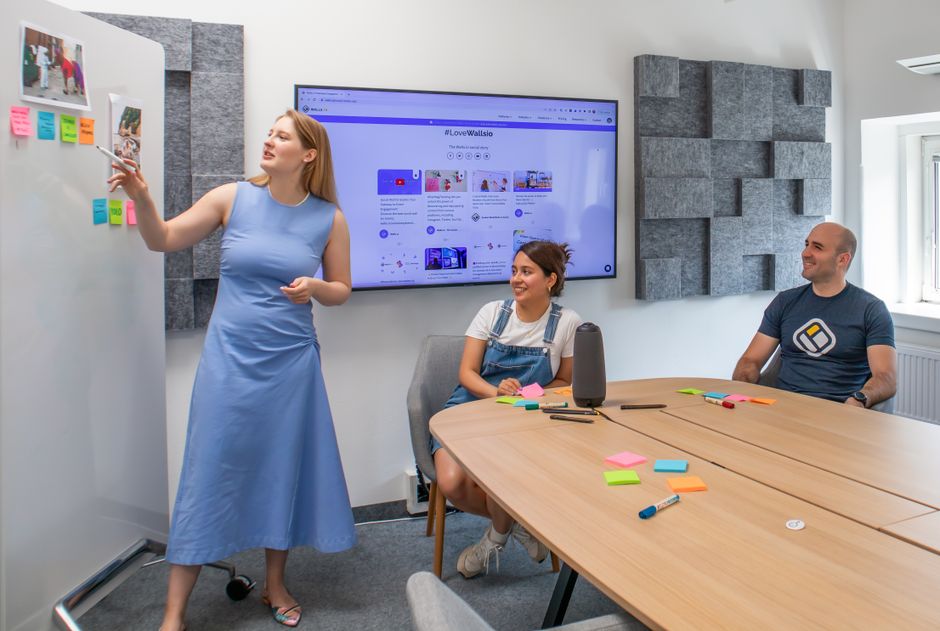
A hybrid, emotionally connected learning model blends short in-person onboarding sprints — where new hires build relationships and absorb culture — with AI-guided role-play and gamified practice they complete asynchronously between sprints. This structure matters for a simple reason: fully remote, content-only onboarding leaves reps undifferentiated and disconnected from team identity. Pure classroom models, meanwhile, can’t scale or repeat often enough to build real skill 7.
The connective tissue is recognition. Public leaderboards, team streaks, and milestone badges tied to learning behavior — not just closed deals — give remote and hybrid sellers a visible place on the team. That visibility is exactly what sustains engagement once the initial onboarding energy fades 10.
Why this reduces manager dependency
When practice and recognition run inside a shared system, new reps get consistent feedback without waiting on a manager’s calendar. That closes the coaching-frequency gap separating top performers from the rest 1.
This is the structural case for Gamification inside Play2sell SalesOS: verifiable badges, segmented rankings, and streaks replace the two-week incentive campaign with governed, ongoing recognition. The next step is yours — audit which learning milestones your current program celebrates publicly. If the answer is none, that’s the gap to close first.
How Do You Structure, Measure, and Prove ROI on Experiential Sales Learning?
Proving ROI on experiential sales learning comes down to tracking four numbers: time-to-first-deal, ramp-to-quota, completion rate, and pre/post skill scores. Seat time and course completion don’t count. Organizations that measure these consistently find the gap between traditional and experiential models is stark.
| Metric | Traditional LMS training | Experiential / AI-practice training |
|---|---|---|
| Ramp-to-quota | 16–20 weeks | 8–12 weeks3 |
| Completion rate | 40–50% | 70%+3 |
| Quota attainment (year one) | baseline | 12–18% higher12 |
| Knowledge retention at 6 months | 20–30% | 65–75%10 |
The revenue case is direct: reps who complete experiential benchmarks hit quota 14–17% more often than peers in passive programs12. Cost-per-rep trained runs 20–30% lower than external bootcamps once delivery scales13. For a VP of Sales, that’s the attribution model — tie every training dollar to ramp speed and quota, not to a certificate.
This is precisely the gap Play2sell SalesOS RolePlay closes: it replaces one-off bootcamps with AI-guided practice inside real sales context. Skill scores and ramp time become numbers you report to the CFO, not estimates you defend.
What Are the Common Pitfalls When Adopting Experiential Learning?

Most experiential learning programs fail for predictable, structural reasons — not because reps lack motivation. Three failure modes account for the majority of stalled rollouts: cosmetic gamification, disconnected simulations, and under-coached managers.
Mistaking novelty for engagement. A leaderboard with no skill progression, no peer mentoring, and no real-time feedback loop becomes wallpaper within two to three weeks. Research on gamified training is explicit on this point: shallow mechanics — badges, points, leaderboards — without real learning design can disengage reps and even distort behavior 10. The lift only shows up when leaders stay actively engaged and reps are genuinely ready to use the platform 10.
Training that lives outside the pipeline. Deploy role-play apart from CRM and live deal context, and you create the steepest adoption cliff: reps see no link between the simulation and the deal in front of them 5.
Under-coached managers. Experiential platforms amplify manager feedback loops. Without ramp-up for frontline leaders, completion stalls at 30-40%, because the manager — not the rep — is usually the real bottleneck 14.
| Pitfall | Root Cause |
|---|---|
| Leaderboard fatigue | No progression or feedback tied to mechanics 10 |
| Simulation in isolation | No CRM/pipeline integration 5 |
| Stalled completion | Manager coaching undertrained 14 |
This is precisely the gap Play2sell SalesOS Gamification is built to close: points, rankings, and badges governed by calibrated missions tied to real CRM events, not a standalone incentive campaign.
What Are Real-World Examples of Experiential Sales Learning in Action?
Real-world deployments of experiential sales learning consistently show faster ramp, better retention, and measurable skill gains — not just higher engagement scores. Take a B2B insurance employer that replaced a two-day classroom launch with three AI role-plays per new rep: first-call conversion climbed 19% within eight weeks3. Pharma and tech teams running adaptive, AI-driven onboarding report similar results. Once reps get continuous, personalized practice instead of a single bootcamp event, ramp-up time drops by 3–4 weeks and retention improves 25%15.
Gamified, adaptive-practice programs push the numbers even further. The kind that blend real-time skill flagging with structured repetition — rather than static leaderboards — have driven close-rate gains of up to 40% in some teams, according to Sales Enablement Collective research8. The pattern across industries holds steady: practice tied to real performance data beats one-time content delivery, every time.
How Do You Choose the Right Vendor or Platform?

Choosing the right platform comes down to one test: will it capture behavior automatically and tie that behavior to pipeline, or will it ask your reps to feed it data manually? Everything else — pricing, UI, feature lists — is secondary.
Demand integration, not isolation
A platform that doesn’t ingest CRM activity, pipeline stage, and deal outcomes through API or webhook will degrade into another standalone tool. Reps ignore it after a few weeks. This is precisely why 90% of companies adopting AI in sales training now treat CRM integration as a critical selection factor. 85% require API capability before buying (2026 industry survey)15.
Evaluate how role-play is actually delivered
| Question | Weak answer | Strong answer |
|---|---|---|
| Scenario source | Generic scripts | Built from real call recordings and buyer profiles6 |
| Feedback | End-of-course quiz | Immediate, per-rep behavioral scoring6 |
| Practice model | One-time workshop | Continuous, repeatable simulation |
Measure the pilot, not the pitch
Before enterprise rollout, require the vendor to prove gains on a trained cohort versus a control group: ramp time, completion rate, 90-day retention, and skill-assessment lift. Comparable AI-coached pilots have shown ramp-time cuts of up to 38% and quota-attainment gains of 14-17%3. Ask for your own numbers, not theirs.
For sales leaders, this is the same discipline Play2sell SalesOS applies inside Leads: distribution and coaching logic run on captured events, not self-reported activity.
Frequently Asked Questions
No. AI absorbs the repetitive layer — scenario practice, first-pass feedback, objection drills — while managers shift into coaching and career development, the layer AI can’t replicate. The research backs this division: the biggest performance gap in enablement usually sits with the manager, not the rep, which is why leading programs now build coaching playbooks and AI assistants that help managers prep for one-on-ones rather than tools that replace them 7.
Q: How long before we see ROI?
Pilot cohorts typically show measurable ramp acceleration within 6–8 weeks, consistent with AI-driven onboarding reducing ramp-up time by three to four weeks for the majority of companies measured in 2025 15. We don’t have reliable third-party data on full payback timelines at mid-market scale, so treat any 12–18 month figure as an estimate to validate against your own cohort data, not an industry benchmark.
Q: Can we layer this onto our existing CRM?
Yes — provided your platform supports API and webhook integration. Your CRM remains the system of record; a layer above it captures events and routes training in real time, which is why CRM integration is a selection criterion for 90% of companies adopting AI in sales training 15.
Q: What’s the typical adoption rate for a sales team?
Expect around 60–70% completion on a first campaign when reinforcement and manager follow-through are in place, since training that extends past the initial event into distributed practice and coaching — not a one-time push — is what converts information into habit 12. Without that reinforcement, most content is forgotten within days regardless of completion rates 4.
Next Steps: Launching Your Experiential Sales Learning Program
Launching an experiential sales learning program means replacing passive, event-based training with AI-guided practice and gamified reinforcement. The data backs this shift: it compresses ramp time while keeping reps around longer. Personalized, repeatable AI-powered coaching cuts new-hire ramp time by up to 38% and lifts quota attainment by 14-17% compared with one-off training events3. Continuous, personalized upskilling through AI has also been linked to a 25% improvement in sales rep retention15.
This is precisely the gap Play2sell SalesOS RolePlay is built to close. Instead of a static course a new hire watches once, RolePlay runs AI-guided practice inside real sales contexts — discovery calls, objection handling, closing — without requiring a manager to script every scenario. Paired with Gamification, which turns completed practice reps, skill milestones, and verified badges into skill-based rankings and streaks, the program sustains engagement well past the two-week drop-off point that kills most generic incentive pushes.
Here’s how to pilot it without betting the whole floor:
- Select 15-25 new reps or underperformers within a single sales pod.
- Run the pilot for 4-6 weeks against a documented baseline.
- Track time-to-first-deal, skill assessment gains, and completion rates before and after.
- Build the business case from pilot data, then scale pod by pod.
If ramp time, reinforcement decay, or manager coaching load are the pain points keeping you up at night, the next step is concrete. Schedule an exploration call to map those gaps against RolePlay and Gamification, and see where a compressed training cycle turns into pipeline faster.
## Sources- State of Sales Training 2026: Stats and Trends — https://secondbody.ai/articles/state-of-sales-training-2026-stats-trends-ai-coaching ↩
- The 4 Components of the Experiential Learning Cycle — https://online.norwich.edu/online/about/resource-library/4-components-experiential-learning-cycle ↩
- B2B Sales Training: Complete 2026 Guide for Teams — https://www.retorio.com/blog/b2b-sales-training ↩
- Best B2B Sales Training Programs 2026: What Moves Quota — https://www.retorio.com/blog/best-b2b-sales-training-programs ↩
- Sales Training: How to Equip B2B Sellers in 2026 — https://www.highspot.com/blog/sales-training ↩
- AI Sales Training: The Complete 2026 Playbook — https://www.outdoo.ai/blog/ai-sales-training ↩
- 8 Trends For Sales Enablement In 2026 — https://blog.trainingpros.com/8-trends-for-sales-enablement-in-2026 ↩
- Top 12 Sales Enablement Trends to Watch in 2026 — https://federicopresicci.com/blog/sales-enablement/sales-enablement-trends ↩
- Best AI Sales Training Tools in 2026: Ranked for B2B Teams — https://www.eubrics.com/blog/best-ai-sales-training-tools-in-2026-ranked-for-b2b-teams ↩
- The Complete Guide to Sales Training Gamification (+7 Ideas) — https://federicopresicci.com/blog/sales-training/sales-training-gamification ↩
- https://www.retorio.com/blog/top-10-sales-training-trends-2026 — https://www.retorio.com/blog/top-10-sales-training-trends-2026 ↩
- The 25 Best Sales Training Programs [2026 Edition] — https://www.highspot.com/blog/best-sales-training-programs ↩
- Master Sales Excellence: 2026 Corporate Training Strategies — TechClass — https://www.techclass.com/resources/learning-and-development-articles/unlock-sales-excellence-2026-advanced-corporate-training-strategies-with-techclass-lms ↩
- https://www.linkedin.com/posts/denise-uhlemann-b31196a5_top-12-sales-enablement-trends-to-watch-in-activity-7419769739427786753-CWWY — https://www.linkedin.com/posts/denise-uhlemann-b31196a5_top-12-sales-enablement-trends-to-watch-in-activity-7419769739427786753-CWWY ↩
- AI In Sales Training 2026 — https://careertrainer.ai/en/reports/ai-sales-training-statistics ↩