Sales Management System: The Operating System Your Sales Team Actually Needs

TL;DR. A sales management system is a unified platform that captures pipeline events, distributes leads, trains salespeople, and keeps execution aligned — through real-time visibility and a deliberate incentive structure. That makes it categorically different from a CRM, which is, at its core, a data repository.
The structural gap matters. 67% of SMBs hit revenue plateaus lasting 18 months or longer, and the root cause is almost always systemic: fragmented data, invisible pipelines, inconsistent training, misaligned compensation.1 Not individual effort. A sales management system fixes the architecture — not the people inside it. ROI surfaces as faster deal cycles, higher conversion rates, lower rep turnover, and revenue that becomes predictable because the process is enforced by the system, not by willpower.
What Is a Sales Management System?

A sales management system is a platform that captures, organizes, and operationalizes the entire sales workflow — from the moment a lead enters the funnel through final commission payout — without requiring reps to manually update a database.
Picture it as an operating layer that sits above your existing CRM. A CRM is a repository: contacts, deal records, notes. A sales management system is a behavior engine. It ingests activity events via API or webhook, routes leads according to performance-based rules, tracks progress in real time, and triggers coaching or incentive actions automatically. The Indeed Editorial Team (2025) defines sales management software as "any program that helps track sales activity, keeps customer information, optimizes sales processes, and improves sales productivity" — but the modern category goes further than storage.2
The structural principle is straightforward: salespeople should sell, not administrate. Every surrounding function — data capture, lead routing, skill development, commission calculation — should be automated or systematically guided. Companies with documented systems in place grow 25% faster and see 50% less employee turnover than their unorganized competitors.3
Learn more in our complete guide: What is a Sales Operating System: the loop that transforms results.
Related reading: Behavior Management Is the New Sales Management.
The Difference Between a Sales Management System, a CRM, and an ERP
A CRM is a contact and deal repository — it stores data. A sales management system is the operational layer that sits above your CRM, automating workflow, incentive execution, and decision-making. An ERP manages finance, inventory, and cross-functional operations across the entire business. Three distinct tools. Three distinct problems.4
| Tool | Primary job | Who it serves |
|---|---|---|
| CRM | Store contacts, log deals | Sales reps (manual entry required) |
| Sales Management System | Automate pipeline execution, capture events, govern commissions | Sales leaders accountable for revenue |
| ERP | Finance, inventory, operations | CFO, operations teams |
The gap shows up fast in practice. Top-performing sales organizations are 81% more likely to use a CRM consistently — yet Gartner research finds that 50–70% of CRM implementations fail to meet their intended business objectives.5 The cause is almost always the same: reps treat the CRM as admin work, not a sales tool.5
A sales management system closes that gap by capturing events automatically via API. It distributes leads by performance, runs AI-guided training against real deals, and produces commission payouts with full audit trails. A CRM was never architected to do any of that.
Key Features a Sales Management System Must Have

A true sales management system is defined by its ability to capture behavioral data automatically, distribute work intelligently, and enforce accountability at every stage — not merely store contacts. Generic CRM tools handle storage. A system built for revenue operations shapes behavior. Six capabilities separate one from the other.
The Non-Negotiable Feature Set
Event capture and API integration. The system must ingest pipeline events — calls logged, emails sent, proposals created, meetings booked — directly from external tools via API or webhook, with zero manual CRM entry. That’s the structural fix for a problem that compounds at scale: HubSpot research shows 66% of salespeople spend more than half their day on non-revenue-generating tasks like data entry and reporting.6 Remove the entry burden and the data actually arrives clean.
Intelligent lead distribution. Routing leads round-robin or by manual assignment is a conversion tax you pay every day. The system must assign by rep performance, capacity, specialization, or geography to maximize speed-to-contact and close rates.2
Real-time pipeline visibility. Managers cannot correct problems they only see in Friday reports. Dashboards must reflect rep activity and deal health as it happens — not 48 hours later.
Context-specific rep training. Coaching tied to real deals in motion — guided role-plays, skill drills, micro-learning — outperforms static content sitting untouched in an LMS. Businesses running structured training programs have seen close to a 50% improvement in win rates.6
Gamification and engagement mechanics. Leaderboards, streaks, missions, and verifiable badges connect daily activity to outcomes. They are a structural counter to the motivation collapse that predictably hits longer sales cycles around week three.
Auditable commission governance. Automated splits, performance bonuses, and full audit trails eliminate the monthly spreadsheet dispute before it starts — not after the CFO requests an audit.
Play2sell SalesOS is built around exactly this architecture. The Leads module handles intelligent routing and event capture above your existing CRM. RolePlay delivers AI-guided coaching on live deal context. Gamification ties every logged activity to points and rankings. Pay automates commission calculations with complete traceability. If even one of these layers is missing from your current stack, you are managing parts of the problem — not the system.
Types of Sales Management Systems: Which One Fits Your Business
Not all sales management systems are built the same way. Choosing the wrong deployment model is one of the fastest ways to burn budget and stall adoption. The right fit depends on your existing stack, your industry, and how mature your sales operation already is.
Standalone vs. CRM-Embedded
Standalone platforms operate independently of your CRM and ingest data via API or webhook. They work best for teams with fragmented tools — or for those who can’t wait for a CRM overhaul before getting pipeline visibility. CRM-embedded systems — add-ons for Salesforce, Dynamics, or Pipedrive — integrate natively with your existing database. If your team is already committed to a single CRM, you layer in sales management features without migrating a single record.
Cloud-Based vs. On-Premise
Nearly all modern sales management systems run as cloud-based SaaS. By 2023, roughly 87% of businesses using a CRM had moved to a cloud deployment — up from just 12% in 2008.2 On-premise is rare for SMBs, and for good reason: it adds infrastructure costs and IT complexity without meaningful upside.
Vertical-Specific vs. Full-Stack vs. Modular
Vertical-specific systems — built for real estate, automotive, pharma, or retail — pre-configure workflows, lead sources, and compliance rules for your industry. That cuts configuration time significantly. Full-stack platforms bundle lead management, training, gamification, and commission tracking into a single layer. Modular systems let you adopt in phases: you extend what’s working without absorbing a full rip-and-replace risk. For most SMBs, that last option matters more than it sounds.
What Concrete Benefits Does a Sales Management System Deliver?

A well-implemented sales management system delivers measurable, compounding returns: faster pipeline movement, higher close rates, lower rep turnover, and revenue leadership can actually forecast. These benefits are structural. They compound because they fix the underlying system — not individual effort.
Pipeline Speed and Conversion
Organizations that implement a clearly defined sales process see 28% higher revenue growth than those without one, according to Harvard Business Review research.6 When reps follow a structured methodology, deals move faster. Companies focused on their ideal customer profile achieve 42% faster sales cycles and 37% higher average deal sizes.1 Structured sales training amplifies this further: teams with formal enablement programs see nearly a 50% improvement in win rates.6
Operational Efficiency
The hours reclaimed alone justify the investment. Right now, 66% of salespeople spend more than half their day on non-revenue-generating work — data entry, status updates, internal reporting.6 Automation cuts that drag directly, increasing available selling time by 14%.1 For managers, that shift means fewer check-in meetings and more time on actual coaching.
Forecasting and Retention
Companies with documented systems experience 25% faster growth and 50% less employee turnover than disorganized competitors.3 When reps can trace every dollar of commission back to a specific action — with full, auditable transparency — they stay. When managers can see real-time pipeline data, they stop discovering problems after the quarter is already lost.
How to Choose the Right Sales Management System for Your Company
Choosing the right sales management system starts with one rule: match the tool to your actual workflow, not the other way around. Pick wrong, and you stack a new problem on top of the old one. Here is a practical six-step framework.
- Audit your current stack. List every tool your team already uses — CRM, communication platforms, data sources, manual spreadsheets. The system you choose must integrate with what exists. Forcing a rip-and-replace kills adoption before it starts.5
- Define your top three pain points. Lead assignment chaos, invisible pipeline, rep turnover, commission disputes — rank them. Buy to solve your biggest bottleneck first. Unused features are just cost.6
- Test vertical fit. If you operate in real estate, automotive, pharma, or retail, prioritize systems pre-configured for your industry. They cut setup time and ship with compliance rules already built in.
- Run a pilot with 20% of your team. Measure adoption rate, time-to-proficiency, and pipeline data quality before a full rollout. Research on CRM failures consistently points to low user adoption as the primary driver of underperformance.5
- Evaluate total cost of ownership over three years. Per-seat pricing is a decoy. Factor in implementation, training, integration work, and ongoing admin overhead.7
- Verify API-first architecture. A system that captures events via API and webhook — rather than waiting for reps to type — is an operating system. One that relies on manual entry is a database.
That last point is the one that matters most. Research on CRM implementations shows that 50–70% of projects fail to meet their intended business objectives5 — and the culprit is almost always behavioral, not technical. The system demanded manual effort instead of capturing it automatically. Your reps did not refuse to use the tool out of spite; they refused because no one gets paid to type.
Best Sales Management Systems Available in the US Market

The leading sales management systems for US SMBs fall into three deployment tiers: full enterprise CRM, standalone pipeline tools, and behavioral engagement layers that sit above any existing stack. Today, 91% of companies with ten or more employees run some form of CRM8 — the real question is whether your chosen tool stores data or actually shapes how reps behave day to day.
| Platform | Best For | Starting Price |
|---|---|---|
| Salesforce Sales Cloud | Enterprise pipelines requiring deep integrations and analytics | $25/user/month |
| Pipedrive | SMBs needing intuitive visual pipeline management | $14.90/user/month |
| HubSpot Sales Hub | Inbound-driven teams on a limited budget | Free tier; paid from $18/month |
| Monday.com Sales | Teams prioritizing flexible, no-code workflows | $12/seat/month |
| Play2sell SalesOS | Revenue teams needing event capture, AI-guided training, gamification, and auditable commissions — operating above any CRM | Consultation |
Pricing sourced from platform documentation.9
Companies using a CRM report sales increases of 29–41%, and top-performing organizations are 81% more likely to use one consistently2 — but those numbers assume the team actually logs what happened. Most tools treat that adoption gap as the rep’s problem. It isn’t.
Play2sell SalesOS addresses this at the architecture level. It connects to your existing CRM via API and webhook, so rep actions are captured automatically — no manual entry required. AI-guided practice runs through RolePlay sharpen skills without pulling reps off the floor. Gamification converts verified performance into points and rankings in real time. Pay calculates split commissions with full auditability, closing the Monday-morning dispute loop before it opens. The data stays clean because the system captures it. The team stays engaged because the system rewards them for it.
How Much Does a Sales Management System Cost?
A sales management system for a 10-person SMB team runs roughly $6,000–$21,000 in year one — licensing, implementation, and training combined. That wide range comes down to vendor tier and technical complexity. Here is how each component breaks down.
Per-Seat Licensing
Most platforms bill per user, per month. Entry-level tools like Freshsales start at $9/user/month. Mid-market options such as Zoho CRM run $14/user/month and Pipedrive from $14.90/user/month. Enterprise-grade platforms like Salesforce open at $25/user/month.9 For a team of 5–10 reps, plan on $100–$500/month in licensing alone. Annual billing typically trims that figure by 10–20%.
Beyond the Subscription: Hidden Cost Layers
| Cost Category | Typical Range |
|---|---|
| Implementation & data migration | $2,000–$10,000 |
| Initial training & onboarding | $1,000–$3,000 |
| Custom API / integration work | $2,000–$5,000 |
SMBs already spend $10,000–$49,000 annually on technology as a baseline.7 In practice, a sales management system often fits inside an existing IT budget rather than forcing a separate line item.
ROI Timeline
Most teams recover year-one costs within 6–12 months. The mechanism is straightforward: shorter sales cycles, less administrative overhead, higher close rates. CRM adoption alone has been shown to lift closing rates by 30%.1 That return compounds as the team internalizes the new workflow — so the second year looks materially better than the first.
How to Implement a Sales Management System Without Disrupting Operations
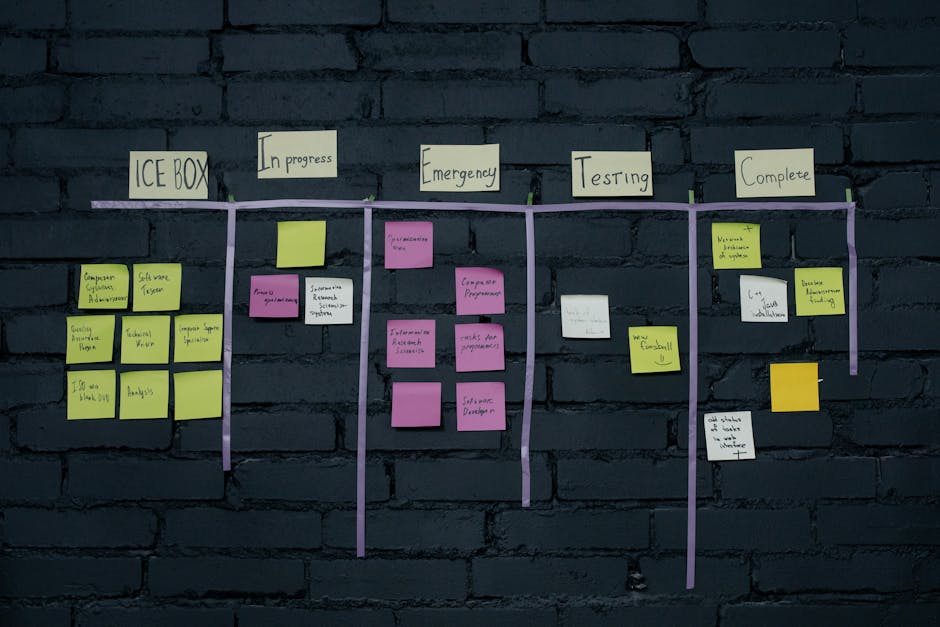
The safest path to a new sales management system runs through four sequential phases — each one protecting revenue continuity while building team confidence. Skip a phase and you pay for it later. Gartner research puts the CRM project failure rate at 50–70%, and the cause is almost always the same: poor adoption and compressed timelines.5
The Four-Phase Rollout
- Weeks 1–4 — Discovery: Audit your existing pipeline data, define lead sources, map your commission structure, and validate API/webhook connections. This phase is investigation only — do not attempt full data migration yet.
- Weeks 5–8 — Pilot (20% of team): Start with top performers and early adopters, running new workflows in parallel with existing ones. Collect structured feedback before changing anything else.
- Weeks 9–12 — Expansion (50% of team): Refine workflows based on what the pilot actually revealed. Faster closes and cleaner pipeline from the pilot cohort become your best argument for the skeptics still watching from the sidelines.
- Weeks 13–16 — Full rollout: All reps go live. Legacy spreadsheets are retired. Manager dashboards activate and real-time coaching begins.
Traps That Kill Rollouts
- Do not require manual data entry during migration — it recreates the exact behavior you are trying to eliminate.
- Do not launch engagement mechanics before the team trusts the core system.
- Do not shut down legacy tools until adoption is confirmed and stable.
Phase Success Benchmarks
| Metric | Target |
|---|---|
| Pilot adoption rate | >80% |
| Time to first contact | ↓15% |
| Pipeline data accuracy | >90% |
| Training module engagement | >70% |
When Play2sell SalesOS is the platform, phases one and two are where the work gets specific. The Leads module connects to your existing CRM via API — reps never type a handoff, the system captures it. The RolePlay module goes live for the pilot cohort during onboarding, so ramp-up time compresses before the full team is even enrolled.
Frequently Asked Questions About Sales Management Systems
Sales management systems replace guesswork with structure — and the questions below address what SMB leaders ask most before committing to one.
What exactly is a sales management system?
A sales management system is a platform that tracks sales activity, organizes customer data, streamlines workflows, and improves team performance.2 Nearly all modern solutions run in the cloud. As of 2023, 87% of businesses use cloud CRM — up from just 12% in 2008.2
Why do so many CRM rollouts fall short?
Gartner found that 50–70% of CRM projects fail to meet their intended business objectives.5 The root causes are consistent: low user adoption, poor data quality, and treating implementation as an IT project rather than a business change initiative.
How quickly can a structured system show results?
Companies with documented systems in place grow 25% faster and see 50% less employee turnover than less organized competitors.3 Most teams notice measurable pipeline improvements within the first 90 days.
Is a spreadsheet really not enough for a small team?
84% of SMBs don’t document their sales process at all.6 That gap directly blocks scalability. Without a repeatable system, onboarding new reps takes longer, top-performer results can’t be replicated, and revenue forecasting stays a monthly estimate.
Take the Next Step: Build Your Sales Operating System
If your SMB is still running sales on spreadsheets, round-robin lead lists, and generic training decks, you have a systems problem — not a people problem. The research confirms it: 70% of operational bottlenecks in small businesses trace back to a lack of organized systems3, and companies with documented processes in place grow 25% faster and see 50% less employee turnover than their unorganized competitors.3
The fix isn’t hiring harder or asking the team to update the CRM more diligently. It’s redesigning the operational layer so the system captures, routes, trains, and pays — automatically.
Play2sell SalesOS sits above your existing CRM and automates the four things manual sales operations cannot:
- Leads — intelligent distribution and automatic event capture, no manual entry required
- Gamification — sustained engagement through calibrated missions, rankings, and verified badges
- RolePlay — AI-guided practice on real deal scenarios, replacing content nobody finishes
- Pay — auditable commission splits with zero end-of-month disputes
The concrete next step: Schedule a call with our team. We’ll map your current pain points — lead chaos, rep churn, slow pipeline, commission disputes — to the specific Play2sell SalesOS modules that address them, then show you how to run a 30-day pilot before any full rollout.
## Sources- Trapped in the Revenue Plateau? 5 Research-Backed Reasons SMBs Fail to Scale — https://www.linkedin.com/pulse/trapped-revenue-plateau-5-research-backed-reasons-smbs-greg-hull-4rzpe ↩
- Top 10 Sales Management Software – Folio3 Dynamics — https://dynamics.folio3.com/blog/sales-management-software ↩
- 13 Small Business Operation Systems Every Company Needs — https://talkroute.com/small-business-systems-13-critical-operations-every-company-needs ↩
- CRM vs Sales Management Software | Key Differences Explained — https://euclidz.com/blog/crm-vs-sales-management-software ↩
- Prevent CRM Implementation Failure: 2026 Rollout Guide — https://blog.plusyourbusiness.com/prevent-crm-implementation-failure-2026-rollout-guide ↩
- Why Your Sales Process Is Limiting Your Growth (And How to Fix It) — https://boldvaluepartners.com/blog/the-hidden-cost-of-a-flawed-sales-process-and-host-to-fix-it ↩
- SMB Sales Playbook — Tips, Tools, and Strategy — https://www.pandadoc.com/blog/smb-sales ↩
- Sales management software: 10 best platforms for 2026 — https://monday.com/blog/crm-and-sales/sales-management-software ↩
- 10 Sales Management System Tools to Help Growth — https://www.larksuite.com/en_us/blog/sales-management-system ↩