Execution Is a Corporate Asset, Not an Individual Skill

TL;DR. Execution is an organizational asset built through systems and infrastructure — not an individual competency that lives or dies with a single hire.1 Companies that outperform their competitors do so because their operating systems reproduce high-performance behaviors at scale, reliably, even after key people walk out the door.2 Sustainable revenue growth does not come from recruiting exceptional individuals. It comes from building the infrastructure that makes every rep execute like your best one.3
Why Execution Matters More Than Your Next Great Hire

Execution is organizational infrastructure. It drives enterprise value more reliably than any single high-profile hire — and the instinct to chase talent, while understandable, consistently fails as a primary strategy.
Hero-dependent revenue models carry measurable financial risk. When growth relies on founder heroics or isolated individual effort rather than scalable systems, the business is inherently fragile4 — and investors price that fragility in. Harvard Business School’s John Kotter found that 70 percent of all strategic initiatives fail because of poor execution1, not weak strategy or insufficient headcount.
The numbers on the other side are equally clear. Companies with unified, system-level revenue leadership grow revenue at nearly 1.8 times the rate of their peers5. That multiple does not come from talent density. It comes from repeatability.
Predictable growth is not a product of a few top performers. It is a product of execution discipline at scale3. When that discipline is institutionalized — embedded in process rather than dependent on personalities — it becomes the kind of operational asset that acquirers and investors reward with premium multiples.
Learn more in our complete guide: What is a Sales Operating System: the loop that transforms results.
What Is Execution Excellence?
Execution excellence is the organizational capacity to consistently translate strategy and individual capability into repeatable, measurable business results — at scale, over time. It is not a leadership trait or a one-time initiative. It is infrastructure.
That distinction matters more than it sounds. Strategy alone does not separate high performers from the rest. A Bain & Company study found that only about 15 percent of companies qualify as high-performance organizations — 62 percent are merely adequate, and 23 percent have organizations that actively hold them back.1 Harvard Business School’s John Kotter put it more bluntly: 70 percent of all strategic initiatives fail because of poor execution.1
What fills that gap is not talent density. It is the system — the processes, feedback loops, coaching rituals, and accountability structures that standardize high-performance behavior until it compounds across the organization.3 When the system becomes the repeatable unit, results stop depending on any single person.
The Fatal Flaw: Confusing Individual Talent with Organizational Capability
The fatal flaw in most sales organizations is treating performance as a function of who you hired rather than how the system works. Individual talent is person-bound, episodic, and walks out the door when a better offer arrives. Organizational capability is cumulative, transferable, and compounds over time. Conflating the two is how companies end up fragile.
Consider what happens in practice: one company doubled its sales headcount in nine months and watched revenue barely move. Every rep ran a different selling motion. No shared definition of deal qualification, stage progression, or coaching standards.6 More talent, zero system. The result was predictable — and expensive.
The research points in the same direction. The conversation in revenue leadership has already shifted: it is no longer *
How Do World-Class Organizations Sustain Excellence When Heroes Leave?

Organizations that sustain excellence when key people leave share one trait: they built the system before they needed it. Performance is embedded in process, not personalities — so turnover becomes a test the organization passes, not a crisis it barely survives.
The data makes the other story impossible to ignore. Research cited by Harvard Business Review found that 62% of companies see revenue growth decline after a CRO departs, with a median drop of nearly 4 percentage points.5 That number is not a leadership problem. It is an architecture problem. When execution lives inside individual contributors, every departure erases a portion of institutional memory.
Systems-driven organizations behave differently. When clarity is embedded in scalable structures rather than concentrated in individuals, organizations gain resilience, agility, and durable capacity.2 The rep leaves; the playbook stays. The executive rotates; the process persists. Onboarding compresses because new hires inherit a functioning system — not a blank page.
World-class organizations measure their maturity precisely by this standard: not how well they perform when the right people are in the room, but how well they perform when those people are gone.
The Hero Problem: Why Companies That Bet on Superstars Underperform
Hero-dependent organizations trade predictable growth for episodic performance — and the evidence is unambiguous. When revenue relies on a handful of top performers improvising through every deal, the entire machine stalls the moment those individuals leave, plateau, or simply have a bad quarter.4
The pattern repeats across verticals: companies that try to scale by hiring more star players end up with uneven execution, unreliable forecasts, and a pipeline that looks healthy only on the best reps’ best days.3 Unstable talent produces uneven performance. Uneven performance produces inconsistent execution. Inconsistent execution produces fragile forecasts. Each failure compounds the next.3
Systems-driven organizations break this cycle by embedding top-performer behaviors into repeatable processes. Every rep — not just the stars — executes with the same discipline, the same playbook, the same coaching cadence.4 New hires ramp faster. Attrition hurts less. Forecasts hold up in a board meeting.
Private equity acquirers understand this distinction and price it accordingly. Hero-dependent revenue is concentrated risk: when the hero walks, revenue walks with them. Systems-driven revenue is a durable asset. Building competitive advantage on individuals is, structurally, a value-destroying bet.
What Is Execution Infrastructure?
Execution infrastructure is the organizational systems that standardize high-performance behavior across an entire team — not just its top performers. That means defined selling processes, pipeline disciplines, coaching cadences, forecast rituals, and customer success playbooks. It is not software. It is organizational design: the decision-making frameworks, behavioral standards, and feedback loops that make excellence repeatable regardless of who is in the seat.
The distinction matters because most companies try to solve execution problems by hiring better individuals rather than building better systems. Leading revenue organizations invert that logic. As one analysis of top B2B revenue leaders put it, the conversation has shifted from "How do we hire great sellers" to "How do we make every seller execute like our best ones?" 3
Infrastructure also creates organizational memory. When processes live in structure rather than in individuals, knowledge transfers faster to new team members, ramp times compress, and performance holds steady through personnel changes. 2 No amount of individual coaching can replicate that property.
Introducing the Sales Operating System: The Organizational Layer That Captures Execution

The Sales Operating System is the organizational layer that translates individual execution into repeatable, org-wide capability. It captures high-performance behaviors, standardizes them across every role, and improves them continuously through structured feedback loops. Think of it as the infrastructure layer above your CRM: it doesn’t just store what reps did — it shapes what they do next.6
At its core, this layer works in four sequential steps:
- Capture — Rep actions are observed and codified automatically via integrations. No manual data entry. No pipeline fiction.
- Reinforce — Behaviors are sustained through coaching rituals, real-time feedback, and structured incentives calibrated to your team’s actual performance patterns — not generic benchmarks.
- Standardize — Proven execution motions get embedded into role design, hiring criteria, and onboarding. New reps ramp faster and with less variance.
- Improve — Feedback loops surface performance gaps, measure intervention impact, and iterate on execution practices continuously.
The organizational payoff is concrete. Companies with unified revenue leadership and systematic execution infrastructure grow revenue at nearly 1.8 times the rate of their peers, according to McKinsey.5 The logic isn’t complicated: predictable growth doesn’t come from a handful of top performers carrying the number — it comes from execution discipline running at scale.3
The Sales Operating System Is Not Software
A Sales Operating System is organizational and behavioral infrastructure — not a software category. The platform enables it. The system underneath is what actually matters: defined roles, decision rights, governance rituals, and behavioral standards that make execution repeatable regardless of which tools are running.
CRM, pipeline dashboards, and forecasting software serve that structure. They do not replace it. Companies that mistake the tool for the system hit the same wall every time — data chaos when the team ignores the process, and hard bottlenecks when no process was ever designed. Technology amplifies the operating system beneath it. Nothing more.
Leading organizations learned this the hard way. They embed structure and discipline into how revenue runs day-to-day, then select technology to support that motion.3 The sequence is not optional. Build the system first. Layer the software on top.
How Does Execution Infrastructure Convert Individual Excellence into Organizational Capability?
Execution infrastructure converts individual excellence into organizational capability by systematically capturing, reinforcing, standardizing, and distributing what top performers do — so those behaviors outlast any single person and become the baseline for the entire team.
Behavioral Capture and Reinforcement
The first step is observation: documenting precisely what elite reps do differently in discovery, negotiation, and expansion conversations. That raw intelligence becomes coaching material. Territories that improve consistently are ones where managers and reps work together to reinforce specific behaviors, practice new skills, and validate wins in real time — not review metrics after the quarter is already lost.7
Standardization and Distribution
Once high-performance patterns are documented, they get embedded into hiring criteria, onboarding curricula, role scorecards, and deal-stage definitions. The goal is inheritance. A new rep joining the team should start at the level it took your best reps months to reach. When transformation operates only at the individual level, only those individuals benefit — the organization never scales the advantage.7
Feedback loops close the cycle. Win/loss analysis, pipeline reviews, and call scoring continuously refine what "good" looks like — and raise the floor for everyone on the team.
Manufacturing: How Toyota Built Competitive Advantage Through Operating System Excellence
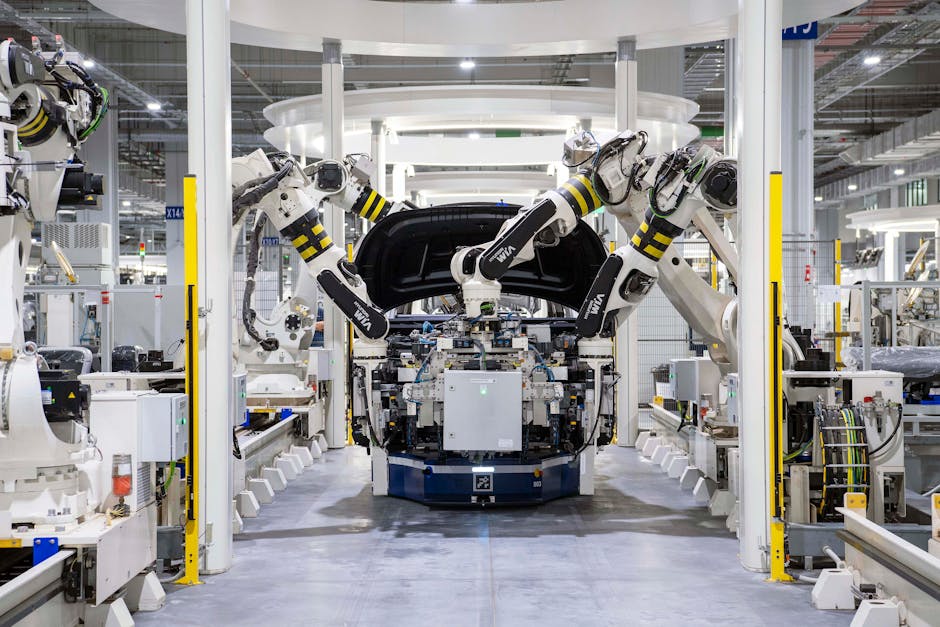
Toyota’s competitive advantage was never its engineers. It was the Toyota Production System (TPS) — a structured operating framework built on kaizen (continuous improvement), just-in-time processes, and visual management — that made excellence repeatable across every plant, every supplier, every market the company entered. Individual talent mattered far less than the system those individuals operated within.
When Toyota acquired a struggling supplier or moved into a new geography, it didn’t import a roster of exceptional workers. It exported the operating system. That system standardized what good looked like, surfaced deviations immediately, and corrected them through built-in feedback loops. Performance became transferable because it was designed in — not hired in.
This principle exposes the deepest flaw in how most sales organizations are built. The conversation in revenue leadership has shifted from "How do we hire great sellers" to "How do we make every seller execute like our best ones?" 3 That shift is not rhetorical — it is structural. The rep is not the repeatable unit. The operating system is.
Aviation: Why Commercial Aviation’s Safety Record Proves That Systems Trump Talent
Commercial aviation proves that systems — not superstars — create reliable performance. Before standardized checklists and crew resource management became mandatory, accident rates were far higher. Not because pilots were less skilled. Because excellence depended on individual judgment rather than shared protocol. Once the industry accepted that process consistency reduces human error across every skill level, safety records transformed permanently.
When a senior captain retires, flights do not become less safe. The checklist, the pre-flight protocol, the communication standard — the operating system is the source of safety. Not the individual in the cockpit.
Sales leadership faces the identical challenge. The conversation has shifted from "How do we hire great sellers?" to "How do we make every seller execute like our best ones?"3 Predictable growth does not come from a handful of top performers. It comes from execution discipline at scale.3 Standardized deal qualification, pre-call preparation rituals, and stage-progression criteria are the sales equivalent of a cockpit checklist: they reduce variance regardless of who is running the deal.
Formula 1: Why Pit-Stop Systems Win Championships More Than Individual Driver Talent
Formula 1 championships are won by operating systems, not by individual drivers. Pit-stop efficiency, engine reliability, aerodynamic calibration, and real-time race strategy are all organizational outputs. They consistently outweigh the raw talent gap between any two drivers on the grid.
When Ferrari and Mercedes compete, the team with faster pit stops, sharper telemetry, and tighter cross-functional communication wins more races than the team with the single best driver. Pit-stop windows have grown so standardized that analysts now predict competitive advantage directly from system benchmarks — personnel changes rarely shift outcomes the way a strategic infrastructure upgrade does.
The same logic governs B2B revenue organizations. Competitive advantage in sales comes from faster deal velocity, more accurate forecasting, and disciplined customer success execution. Those are system outputs, not the result of superstar hiring. As one leading revenue operations source puts it:
Software Engineering: How DevOps and SRE Operating Systems Scale Excellence

Software engineering organizations that outperform their peers don’t do it by recruiting only exceptional engineers — they build operating systems that make consistency the default. Google, Amazon, and Netflix are textbook examples. Their competitive advantage isn’t their talent rosters alone. It’s the DevOps and Site Reliability Engineering (SRE) frameworks that codify reliability, speed, and deployment discipline at scale.
The operating system does the heavy lifting. Automated testing, continuous integration pipelines, and incident response protocols let a competent engineer — not a rare 10x hire — ship reliable code day after day. When a strong engineer leaves a DevOps-mature organization, production doesn’t stall. The system absorbs the departure because the repeatable unit is the process, not the person.
Sales organizations should operate by the same logic. As one analysis of modern revenue leadership puts it, the goal isn’t to hire a team of superstars, but to design a system that turns ordinary performers into consistent, predictable producers.
Healthcare: Why Surgical Protocol Excellence Saves More Lives Than Surgeon Talent Alone
Standardized operating systems outperform individual talent — in the OR and on the sales floor. The WHO Surgical Safety Checklist is the clearest proof: hospitals that embedded structured pre-operative protocols reduced complications and mortality across entire patient populations, regardless of which surgeon held the scalpel. The system did the heavy lifting, not the individual.
The lesson transfers directly. When a celebrated surgeon retires, a hospital with mature checklists, anesthesia protocols, and infection-control processes keeps delivering consistent outcomes. A hospital built around hero surgeons does not — it faces an immediate performance gap.
Sales organizations repeat this mistake constantly. Revenue generation in many scaling companies still relies on founder heroics and isolated individual effort rather than repeatable systems.4 The fix is the same one hospitals discovered: systematize the protocol. Standardized prospecting cadences, deal-qualification frameworks, and closing checklists produce predictable results across an entire team — not just for the reps who were born to sell. Predictable growth doesn’t come from a few top performers. It comes from execution discipline at scale.3
Why Do Organizations Fail to Build Execution Infrastructure?
Organizations fail to build execution infrastructure because the payoff is slow, the pain is invisible, and the alternative — hiring another high performer — feels faster. That asymmetry is the core trap.
Short-term revenue pressure wins the internal budget argument almost every time. A new star rep closes deals this quarter. A new operating system pays off over several quarters. Leadership picks the rep, quarter after quarter, until the dependency becomes structural. Harvard Business School’s John Kotter found that 70 percent of all strategic initiatives fail precisely because of poor execution — not poor strategy.1
Hero-dependent cultures also develop antibodies against process. When top performers believe standardization caps their upside or cramps their style, they push back. Leadership, not wanting to lose them, backs down. The process dies before it ships.
The hidden costs rarely appear on any dashboard: turnover risk, acquisition discount, inability to scale, forecast fragility.3 By the time leadership stops to measure them, the damage is already done.
Frequently Asked Questions
Q: Doesn’t standardized execution limit exceptional performers?
No — systems raise the floor without capping the ceiling. Structure removes the friction that slows average performers, which frees your best reps to focus on what actually sets them apart. The conversation in revenue leadership has shifted from "how do we hire great sellers" to "how do we make every seller execute like our top ones" — and that shift only happens through systems, not through protecting individual heroics.3
Q: How long does building a sales operating system realistically take?
Expect 12–24 months to establish foundational capability, with continuous refinement beyond that. Early wins — pipeline discipline, cleaner forecasts, fewer commission disputes — typically surface within 90 days of deploying structured process and behavioral accountability.
Q: What if top performers resist process standardization?
Reframe the conversation. The operating system is not a leash — it’s a lever. It lets exceptional performers scale their judgment and playbook across the entire team rather than carrying quota alone. That’s a bigger stage, not a smaller one.
Q: Do we need significant technology investment to get started?
No. Organizational design, coaching rituals, governance, and clear role accountability can all be established before a single new tool is purchased.8 Technology amplifies a well-designed system — it does not create one. Structure first, software second.
The Central Idea: Building Organizations Capable of Executing Exceptionally
Companies don’t build durable enterprise value by hiring exceptional salespeople. They build it by constructing organizations capable of executing exceptionally — every quarter, at every level, regardless of who happens to be on the roster today.
The research is unambiguous: companies with unified revenue leadership grow at nearly 1.8 times the rate of their peers, according to McKinsey.1 That multiple doesn’t come from star performers. It comes from execution infrastructure — the systems, processes, behavioral incentives, and data flows that make high performance repeatable rather than incidental.
Sources
- Execution Excellence: 4A Framework for Strategy Delivery — https://thinkers50.com/blog/beyond-strategy-lessons-execution-excellence ↩
- Scaling Leadership: How to Escape the Execution Trap and Drive Enterprise Impact — https://think-human.com/scaling-leadership-how-to-escape-the-execution-trap-and-drive-enterprise-impact ↩
- Top Challenges CROs & Sales Leaders Face in Modern B2B — https://altify.com/blog/what-are-the-top-challenges-cros-and-sales-leaders-face ↩
- What Does a Chief Revenue Officer Actually Do and What Should a Founder Expect? — https://www.youtube.com/watch?v=3jAVpRJRiGM ↩
- The CRO role is a corporate delusion. — https://www.linkedin.com/posts/bryan-macdonald-ct_hot-take-the-chief-revenue-officer-role-activity-7343315802378366976-ypFb ↩
- VP Sales, CSO, CRO Roles: Separating Execution, Strategy, and Growth — https://www.linkedin.com/posts/brandon-stegall-05301710_cro-vs-cso-vs-vp-sales-these-titles-get-activity-7421214408942555136-qnbU ↩
- Sales Transformation: Driving Organizational Success | Force Management — https://www.forcemanagement.com/blog/sales-transformation-the-ladder-to-organizational-success ↩
- 10 principles of organization design — https://www.strategy-business.com/article/00318 ↩